 |
Central Coast Council
Business Paper
Ordinary Council Meeting
14 December 2021
 |
Meeting Notice
The Ordinary Council Meeting
of Central Coast Council
will be held in the Council Chamber,
2 Hely Street, Wyong on
Tuesday 14 December 2021,
for the transaction of the business listed below:
1 Procedural Items
1.1 Disclosure of Interest................................................................................................................................ 4
1.2 Notice of Intention to Deal with Matters in Confidential Session.............................................. 6
1.3 Confirmation of Minutes of Previous Meeting................................................................................. 7
2 Reports
2.1 Mountain Bike Feasibility Study Consultation Report.................................................................... 9
2.2 Adoption of the Ourimbah Area Strategy and Centre Masterplan......................................... 16
2.3 Central Coast Water Security Plan (CCWSP)................................................................................... 22
2.4 Central Coast Stadium- Stadium Implementation Plan, Masterplan...................................... 30
2.5 Gosford City Car Park Feasibility Assessment/Business Case - Budget................................. 33
2.6 Direct sale of Council's Gosford holdings........................................................................................ 37
2.7 Proposed Realignment of Glenning Valley, Berkeley Vale and Fountaindale Suburb Boundaries....................................................................................................................................................................... 41
2.8 Budget Amendment for Development Assessment Unit........................................................... 47
2.9 Proposed Council Meeting Dates 2022............................................................................................ 49
2.10 Amendment to Code of Meeting Practice...................................................................................... 54
2.11 Governance Lighthouse report as at 30 September 2021......................................................... 59
2.12 Administrator Expenses and Facilities Report to 31 October 2021......................................... 61
2.13 LG Remuneration Tribunal annual determination review 2022................................................ 65
2.14 Use of Domestic Waste Restricted Funds for Fleet Capital Purchases................................... 68
2.15 2020-2021 Financial Reports - Audit Extension............................................................................. 71
2.16 Acquisition of part of 20 Brush Creek Rd, Cedar Brush Creek and part of 56 Brush Creek Rd, Cedar Brush Creek for road purposes........................................................................................................... 74
3 Confidential
3.1 Kariong Oval Recreation Area Skate Park, Pump Track and Playspace Upgrade
David Farmer
Chief Executive Officer
|
Item No: 1.1 |
|
|
Title: Disclosure of Interest |
|
|
Department: Corporate Affairs |
|
|
14 December 2021 Ordinary Council Meeting |
|
Reference: F2021/00035 - D14832107
That Council and staff now disclose any conflicts of interest in matters under consideration by Council at this meeting.
Chapter 14 of the Local Government Act 1993 (“LG Act”) regulates the way in which the councillors and relevant staff of Council conduct themselves to ensure that there is no conflict between their private interests and their public functions.
Section 451 of the LG Act states:
“(1) A councillor or a member of a council committee who has a pecuniary interest in any matter with which the council is concerned and who is present at a meeting of the council or committee at which the matter is being considered must disclose the nature of the interest to the meeting as soon as practicable.
(2) The councillor or member must not be present at, or in sight of, the meeting of the council or committee:
(a) at any time during which the matter is being considered or discussed by the council or committee, or
(b) at any time during which the council or committee is voting on any question in relation to the matter.
(3) For the removal of doubt, a councillor or a member of a council committee is not prevented by this section from being present at and taking part in a meeting at which a matter is being considered, or from voting on the matter, merely because the councillor or member has an interest in the matter of a kind referred to in section 448.
(4) Subsections (1) and (2) do not apply to a councillor who has a pecuniary interest in a matter that is being considered at a meeting, if:
(a) the matter is a proposal relating to:
(i) the making of a principal environmental planning instrument applying to the whole or a significant part of the council’s area, or
(ii) the amendment, alteration or repeal of an environmental planning instrument where the amendment, alteration or repeal applies to the whole or a significant part of the council’s area, and
(a1) the pecuniary interest arises only because of an interest of the councillor in the councillor’s principal place of residence or an interest of another person (whose interests are relevant under section 443) in that person’s principal place of residence, and
(b) the councillor made a special disclosure under this section in relation to the interest before the commencement of the meeting.
(5) The special disclosure of the pecuniary interest must, as soon as practicable after the disclosure is made, be laid on the table at a meeting of the council and must:
(a) be in the form prescribed by the regulations, and
(b) contain the information required by the regulations.”
Further, the Code of Conduct adopted by Council applies to all councillors and staff. The Code relevantly provides that if a councillor or staff have a non-pecuniary conflict of interest, the nature of the conflict must be disclosed as well as providing for a number of ways in which a non-pecuniary conflicts of interests might be managed.
|
|
|
|
Title: Notice of Intention to Deal with Matters in Confidential Session |
|
|
Department: Corporate Affairs |
|
|
14 December 2021 Ordinary Council Meeting |
|
Trim Reference: F2021/00035 - D14832123
That Council note that matters have been tabled to deal with in a closed session.
Summary
It is necessary for the Council to adopt a resolution to formalise its intention to deal with certain matters in a closed and confidential Session. The report is incorporated in the "Confidential" business paper which has been circulated.
The Local Government Act 1993 requires the Chief Executive Officer to identify those matters
listed on the business paper which may be categorised as confidential in terms of section 10A
of the Local Government Act 1993. It is then a matter for Council to determine whether those
matters will indeed be categorised as confidential.
Context
2(a) personnel matters concerning particular individuals (other than Councillors),
2(b) the personal hardship of any resident or ratepayer,
2(c) information that would, if disclosed, confer a commercial advantage on a person with whom the Council is conducting (or proposes to conduct) business,
2(d) commercial information of a confidential nature that would, if disclosed:
(i) prejudice the commercial position of the person who supplied it, or
(ii) confer a commercial advantage on a competitor of the Council, or
(iii) reveal a trade secret,
2(e) information that would, if disclosed, prejudice the maintenance of law,
2(f) matters affecting the security of the Council, Councillors, Council staff or Council property,
2(g) advice concerning litigation, or advice that would otherwise be privileged from production in legal proceedings on the ground of legal professional privilege,
2(h) information concerning the nature and location of a place or an item of Aboriginal significance on community land.
2(i) alleged contraventions of any code of conduct requirements applicable under section 440
It is noted that with regard to those matters relating to all but 2(a), 2(b) and 2(d)(iii) it is necessary to also give consideration to whether closing the meeting to the public is, on balance, in the public interest.
Further, the Act provides that Council may also close to the public so much of its meeting as comprises a motion to close another part of the meeting to the public (section 10A(3)).
As provided in the Office of Local Government Meetings Practice Note August 2009, it is a matter for the Council to decide whether a matter is to be discussed during the closed part of a meeting. The Council would be guided by whether the item is in a confidential business paper, however the Council can disagree with this assessment and discuss the matter in an open part of the meeting.
Nil
|
Item No: 1.3 |
|
|
Title: Confirmation of Minutes of Previous Meeting |
|
|
Department: Corporate Affairs |
|
|
14 December 2021 Ordinary Council Meeting |
|
Reference: F2021/00035 - D14956040
That Council confirm the minutes of the Ordinary Meeting of Council held on 23 November 2021.
Summary
Confirmation of minutes of the Ordinary Meeting of Council held on 23 November 2021.
|
1⇨ |
MINUTES - Council Meeting - 23 November 2021 |
Provided Under Separate Cover |
D14941988 |
|
Item No: 2.1 |
|
|
Title: Mountain Bike Feasibility Study Consultation Report |
|
|
Department: Environment and Planning |
|
|
14 December 2021 Ordinary Council Meeting |
|
Reference: F2019/00794-002 - D14862900
Author: Sharyn Styman, Environmental Management and Projects Officer
Manager: Luke Sulkowski, Unit Manager, Environmental Management
Executive: David Milliken, Director Environment and Planning (Acting)
1 That Council endorse the report on community consultation undertaken for the Mountain Bike Feasibility Study Discussion Paper.
2 That Council endorse the development of a Central Coast Mountain Biking Plan, led by Council staff in collaboration with an active stakeholder working group, to establish a strategic framework and select suitable sites, and that the project be considered for funding through Council’s budgetary processes, which may include applying for external funding from grants, developer contributions or cost or service reductions.
3 That Council recognises the risk of harm to the environment, heritage, and public safety from unauthorised trail construction on Council land and that education, enforcement and trail closures will be an ongoing responsibility of Council in order to manage risks. However improved outcomes for reserve management will be reliant on a proactive approach to increase supply at suitable sites due to limited enforcement resources and the size of the region.
4 That Council staff explore options for supporting the construction of dirt jumps by younger riders on suitable Council land and undertake a trial in a limited number of urban areas where there is expressed high demand and where other risks can be appropriately managed. Evaluation of any trails shall be reported to the stakeholder working group and considered in the preparation of a Central Coast Mountain Biking Plan.
5 That Council staff notify those people who lodged submissions and relevant stakeholders of Council’s resolution.
|
Report purpose
To enable Council to consider the outcomes of the community consultation on the Mountain Bike Feasibility Study Discussion Paper as resolved by Council on 11 November 2020 (1089/20) and to consider a recommendation that provides future direction for Council to support sustainable mountain biking on the Central Coast.
Executive Summary
Community consultation was undertaken between 22 February 2021 and 22 March 2021 on the Mountain Bike Feasibility Study Discussion Paper. The consultation methods and outcomes can be found in Attachment 1 (D14930666).
With consideration of community feedback and Council resources, three options are recommended to support sustainable mountain biking on the Central Coast:
1. Development of a Mountain Biking Plan 2. Continue education, enforcement and trail closures 3. Trial selected sites for dirt jumps
It is recommended that the future direction focus on a proactive approach to increase supply at suitable sites.
A discussion of all options considered is available in Attachment 2 (D14930677). |
Background
Mountain biking is a popular recreation on the Central Coast that can have positive benefits on health and well-being. However, when conducted on unauthorised trails without appropriate planning, approvals and controls it poses risks to land managers, riders and the community and has the potential to compromise natural environments and heritage sites.
Council initiated a Mountain Bike Feasibility Study in 2019 in response to the increasing construction of unauthorised bike trails in Council natural reserves, and requests from the local community, commercial entities, and government for further authorised opportunities for mountain biking on the Central Coast to meet local demand and promote eco-tourism on the Central Coast. The aim of the study was to assist Council in planning for recreation in Council’s natural reserves by:
· Identifying the role that Council’s natural reserves may play in the provision of mountain biking experiences across the Central Coast
· Protecting areas of high conservation and heritage value
· Minimising the key drivers for the building of unauthorised trails
· Maximising the safe use of Council reserves by all visitors
On 10 August 2020, Council considered a report on a Notice of Motion relating to options for a dedicated mountain bike facility and resolved:
847/20 That Council recognises the economic and social benefits of Mountain Biking.
848/20 That Council acknowledges the importance of a structured approach to developing facilities and tracks for Mountain Bikes in conjunction with a targeted tourism strategy.
849/20 That any working group includes business representation to leverage the economic and jobs outcomes of a comprehensive strategy.
850/20 That Council complete the Mountain Bike Feasibility Study to allow for the recommendations of the Mountain Bike Feasibility Study Discussion Paper and subsequent community engagement report to be considered.
851/20 That Council give consideration to options for engaging key stakeholders in the planning and development of mountain bike facilities and opportunities across the Central Coast be postponed until after the Mountain Bike Feasibility Study has been completed.
Council consulted with the community and external stakeholders in 2019 to inform preparation of a discussion paper that presents a supply analysis, overview of community demand, views and attitudes, case studies, site selection criteria, feasibility analysis, options and recommendations.
On 11 November 2020 Council resolved:
1087/20 That Council endorse the Mountain Bike Feasibility Study Discussion Paper for the purpose of community consultation.
1088/20 That Council place the Mountain Bike Feasibility Study Discussion Paper on public exhibition for a period of 28 days.
1089/20 That a further report come back to Council on the outcomes of the community consultation on the Mountain Bike Feasibility Discussion Paper and that Council note that the proposed expenditure of up to $15,000 towards the ‘Consultation Report’ as described in this report is included in Council’s adopted 2020/21 Operational Plan.
Current Status
Public exhibition of the discussion paper and preparation of a report on the outcomes of the community consultation has been completed.
The number of natural reserves impacted by unauthorised trails and/or dirt jumps more than doubled during COVID restrictions in 2021. In response Council commenced pro-active patrols in natural reserves and monitoring of open spaces. A number of unauthorised trails and jumps were removed, and land remediated. These actions have not been effective in all locations and the number of unauthorised trails and jumps on Council land and associated risks continue to increase. Reactive management, including repeated closure of some unauthorised trails, has diverted finite resources from other projects and programs in Council’s natural reserves.
Report
Council undertook community consultation on the discussion paper between 22 February 2021 and 22 March 2021. A total of 245 guided submission forms, 43 emailed submissions, 62 petition/generic emailed submissions and 32 emails providing feedback were received. A majority (63%) of respondents indicated that they engage in mountain biking on the Central Coast.
Submissions revealed consensus amongst respondents that:
1. Effective stakeholder engagement must occur throughout any process for developing a plan or approving or closing trails
2. The site selection criteria required to assessment potential sites need refinement
3. A trails approval and closure process must be established and agreed upfront
4. Shared trails are not the preference for any recreational user group
The submissions indicated several contentions, such as
1. Whether providing authorised trails that meet demand will reduce unauthorised trail construction
2. Whether formalising illegal trails rewards the unauthorised trail construction
3. Whether mountain bike trails should be permitted on COSS land
4. Whether there is sufficient demand, economic benefit, ratepayer support, controls to manage council’s liability and council resources to fund and manage future facilities
1. Retain status quo
2. Expand and enhance the shared trail network
3. Increase education and awareness
4. Improve partnerships
5. Develop a regional trails plan
6. Increase enforcement
The following three options: development of a regional trails plan, improving partnerships and expanding and enhancing the shared trail network were ranked of highest importance by respondents in the guided submission form. Option 1, retaining status quo, was ranked the second lowest in importance for respondents.
For guided submissions completed by only the respondents that did not identify themselves as participating in mountain biking, the three options of highest importance were increasing enforcement, development of a regional trails plan and increasing education and awareness.
The Mountain Bike Feasibility Study Discussion Paper - Consultation Report is provided as Attachment 1 (D14930666).
Consultation
The Mountain Bike Feasibility Study has involved two phases of consultation. The phase 1 consultation in 2019 helped Council to understand community and stakeholder views, demand, issues and concerns regarding mountain biking on the Central Coast and informed preparation of the discussion paper. The phase 2 consultation in 2021 sought community feedback on the discussion paper. A full description of the consultation methods and outcomes for phase 2 were presented in a consultation report (see Attachment 1).
Financial Considerations
At its meeting held 19 October 2020, Council resolved the following:
1108/20 That any motions put before Council for the remainder of this term of Council that have financial implications require the Chief Executive Officer to provide a report on how those additional costs will be met.
The following statement is provided in response to this resolution of Council.
Adoption of the report on the community consultation for the Mountain Bike Feasibility Study Discussion Paper has no financial implication for Council.
Development of a Central Coast Mountain Biking Plan and establishment of a stakeholder working group is projected to cost $310,000 over 18 months. It is recommended that the project be considered for funding through Council’s budgetary processes, which may include applying for external funding from grants, developer contributions or cost or service reductions.
Education, enforcement and trail closures is proposed to be undertaken within current budgets and staff resources and will have no unbudgeted financial implication for Council.
Trial of alternative sites is proposed to be undertaken within current budgets and staff resources and will have no unbudgeted financial implication for Council.
Link to Community Strategic Plan
Theme 2: Smart
|
Goal C: A growing and competitive region |
|
S-C4: Promote and grow tourism that celebrates the natural and cultural assets of the Central Coast in a way that isaccessible, sustainable and eco-friendly. |
Risk Management
Continuation of the current ad-hoc approach is likely to increase the following risks:
· Non-compliance with Council’s legislative responsibilities, legally binding conservation-related agreements, plans and strategies
· Irreversible damage to Aboriginal heritage sites and biodiversity values
· Serious injury or death of riders, other reserve visitors and wildlife
· Ongoing community conflict and dissatisfaction with Council’s management of the issue, including negative media coverage
· Council’s liability and reputation
· Vandalism to Council property, assets and infrastructure
There are no new risks to Council in implementing the recommendation and in the long-term it is anticipated the risks listed above would be reduced.
Options – Recommended
1 Development of a Central Coast Mountain Biking Plan led by Council in collaboration with an active stakeholder working group to identify suitable areas where mountain biking opportunities can be developed (subject to further detailed assessment, design and funding) in a sustainable manner that protects environmental and heritage values and public safety.
2 Continue education, enforcement and trail closures with the objective of reducing ongoing construction and use of unauthorised trails and associated impacts on Council land.
3 Explore options for supporting the construction of dirt jumps by younger riders on suitable Council land and undertake trials.
Options – Not Recommended
1 Retain status quo. This option does not address the community demand for mountain bike trails in natural areas and is unlikely to reduce unauthorised trail construction.
|
1⇨ |
MTB Discussion Paper - CCC Consultation report FINAL |
Provided Under Separate Cover |
D14930666 |
|
2⇨ |
MTB Feasibility Study Discussion Paper - Consultation Report |
Provided Under Separate Cover |
D14930677 |
|
Item No: 2.2 |
|
|
Title: Adoption of the Ourimbah Area Strategy and Centre Masterplan |
|
|
Department: Environment and Planning |
|
|
14 December 2021 Ordinary Council Meeting |
|
Reference: CPA/249857-002 - D14964339
Author: Melati Lye, Senior Strategic Planner
Manager: Jared Phillips, Section Manager, Centres Planning and Urban Design
Executive: David Milliken, Director Environment and Planning (Acting)
1 That Council adopt the Ourimbah Area Strategy and Centre Masterplan subject to the amendments outlined in this report.
2 That Council authorise the Chief Executive Officer to make final editorial amendments to the Ourimbah Area Strategy and Centre Masterplan.
|
Report purpose
To consider amendments to the Ourimbah Area Strategy and Centre Masterplan to align with the Urban Spatial Plan, the Local Strategic Planning Statement and the Ourimbah Creek Floodplain Risk Management Plan, following the consideration of comments received during the public exhibition period.
This report recommends Council adopt the Ourimbah Area Strategy and Centre Masterplan as amended.
Executive Summary The Ourimbah Area Strategy and Centre Masterplan (the Plan) presents a vision for Ourimbah that assists with managing the expected long-term growth and change in the area, strengthens it’s broader economic future, provides greater housing choice, and protects the area’s unique character and sensitive setting. It consists of:
1 an Area Strategy, made up of an area-wide framework emerging from a series of thematic strategies (Section 3), along with high-level plans for individual precincts (Section 4), and 2 a Centre Masterplan (Section 5), providing more detailed directions for land use, development, and public domain considerations focused within Ourimbah’s Centre.
The specific challenges and opportunities that were raised by stakeholders, including the local community, have helped to shape the detailed recommendations presented in the Plan to support the long-term vision for growth and change in the area.
The draft Ourimbah Land Use Strategy and Town Centre Masterplan (Version 1) was publicly exhibited in 2016.
The draft Plan Version 1 used three population growth scenarios to consider the additional dwellings that may need to be accommodated over the next 20 years.
· Scenario 1- Business as Usual considered the likely housing requirements of the currently projected population growth rate of 0.5% per annum (around 500 people). (Low Growth Model); · Scenario 2 – Keeping Pace considered additional housing requirements if Ourimbah grew at 1.5% per annum, in line with projections for the whole of Wyong Shire (around 1,600 people). (Medium Growth Model); and · Scenario 3 – Peak Growth considered additional housing requirements if Ourimbah grew at the rate of 2.4% per annum (around 2,900 people). (High Growth Model).
The High Growth Model having a greater proportion of apartments and multi-storey development was the preferred approach in Version 1.
In response to the public submissions received during the 2016 exhibition, Version 1 was revised substantially into the Low Growth Model for the Ourimbah area, which includes both a significant reduction in the number of investigation areas as well as the anticipated dwelling and population capacity. As the format and contents of the document was considerably revised it was recommended that Council re-exhibit the document. The draft Ourimbah Land Use Strategy and Town Centre Masterplan (Version 2) was publicly exhibited again in 2019.
During the 2019 public exhibition period there were 1,500 visits to the Council website and more than 20,300 social media users. A total of 140 formal submissions were received including 11 submissions from State Government agencies.
This document was amended in response to the issues raised during the public exhibition of Version 2; and reported to Council for adoption in October 2019 (CM Reference D14964339). Council resolved to defer consideration of this project to allow for the alignment with other Council strategic planning initiatives, such as the Local Strategic Planning Statement and the Ourimbah Creek Floodplain Risk Management Plan.
The draft Plan was revised and finalised to align with the Urban Spatial Plan, the Local Strategic Planning Statement and the Ourimbah Creek Floodplain Risk Management Plan; and is reported to Council for adoption. |
Background
On 28 October 2019, the Ourimbah Land Use Strategy and Town Centre Masterplan was reported to Council for finalisation and adoption (CM Reference D14964339).
Council resolved as follows:
1027/19 That Council defer the consideration of this item to allow Council to review the plan and its alignment to the Urban Spatial Plan, the Local Strategic Planning Statement and the Ourimbah Creek Floodplain Risk Management Plan.
Current Status
The draft Ourimbah Area Strategy and Centre Masterplan (draft Plan) was revised to align with the Urban Spatial Plan, the Local Strategic Planning Statement and the Ourimbah Creek Floodplain Risk Management Plan; and is reported to Council for adoption.
Report
Ourimbah is strategically located close to existing infrastructure, including the M1 Motorway, the main Northern railway line, the regional campus of the University of Newcastle (UON), TAFE NSW (Hunter Institute), the Central Coast Community College and district playing fields at Sohier Park.
The draft Plan presents a vision for Ourimbah which assists with managing the expected long-term growth and change in the area, strengthens the broader economic future, provides greater housing choice, and protects the area’s unique character and sensitive setting. It consists of:
1 an Area Strategy, made up of an area-wide framework emerging from a series of thematic strategies (Section 3), along with high-level plans for individual precincts (Section 4).
2 a Centre Masterplan (Section 5), providing more detailed directions for land use, development, and public domain considerations focused within Ourimbah’s Centre.
The draft Plan was revised to align with the Urban Spatial Plan, the Local Strategic Planning Statement and the Ourimbah Creek Floodplain Risk Management Plan.
Urban Spatial Plan (USP) and Local Strategic Planning Statement (LSPS)
The USP (Part 1 of the LSPS) referred to Ourimbah as a “Potential” Town Centre due to its close proximity to the M1 Motorway, Main Northern Railway Station, University of Newcastle (Ourimbah Campus), TAFE, Community College and District playing fields at Sohier Park. There were a large number of public submissions from members of the Ourimbah Region Residents Association objecting to this reference.
As a response to these submissions, Ourimbah was changed to a “Local Centre”, in the LSPS. The LSPS intentions for local planning in Ourimbah are focused on “having a mixture of the old and the new, retaining the historical, semi-rural character of Ourimbah while providing housing, employment, educational and recreational opportunities.”
The draft Plan was amended to reflect this.
Ourimbah Creek Floodplain Risk Management Plan (FRMP)
The FRMP sets out the agreed approach to managing flood risk in the Ourimbah Creek catchment. It concluded that the current land use zones for the Ourimbah Creek catchment comply with the current NSW standards. Any future investigations resulting in land use changes recommended in the draft Plan will require flood risk planning measures to identify any impacts and additional management actions.
Relevant actions have been added in the draft Plan for Precincts where flood improvements were identified in the FRMP (Precincts 4, 6 & 10)
In addition, the draft Plan was updated as follows:
· The Executive Summary was expanded to act as a standalone reference document;
· The Strategic Planning Context was updated to include current plans such as the Central Coast Community Strategic Plan 2018, LSPS 2020, Ourimbah Creek Floodplain Risk Management Plan 2019 etc;
· The Centre Masterplan section was revised to reflect the LSPS;
· The Implementation Plan was updated in line with current work programs; and
· Minor formatting updates.
Consultation
The draft Plan was informed by extensive consultation with the community, including through online forums and an open-invitation public meeting, attended by around 80 people. A Stakeholder Liaison Group was established, comprising of 22 members representing State Government agencies, locally based institutions, business and residents. This group met three times during the strategy formulation process to identify the main issues of interest and consider how the strategy could address them.
The specific challenges and opportunities that were raised by stakeholders, including the local community, have helped to shape the more detailed recommendations presented in the draft Plan to support the long-term vision for growth and change in the area.
The Ourimbah Land Use Strategy and Town Centre Masterplan (Version 1) was publicly exhibited during April and May 2016. In response to the public submissions received during the 2016 exhibition, Version 1 was revised substantially; and the Ourimbah Land Use Strategy and Town Centre Masterplan (Version 2) was publicly exhibited again between January and March 2019.
There were 1,500 visits to the Council website and more than 20,300 social media users, during the public exhibition period. A total of 140 formal submissions were received including 11 submissions from State Government agencies.
This document was amended in response to the issues raised during the public exhibition of Version 2; and reported to Council for adoption in October 2019. Council resolved to defer consideration of this project to allow for the alignment with other Council strategic planning initiatives, such as the Local Strategic Planning Statement and the Ourimbah Creek Floodplain Risk Management Plan.
Financial Considerations
At its meeting held 19 October 2020, Council resolved the following:
1108/20 That any motions put before Council for the remainder of this term of Council that have financial implications require the Chief Executive Officer to provide a report on how those additional costs will be met.
The following statement is provided in response to this resolution of Council.
Actions are predominantly those that Council has already committed to implementing or alternatively are open-ended and the cost of implementation can be included in future Operational Plans.
Council may employ a range of mechanisms to fund and deliver infrastructure, such as levying contributions (including works-in-kind) from new developments through Local Contributions Plans or by securing grants or funding through National and State Government schemes.
Council may also consider proponent-led planning proposals within the investigation areas, identified in the draft Plan. These proposals will be required to address relevant strategic objectives and precinct level considerations. The cost of providing essential infrastructure associated with these proposals (including utilities and community infrastructure) will be met by the proponent. Planning proposals that are not within identified investigation areas will generally not be supported, unless identified in an updated strategy.
Link to Community Strategic Plan
Theme 4: Responsible
|
Goal I: Balanced and sustainable development |
|
R-I2: Ensure all new developments are well planned with good access to public transport, green space and community facilities and support active transport. |
Risk Management
The implementation of the draft Plan will consider and mitigate any corporate risks through ensuring:
· Appropriate consultation is undertaken with relevant public authorities, major stakeholders and the community; and
· All legislative procedures have been followed.
Options
1 Adopt the Final Ourimbah Area Strategy and Centre Masterplan. This is the recommended option.
2 Further amend the Ourimbah Area Strategy and Centre Masterplan. This option is not recommended as extensive community and stakeholder consultation has been undertaken, and considerable amendments made in response to this feedback and current strategic directions.
Critical Dates or Timeframes
Following adoption of the draft Plan, the implementation of the plan will occur over short (0-5 years), medium (5-10 years) and long term (10 + years) timeframes, or as prioritised by Council.
|
1⇨ |
Ourimbah Area Strategy and Masterplan 2021 |
Provided Under Separate Cover |
D14962927 |
|
Item No: 2.3 |
|
|
Title: Central Coast Water Security Plan (CCWSP) |
|
|
Department: Water and Sewer |
|
|
14 December 2021 Ordinary Council Meeting |
|
Reference: F2019/00970 - D14846828
Author: Luke Drury, Section Manager Assets and Planning
Manager: Daniel Kemp, Unit Manager, Planning and Delivery
Executive: Jamie Loader, Director Water and Sewer
That Council endorse the revised Draft Central Coast Water Security Plan to be submitted to the Department of Planning, Industry and Environment for their review and approval.
|
Report purpose
To enable Council to receive the outcomes from the recent public exhibition process for the Draft Central Coast Water Security Plan (CCWSP) and consider submission of the CCWSP to the Department of Planning, Industry and Environment (DPIE) for their review and approval.
Executive Summary
The Central Coast Water Security Plan (CCWSP) is a drinking water plan for our growing community. The CCWSP replaces WaterPlan 2050 as the region’s water security plan and is a key element of Council’s Integrated Water Cycle Management (IWCM) Plan that is being developed under the DPIE IWCM regulatory framework.
A four-year process had informed the development of the draft CCWSP, which included numerous technical investigations and modelling, community engagement and risk and uncertainty assessment. A preferred water supply portfolio has been identified that aims to conserve and use water efficiently, maximise the sustainable use of existing supplies and develop new climate independent supplies into the future as the demand for water continues to grow.
The public exhibition of the CCWSP has been completed and the relevant outcomes of the exhibition phase have been incorporated into the final draft version of the Plan for submission to DPIE for their review and approval.
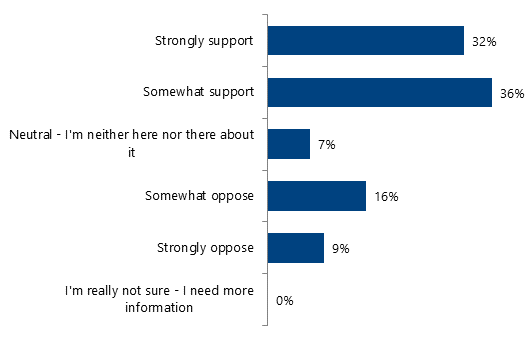
During the exhibition period there were over 1,300 visits to the Your Voice Our Coast project page and over 340 downloads of the plan. Staff maintained an online Q&A board and held three online sessions with interested groups. As a result, staff received 45 submissions through the online guided submission form and a further 10 submissions via email and post. Quantitative data from the guided submission responses (45) is outlined below and indicates general support for the draft plan. Further details relating to support levels for the various goals of the plan, as well as the three key pillars of the plan are provided within Attachments 1 and 2 of this report.
Overall, how strongly do you support or oppose the draft Central Coast Water Security Plan?
The exhibition period has confirmed that the community seeks a water supply plan that is both resilient and considerate of the local environment. The strongest levels of support were for water conservation (96% supportive or neutral) and optimising existing supplies (89% supportive or neutral). Support for future investment in rainfall independent supplies was also favourable (75% supportive or neutral) and feedback confirmed areas where future education and engagement could further strengthen support for the plan. These include:
· Ongoing discussion of an adaptive planning approach and management of risk and uncertainty. · Operation of the Norah Head ocean outfall and opportunities for brine management within the outfall.
There is general support for the CCWSP and there are no remaining identified issues that warrant deferral of the submission of the CCWSP to DPIE for review and approval.
|
Background
Council is undertaking a review of its Water Security Plan (previously WaterPlan 2050) as part of its ongoing planning, risk management activities and regulatory compliance. This is being undertaken in parallel and in close collaboration with the review of the Lower Hunter Water Security Plan (LHWSP) being led by the NSW Department of Planning Industry & Environment (DPIE) in conjunction with Hunter Water Corporation (Hunter Water). The purpose of collaboration is to identify any mutual beneficial options available through greater cooperation between the two regions.
The outcomes from the project will establish the long-term strategy for water security for the Central Coast. The long-term supply/demand balance will be assessed, as well as an update to Council’s Drought Management Plan (DMP).
The updates of these plans are a requirement of the Integrated Water Cycle Management Planning Framework, administered by DPIE under the Water Management (General) Regulation 2018.
At its meeting of 24 August 2021, Council resolved (220/21):
1. That Council approves the Draft Central Coast Water Security Plan to proceed to public exhibition; and
2. That a final report comes back to Council following public exhibition detailing feedback prior to the Plan being submitted to the Department of Planning, Industry and Environment.
Current Status
Council staff have completed a review of all submissions received on the draft Central Coast Water Security Plan. An updated final draft document has now been prepared that has incorporated feedback received where suitable and is ready to be submitted to the Department of Planning, Industry and Environment (DPIE) for their formal review and approval.
A public exhibition engagement summary and long format report has been prepared and circulated to all parties that made a submission and has also been posted on the project’s ‘Your Voice Our Coast’ website.
Consultation
The public exhibition phase commenced on 31 August 2021 and was undertaken in accordance with Central Coast Council’s Engagement Framework. During the public exhibition period Council staff received requests to extend the four-week exhibition period due to the important nature of the topic and the disruption caused due to the ongoing COVID 19 pandemic. As a result, the exhibition phase was extended for a further two weeks, concluding on 12 October 2021.
A public exhibition engagement summary and full consultation report are provided in Attachments 1 and 2, with key highlights provided below.
How we consulted
· 1,313 visits to the Your Voice Our Coast project page
· 342 downloads of the plan and over 200 views of supporting video
· Eight questions posted and answered through the online Q&A board
· Three meetings held between interested groups and Council’s project team
· Over 11,000 stakeholders updated through e-news
· More than 16,000 social media users reached
What we heard
We received 55 submissions, 45 through the online guided submission form and an additional 10 submissions received via email and post. Quantitative data from the guided submission responses (45) is provided below to demonstrate general support for the draft plan. Further details relating to support levels for the various goals of the plan, as well as the three key pillars of the plan are provided within Attachments 1 and 2.
The themes that paint a high-level picture of the key findings from these submissions are:
· Positive feedback on the resilience of desalination as a climate independent water supply
· Concerns with the desalination plant including cost, energy consumption, environmental impacts and fears that it will be built and left unused
· Support and concern surrounding carbon offsets for the desalination plant
· Interest in temporary desalination plants
· A perceived commitment to delivering the options (particularly a desalination plant) by a given year rather than in response to the supply/demand balance
· Concerns that climate change will bring more rainfall making desalination unnecessary
· Concerns surrounding the sustainability and environmental impacts of groundwater
· Support for Council to incentivise the installation of rainwater tanks
· Support for education and incentives for water saving, and disincentives for water wastage
· Support for the sustainability and circular economy of purified recycled water
· Concerns with purified recycled water surrounding community acceptance, education and public confidence in the technology
Submissions from within the water industry (Water Services Association of Australia and Hunter Water Corporation) were supportive of the ‘all options’ planning approach and diversifying traditional water supplies with rainfall independent supplies in the future to increase resilience.
Report
Council staff have reviewed and considered each submission as part of updating the draft Central Coast Water Security Plan (Attachment 3). While the preferred portfolio remains unchanged, additional information has been included and other items refined to better reflect the adaptive nature of the plan which is required to manage the future risks and uncertainty that exist within water resource planning. Individual responses have also been provided to each of the ten long format submissions made on the plan.
Key implementation actions within the plan which will further address some of the concerns raised include the development of a long-term water conservation program and commencement of a long-term community engagement program around the use of purified recycled water. There are also further environmental investigations planned to obtain planning approvals for a revised desalination intake structure to be less impactful on the community (direct ocean intake instead of previous structures under Budgewoi Beach) and to confirm the long-term sustainable yield of our groundwater supplies.
Both the Lower Hunter Water Security Plan (LHWSP) and Greater Sydney Water Strategy (GSWS) have completed public exhibition phases since August 2021. Both of those plans have also identified adaptive plans to increase water conservation, optimise existing supplies and make future investments in rainfall independent supplies such as purified recycled water and desalination. Council has the advantage of a current yield surplus (long term supply exceeds demand) that allows the deferral of major new water sources further into the future. However, the draft LHWSP and GSWS identify current yield deficits that likely require investment in climate independent supplies within the next five to ten years to address the supply/demand balance. Neither of the above-mentioned plans and strategies are recommending the further consideration of new Dams.
The draft Central Coast Water Security Plan identifies a resilient and sustainable water future that seeks new opportunities, contributes to regional health and prosperity, and is supported by the community. The preferred portfolio allows time for Council to further investigate and manage risks by conserving and using water more efficiently, maximising the efficient use of our existing water supplies and planning for future rainfall independent supplies for an adaptive future.
Financial Considerations
At its meeting held 19 October 2020, Council resolved the following:
1108/20 That any motions put before Council for the remainder of this term of Council that have financial implications require the Chief Executive Officer to provide a report on how those additional costs will be met.
The following statement is provided in response to this resolution of Council.
The preferred portfolio is shown to defer major supply investments beyond 2035 based on Council’s most likely demand forecast, by leveraging lower cost enhancements to existing supplies first, in addition to maximising efficient investments in water conservation. There is no material capital expenditure required associated with the preferred portfolios in Council’s next IPART pricing submission for Water, Sewerage and Drainage Services.
The readiness activities (planning & maintenance) identified for the drought response actions form part of Council’s current operational plan budget for 2021/22 and have been allowed for in Council’s next IPART pricing submission for Water, Sewerage and Drainage Services.
Link to Community Strategic Plan
Theme 4: Responsible
|
Goal H: Delivering essential infrastructure |
|
R-H4: Plan for adequate and sustainable infrastructure to meet future demand for transport, energy, telecommunications and a secure supply of drinking water. |
Risk Management
Preparation of an updated water security plan is required to meet legislative requirements. This includes the identification of relevant drought response measures and undertaking planning actions to understand and shorten delivery lead-times as required to properly manage risks associated with future droughts.
Options
1 Endorse the Plan to be submitted to the Department of Planning, Industry and Environment (DPIE) for their review and approval. This is the recommended option.
2 Defer the endorsement of the Central Coast Water Security Plan (CCWSP). This is not recommended as there are no remaining identified issues to be further investigated. Also the timeline for both the CCWSP and LHWSP have been aligned to ensure the assessment of joint investment opportunities is considered when the two plans are reviewed by Government. The LHWSP remains on track to undergo key reviews and approvals in mid December and early 2022.
Council staff acknowledge that there is risk and uncertainty associated with all the shortlisted portfolios identified within the CCWSP. The plan has been prepared as an adaptive plan that allows Council to best manage future risks and opportunities. If the future impacts to the supply and demand balance differ from the core assumptions within the plan, the identified actions can be deferred or brought forward as required. There are no remaining identified issues that warrant deferral of endorsement of the CCWSP and submission to DPIE for review and approval.
Critical Dates or Timeframes
A summary of key dates for the completion of the Central Coast Water Security Plan is provided in Figure 1. Key dates for milestones on the Lower Hunter and Greater Sydney water plans are also provided to demonstrate the parallel planning processes underway.
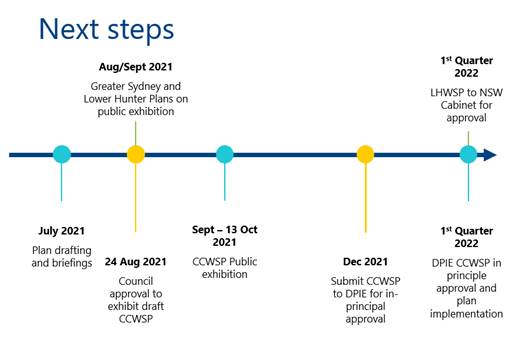
Figure 1 - Key dates for remaining CCWSP activities
|
1⇨ |
Final Draft Central Coast Water Security Plan November 2021 |
Provided Under Separate Cover |
D14947105 |
|
2⇨ |
Public Exhibition Engagement Summary Central Coast Water Security Plan |
Provided Under Separate Cover |
D14947818 |
|
3⇨ |
Public Exhibition Consultation Report - Central Coast Water Security Plan |
Provided Under Separate Cover |
D14947816 |
|
Item No: 2.4 |
|
|
Title: Central Coast Stadium- Stadium Implementation Plan, Masterplan |
|
|
Department: Corporate Affairs |
|
|
14 December 2021 Ordinary Council Meeting |
|
Reference: CPA/3800 - D14955820
Author: Ben Brown, Property Development Manager
Manager: Jamie Barclay, Unit Manager Development and Property
Executive: Natalia Cowley, Director Corporate Affairs and Chief Financial Officer
That Council extend the completion of the Stadium Masterplan, with a new deadline of June 2022.
|
Report purpose
To notify and seek extension to complete the development of the Stadium Masterplan from its original December 2021 deadline as noted in the Stadium Implementation Plan to June 2022.
Executive Summary
At the Ordinary Meeting of Council held on 23rd March 2021, minute 83/21 resolved:
That Council adopt the Stadium Implementation Plan and make it available on Council’s website.
Within the Stadium Implementation Plan, Strategic Priority 3, required Council develop a precinct master plan by December 2021. Due to certain items requiring internal resolution it is recommended that the finalisation of the Stadium Masterplan be deferred to June 2022. |
Background
On 23 March 2021, Council endorsed the Stadium Implementation Plan. Strategic Priority 3: Precinct, required Council develop a precinct master plan by December 2021. It is expected the precinct masterplan will help to improve connectivity between the city and stadium, lead to better activation of event days, and enhance the overall event and non- event day experience of the Stadium. This is expected to lead to greater community, economic and financial impacts of events held at the Stadium, to both the Stadium and surrounding businesses.
Council is currently developing the masterplan with consideration (at a minimum) of:
· Connectivity to transport links; CBD and local businesses;
· Engagement with Brisbane Water and Leagues Park;
· Parking;
· Non- event day activation.
Report
Council is currently developing the Gosford Waterfront Masterplan and Stadium Masterplan via a holistic approach as both Masterplans are intrinsically linked. Whilst Council is continuing to develop both Masterplans, there are a couple of items requiring internal resolution prior to finalisation of the Stadium Masterplan. These items include:
1. Finalisation of the Management Rights EOI;
2. Land ownership succession to Council related to Lot 1, DP101876;
3. Finalise discussions with DPIE related to the possibility of rezoning and reclassification of Lot 2, DP101876.
Council is seeking an extension of the Stadium Masterplan deadline of December 2021 to June 2022 so there is adequate time to address the items noted above.
Consultation
Public consultation related to the Masterplan is scheduled to take place after finalisation of the draft masterplan and key stakeholder engagement has concluded.
Financial Considerations
At its meeting held 19 October 2020, Council resolved the following:
1108/20 That any motions put before Council for the remainder of this term of Council that have financial implications require the Chief Executive Officer to provide a report on how those additional costs will be met.
The following statement is provided in response to this resolution of Council.
Economic development has budgeted the Masterplan development in this financial year.
Link to Community Strategic Plan
Theme 2: Smart
|
Choose Focus Area |
|
S-C2: Revitalise Gosford City Centre, Gosford Waterfront and town centres as key destinations and attractors for business, local residents, visitors and tourists. |
Risk Management
Council has concluded that finalising the Masterplan now without addressing the key items will adversely affect the Masterplan outcome.
Options
1 Modify the deadline to submit the Masterplan from December 2021 to June 2022. This is the recommended option.
2 Submit the Masterplan in its current form by December 2021 without the proper due diligence concluding.
Critical Dates or Timeframes
If this recommendation is adopted, then the key date will be June 2022 to report back to Council with the finalised Stadium Masterplan.
Attachments
Nil.
|
Item No: 2.5 |
|
|
Title: Gosford City Car Park Feasibility Assessment/Business Case - Budget |
|
|
Department: Corporate Affairs |
|
|
14 December 2021 Ordinary Council Meeting |
|
Reference: F2020/00694 - D14934425
Author: Simone Chad, Manager Parking Stations
Manager: Jamie Barclay, Unit Manager Development and Property
Executive: Natalia Cowley, Director Corporate Affairs and Chief Financial Officer
That Council transfer $234,000 from account 123215 – External Restrictions (Gosford Parking Station Special Rate Levy) to 10.52151.821005.000.00000 - Gosford City Car Park, for the development of a Feasibility Assessment/Business Case for the Gosford City Car Park to be used in the 2021/22 Financial Year.
|
Report purpose
To obtain approval to utilise and transfer funds from account 123215 – External Restriction Parking Stations Special Rate Levy to 52151.Gosford City Car Park for the development of a Feasibility Assessment/Business Case for the Gosford City Car Park.
Executive Summary
In 2019 Council engaged GHD Consulting to undertake preliminary non-invasive structural testing and reporting on the level of deterioration at the Gosford City Car Park, which is approximately 40 years old. The reports provided by GHD detailed a level of deterioration that warranted further invasive studies, which were to be utilised to create a comprehensive capital works program for the car park. The Parking Station’s section had budgeted for a project of this nature in both the 2020/21 and 2021/22 financial years. However, due to Council’s financial crisis and the impact COVID has had on revenue at the Gosford City Car Park, the operational budget in both financial years has had to be relinquished. As such, funding is requested from the car park’s external restriction to undertake this essential project. |
Background
The Gosford City Car Park, formerly Baker Street Car Park, is a five level multi-storey car park. The car park is constructed of post-tensioned floor slabs supported on reinforced concrete columns and two stair/lift shafts. Its roof is made of light steel frame supports with metal cladding. The car park was built circa 1981 and it is approximately 40 years old.
In May 2019, Council engaged GHD to undertake a structural condition assessment of the car park. This report presents the concrete diagnostic investigation, including estimation of the remaining life of the carpark. The concrete diagnostic testing was undertaken and completed by GHD on 5 June 2019.
As noted in the GHD building condition report, the carpark structure is showing some signs of its age, in the form of numerous concrete deteriorations, and corroding roof structure. The concrete and steel deterioration noted in the building condition report included spalling, exposed and corroding reinforcement, numerous cracks, and corroding steel roof elements.
The concrete diagnostic test results in the report support the progressive deterioration of the carpark concrete elements and the requirement of remediation works in the near future.
The projected residual life of the existing concrete elements was determined using the carbonation diffusion model. The estimations indicate that the carbonation induced corrosion occurring in the concrete elements are low and in 2019 it was identified these elements have a remaining residual life of greater than 25 years, except for the deck soffit areas with low cover. Therefore, it could be assumed that the current residual life is approximately 23 years.
However, the investigations undertaken by GHD in 2019 were non-invasive. Therefore, it is essential that Council undertake a further feasibility study/business case, including ground penetrating radar scanning, to determine the full extent of deterioration of the structure. This study will produce a report including options, but not limited to, repair, rebuild, demolish and the associated costs. This will assist Council to make informed decisions for the future of the structure and understand the required capital investment to continue providing parking at the Gosford City Car Park/Gosford CBD.
The Parking Station Section had budgeted for this project in both the 2020/21 and 2021/22 financial years. However, with Council’s financial crisis and COVID’s impact on revenue at the Gosford City Car Park, the operational funding for this project has had to be relinquished in both instances. The balance of the External Restrictions (Gosford Parking Station Special Rate Levy), as of 31 October 2021, was $1,258,185 as such, it is requested to utilise $234,000 of this balance to fund this project.
Current Status
Currently, until funding is approved this project is unable to commence. Therefore, the car park continues to deteriorate without any comprehensive capital works plan.
Consultation
No consultation required
Financial Considerations
At its meeting held 19 October 2020, Council resolved the following:
1108/20 That any motions put before Council for the remainder of this term of Council that have financial implications require the Chief Executive Officer to provide a report on how those additional costs will be met.
The following statement is provided in response to this resolution of Council.
The cost of this study/plan, $234,000, will be funded from the External Restrictions (Gosford Parking Station Special Rate Levy), which had balance as of 31 October 2021 of $1,258,185. However, as this funding is not being offset by the Economic Development and Property Unit, there will be an increase to the Unit’s operational expense budget by $234,000.
Council will transfer $234,000 from account 123215 – External Restrictions (Gosford Parking Station Special Rate Levy) to 10.52151.821005.000.00000 – Gosford City Car Park.
Link to Community Strategic Plan
Theme 4: Responsible
|
Goal H: Delivering essential infrastructure |
|
R-H3: Create parking options and solutions that address the needs of residents, visitors and businesses. |
Risk Management
This project is essential and is required to proceed, not proceeding will create a safety risk, with the car park continuing to deteriorate.
Critical Dates or Timeframes
Approval of the budget transfer is required to develop a comprehensive capital works plan for the Gosford City Car Park/Gosford CBD parking options, without an approved budget in 2021/22 this project is unable to proceed.
|
|
Item No: 2.6 |
|
|
Title: Direct sale of Council's Gosford holdings |
|
|
Department: Corporate Affairs |
|
|
14 December 2021 Ordinary Council Meeting |
|
Reference: F2020/03104 - D14966354
Author: Joe O'Connor, Commercial Property Manager, Commercial Property
Manager: Jamie Barclay, Unit Manager Development and Property
Executive: Natalia Cowley, Director Corporate Affairs and Chief Financial Officer
1 That Council enter into a Memorandum of Understanding (MOU) with Landcom and The Technical and Further Education Commission (TAFE) to jointly assess the suitability of the Council’s Gosford landholdings for the prime purpose of redevelopment into a new TAFE NSW campus.
2 That Council resolve to grant Landcom, TAFE NSW and the Minister administering the Technical and Further Education Commission Act 1990 exclusive rights to negotiate the purchase of the Gosford landholdings and will not enter or continue any negotiations with any other parties or conduct any market activities in relation to the sale or leasing of the Council Site, unless otherwise agreed by the parties.
3 That subject to the terms and the parties reaching an agreement bound by the MOU, that Council enter into a direct sale of the following land for not less than an independent valuation to Landcom and/or TAFE:
a) 49-51 Mann Street Gosford 2250 (Lot 1 DP 251476);
b) 49-51 Mann Street Gosford 2250 (Lot 1 DP 564021);
c) 53 Mann Street Gosford 2250 (Lot 3 DP 129268);
d) 55-57 Mann Street Gosford (Lot 2 DP 129268);
e) 59-71 Mann Street Gosford (Lot 1 DP 129268).
4 That Council enter into a Deed of Option with Landcom and TAFE that subject to the reclassificaiton of the following lots, Council enter into a direct sale to sell the following land for not less than an independent valuation to Landcom and/or TAFE:
a) 73 Mann Street Gosford (Lot B in DP 321076);
b) 75 Mann Street Gosford (Lot 2 in DP 543135);
c) 126 Georgiana Terrace, Gosford (Lot 454 in DP 727721).
|
Report purpose
For Council to consider the direct sale of its Gosford holdings (49-53, 55-57, 73-75 Mann Street, and 126 Georgiana Terrace, Gosford) to Landcom and TAFE.
Executive Summary
On 30 November 2020 Council resolved to sell its Gosford land holdings on the open market for not less than a market valuation. Since this time, Council received an unsolicited proposal from Landcom and TAFE about the possibility of a direct sale, to facilitate the building of a new, state-of-the-art TAFE NSW campus in the heart of Gosford CBD. |
Background
On 30 November 2020 Council resolved to sell its Gosford holdings on the open market for not less than a market valuation. Landcom and TAFE are proposing to build a new, state-of-the-art TAFE NSW campus over Council’s landholdings in Gosford CBD. The proposal will see a new campus built as part of the Central Coast Education and Employment Precinct and will support the creation of 1,000 local jobs and up to 3,000 tertiary and vocational education opportunities.
Current Status
At present, initial investigations have been conducted by Landcom and TAFE as to the viability of the site. A draft MOU has been provided to Council for consideration and this is provided in Attachment 1. Further an artist’s impression of the proposed development of the land has been provided in Attachment 2.
Consultation
Council’s Legal Unit have reviewed the MOU and have confirmed its terms are acceptable for Council to enter into.
Financial Considerations
At its meeting held 19 October 2020, Council resolved the following:
1108/20 That any motions put before Council for the remainder of this term of Council that have financial implications require the Chief Executive Officer to provide a report on how those additional costs will be met.
The following statement is provided in response to this resolution of Council.
Council, Landcom and TAFE will share costs associated with engaging a valuer to provide a jointly appointed report. Council’s share of this cost may be in the order of $5,000 - 7,000. It is also proposed that a Phase 1 Contamination investigation be undertaken. Council’s share in funding this report, may be in the order of between $10,000-15,000. These costs have been budgeted as part of Council’s Land Sales program for FY22.
Link to Community Strategic Plan
Theme 4: Responsible
|
Goal G: Good governance and great partnerships |
|
R-G2: Communicate openly and honestly with the community to build a relationship based on transparency, understanding, trust and respect. |
Risk Management
The procurement of the valuation and contamination services will be obtained in accordance with Council’s procurement guidelines to ensure best practice governance is followed.
Council conducted community consultation from 30 April to 28 May 2021 regarding the land sales associated with the Tranche 3 properties. As part of this process, the community raised the concern that selling Council’s Gosford landholdings would reduce the potential economic growth of Gosford.
While it is important for Council’s financial sustainability and the consolidation of its administration units to proceed to sell the Gosford CBD landholdings, the potential sale to Landcom and TAFE would ensure the economic growth, innovation and evolution of Gosford are achieved.
The sale price for Council’s Gosford holdings will be determined by an independent valuer provided in accordance with a brief agreed by Council, Landcom and TAFE. Each party having been given the opportunity to agree to the valuation brief and also nominate valuers to be appointed.
Options
1 Enter into an MOU with Landcom and TAFE to assess the suitability for a direct sale of Council’s Gosford CBD landholdings.
2 Do not enter into an MOU with Landcom and TAFE or provide a direct sale of Council’s Gosford CBD landholdings. In this option, Council would proceed to sell the Gosford landholdings on the open market.
Critical Dates or Timeframes
In order to ensure that the Gosford landholdings are settled by 30 June 2022 as part of Council’s financial sustainability, the MOU needs to be executed by late December 2021.
|
1⇨ |
Memorandum of Understanding |
Provided Under Separate Cover |
D14967709 |
|
2⇨ |
Artist Impression |
Provided Under Separate Cover |
D14967710 |
|
Item No: 2.7 |
|
|
Title: Proposed Realignment of Glenning Valley, Berkeley Vale and Fountaindale Suburb Boundaries |
|
|
Department: Corporate Affairs |
|
|
14 December 2021 Ordinary Council Meeting |
|
Reference: F2004/00500-004 - D14955549
Author: Roslyn Young, Section Manager Information Services
Manager: Jamie Beal, Unit Manager Information and Technology
Executive: Natalia Cowley, Director Corporate Affairs and Chief Financial Officer
2 That Council commence 28-day consultation period and seek comment from affected property owners and other government departments.
3 That following the consultation period, a further report be provided to Council for the purpose of considering submissions received.
|
Report purpose
To support the realignment of the suburb boundary between Berkeley Vale, Glenning Valley, and Fountaindale, including the house renumbering of Torrellia Way.
Executive Summary
As the designated local addressing authority Council is responsible for assigning property addresses in line with the Australian/New Zealand Standard 4819:2011 – Rural and Urban Addressing; NSW Address Policy and NSW Retrospective Address Policy.
This report focuses on the rationalisation of the suburb boundaries of Berkeley Vale, Glenning Valley and Fountaindale due to changes to the lot and road networks through recent subdivisions. The report also proposes the re-addressing of Torrellia Way to ensure clear, consistent and compliant street numbering. |
Background
In 2009 a rezoning proposal known and referenced as The Glenning Valley Planning Proposal was submitted to Council for approval. The proposal was for the rezoning of approximately 50 ha of land for both residential and conservation purpose. The properties affected by this rezoning proposal are officially located within the suburb of Berkeley Vale.
The Glenning Valley Urban Release Area was gazetted on 12 May 2014 as part of Amendment 1 to Wyong Local Environmental Plan 2013 (RZ/17/2009) and rezoned the subject land from E2 Environmental Management to R2 Low Density Residential. The land which was the subject of this rezoning is as follows and within Figure 1:
· Lot 513 Deposited Plan 500951
· Lot 511 Deposited Plan 205919
· Lot 21 Deposited Plan 740435
· Lot 22 Deposited Plan 740435
· Lot 455 Deposited Plan 786675
· Lot 52 Deposited Plan 1039187
· Lot 4 Deposited Plan 1078468
· Lot 2 Deposited Plan 1100181
· Lot 1111 Deposited Plan 1143167
· Lot 1112 Deposited Plan 1143167
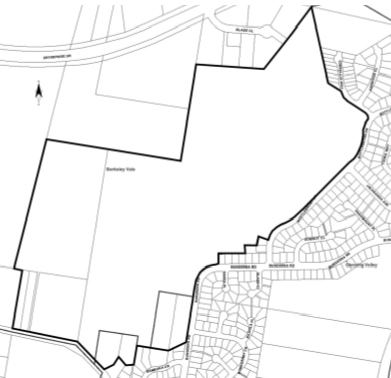
Figure 1 – Land the subject of the Glenning Valley Rezoning
The relevant applications on the rezoned land are as follows:
· DA/1438/2015 – 127 lot subdivision of 79 Berkeley Road Berkeley Vale – Approved by Land and Environment Court 9 November 2017.
· DA/98/2016 - Eight lot subdivision of 65 Bundeena Road Glenning Valley –– Deferred Commencement Approval.
· DA/1057/2018 – Two lot subdivision of 31 Bemboka Crescent Glenning Valley with a right of carriageway over 79 Berkeley Road to enable legal access – Approved 14 December 2017.
· DA/1058/2018 - 15 lot subdivision on proposed lot 2 of the subdivision of 31 Bemboka Crescent Glenning Valley – Approved by Land and Environment Court 29 June 2018.
· DA/326/2018 – 45 lot subdivision at 87 Berkeley Road Berkeley Vale – Approved 13 November 2019.
· DA/465/2020 – 97 lot subdivision at 5 Scribbly Gum Street Berkeley Vale – Approved by Land and Environment Court 6 May 2021.
The Glades Estate is comprised of the following subdivisions (also listed above):
· DA/1438/2015 – 127 lot subdivision of 79 Berkeley Road Berkeley Vale.
· DA/1057/2018 – Two lot subdivision of 31 Bemboka Crescent Glenning Valley with a right of carriageway over 79 Berkeley Road to enable legal access.
· DA/1058/2018 - 15 lot subdivision on proposed lot 2 of the subdivision of 31 Bemboka Crescent Glenning Valley.
· DA/465/2020 – 97 lot subdivision at 5 Scribbly Gum Street Berkeley Vale.
Current Status
Although some properties in the new subdivisions are in the suburb of Berkeley Vale, the development known as The Glades Estate, was marketed and sold as being within the suburb of Glenning Valley.
Council has subsequently received multiple submissions from the developer and property owners requesting the realignment of the Glenning Valley suburb boundary to incorporate all properties within the Glades Estate development.
In addition to the community sentiment, the existing suburb boundary is based on previous subdivisions and no longer relevant to the current road and lot patterns. The boundary is not compliant with NSW Addressing requirements and is causing confusion for residents as the exact boundary location is not easy to determine.
In particular, three streets within The Glades Estate are contained in both the Glenning Valley and Berkeley Vale suburb boundaries. These streets are Sandalwood Close, White Fig Drive and Torrellia Way.
Report
The Glennning Valley suburb boundary realignment is proposed in accordance with Section 6.8 of the NSW Address Policy and User Manual. Below is an extract of key principles for the determination of suburb boundaries as outlined in Section 6.8.5:
· Address locality boundaries shall follow clear and easily distinguishable lines such as rivers, railways, major road centrelines
· Address locality boundaries shall not bisect properties in common ownership and shall not bisect individual land parcels
· Boundaries should be regularly reviewed, especially in areas subject to urban development. The review process should take into primary consideration impacts on community interests. Following this, consideration can be given to the likely impact on government and commercial interests
· Address localities should be reflected in the address of any given site. A boundary adjustment may be required if the address locality of the access point to a site is not concurrent with the address locality for the site being addressed.
(Section 6.8 Principles of Address Locality Naming - Section 6.8.5 Boundary Determination).
The realignment will enable easy identification of properties within a common geographical location and minimise confusion for residents, service providers and emergency services.
A total of 150 properties are proposed to be incorporated into the suburb of Glenning Valley from the neighbouring suburbs of Berkeley Vale and Fountaindale. An overview of these properties is shown below.
· properties within the Glades Estate currently located in the suburb of Berkeley Vale
· properties located south of Blade Close and Enterprise Drive, which will enable the suburb boundary to clearly follow the main road centreline of Enterprise drive
· properties currently within the suburb of Fountaindale (Lot 101 DP 1112621, Lot 501 DP 1134328, Lot 502 DP 1134328, Lot 503 DP 1134328, Lot 4 DP 1200585, Lot 1 DP 1200585, Lot 95 DP 755263 (Crown Land)
It should be noted the lots surrounding Blade Close have not been included in the redefinition as this land is zoned industrial and contextually relates to other land in Berkeley Vale.
Further detailed outline of affected properties and boundary locations are provided in the following attachments.
Attachment 1 – Existing Suburb Boundary
Attachment 2 – Proposed Suburb Boundary
Attachment 3 – Table 1 - Proposed Properties to be included in Glenning Valley
Torrellia Way
As part of the Glades Estate subdivision, the creation of new allotments in Torrellia Way has resulted in non-compliant and inconsistent street addressing, which has become problematic for owners and residents.
It is proposed to renumber the street in its entirety to ensure that the addressing is sequential and complies with the Australian/New Zealand Standards AS/NZS 4819:2011 – Rural and urban addressing, NSW Address Policy and NSW Retrospective Address Policy.
Re-numbering will also assist with the timely location of these properties for service providers and emergency services.
As an interim measure to ensure the identification of the new allotments in Torrellia Way Council provided tentative addresses for the residents using the property’s lot number.
Detailed outline of the proposed numbering is provided in the following attachments.
Attachment 4 – Torrellia Way Current Addressing
Attachment 5 – Torrellia Way Proposed Addressing
Consultation
Multiple property owners and residents have contacted Council to request the boundary review and readdressing of Torrellia Way.
A 28-day consultation period will commence in February 2022. During this period, further comments are to be sought from affected property owners and from other Government Departments. Each property owner will be provided a letter with their proposed address.
Following the consultation period and approval of the Council, the suburb boundary proposal will be submitted to the Geographical Names Board for approval.
Financial Considerations
At its meeting held 19 October 2020, Council resolved the following:
1108/20 That any motions put before Council for the remainder of this term of Council that have financial implications require the Chief Executive Officer to provide a report on how those additional costs will be met.
The following statement is provided in response to this resolution of Council.
The recommendation does not impact on Council’s financial position.
Link to Community Strategic Plan
Theme 1: Belonging
|
Goal G: Good governance and great partnerships |
|
B-A1: Work within our communities to connect people, build capacity and create local solutions and initiatives. |
Risk Management
Should the Council not approve the realignment of the boundary and/or the renumbering of Torrellia Way there is a risk of properties being unable to be identified in the event of emergency.
Options
1 Approve the proposal to realign the Glenning Valley, Berkeley Vale and Fountaindale suburb boundary. This is the recommended option.
2 Do nothing to address the anomalies and difficulties may remain.
|
1⇨ |
Existing Suburb Boundary |
Provided Under Separate Cover |
D14955521 |
|
2⇨ |
Proposed Suburb Boundary |
Provided Under Separate Cover |
D14955524 |
|
3⇨ |
Proposed Properties to be included in Glenning Valley |
Provided Under Separate Cover |
D14955527 |
|
4⇨ |
Existing House Numbering Torrellia Way |
Provided Under Separate Cover |
D14955530 |
|
5⇨ |
Proposed Numbering Torrellia Way |
Provided Under Separate Cover |
D14955542 |
|
Item No: 2.8 |
|
|
Title: Budget Amendment for Development Assessment Unit |
|
|
Department: Environment and Planning |
|
|
14 December 2021 Ordinary Council Meeting |
|
Reference: F2021/00033 - D14912399
Author: Andrew Roach, Unit Manager, Development Assessment
Executive: David Milliken, Director Environment and Planning (Acting)
1 That Council agree to an adjustment to the budget by increasing Employee Costs of the Development Assessment Unit by $900,000 to be offset by a $900,000 reduction in the Materials & Services Budget Line Item.
2 That Council note that the Development Assessment Unit Employee Costs budget will be kept under review and a further report be brought to Council in approximately twelve months’ time.
|
To request an adjustment to the budget.
Executive Summary
The purpose of this report is to seek an adjustment to the budget, by increasing Employee Costs of the Development Assessment Unit by $900,000 to be offset by a $900,000 reduction in the Materials & Services budget Line Item. |
Background
Additional development application fees and associated charges had been received over and above that which was anticipated in the budget during the first quarter of 2021-22. This is a result of strong activity in the building/construction sector which is expected to remain strong for the foreseeable future. Q1 budget adjustments were made as a result of this unanticipated uplift in fees and charges.
The purpose of this report is to seek an adjustment to the budget, by increasing Employee Costs of the Development Assessment Unit by $900,000 to be offset by a $900,000 reduction in the Materials & Services Budget Line Item.
This adjustment would have the effect of permitting additional FTE to be secured for the Development Assessment Unit, increasing the capacity of Councils development assessment functions to cater for the demand in the building/construction sector and Councils legislated obligations as set out under the Environmental Planning & Assessment Act 1979. It is anticipated that any FTE uplift would be for a temporary period only (maximum 2 years) with the employee costs budget being reviewed as part of the annual review cycle.
Consultation
Consultation has been undertaken internally with Councils Senior Financial Project Coordinator and Senior Busines Partner (People & Culture), who support the recommendation.
Financial Considerations
At its meeting held 19 October 2020, Council resolved the following:
1108/20 That any motions put before Council for the remainder of this term of Council that have financial implications require the Chief Executive Officer to provide a report on how those additional costs will be met.
The following statement is provided in response to this resolution of Council:
The proposal is an adjustment to the budget, by increasing Employee Costs of the Development Assessment Unit by $900,000 to be offset by a $900,000 reduction in the Materials & Services Budget Line Item.
Link to Community Strategic Plan
Theme 4: Responsible
|
Goal I: Balanced and sustainable development |
|
R-I4: Provide a range of housing options to meet the diverse and changing needs of the community and there is adequate affordable housing. |
Risk Management
In terms of proceeding with the budget amendment as proposed, the primary risk is that the currently experienced uplift in fees does not continue as anticipated resulting in financial risk and over-spend in the budget. If such a drop in fees were to occur, there are potentially mechanisms to arrest over-spend, including savings from other budget areas and natural staff turnover within the Unit.
Attachments
Nil.
|
Item No: 2.9 |
|
|
Title: Proposed Council Meeting Dates 2022 |
|
|
Department: Corporate Affairs |
|
|
14 December 2021 Ordinary Council Meeting |
|
Reference: F2021/00035 - D14433686
Author: Rachel Callachor, Meeting Support Officer
Manager: Edward Hock, Unit Manager, Governance and Legal Counsel
Executive: Natalia Cowley, Director Corporate Affairs and Chief Financial Officer
1 That Council adopt the proposed Ordinary Council Meeting dates for 2022.
2 That Council, in accordance
with clause 232 of the NSW Local Government (General) Regulation 2005, publish
the 2022 Ordinary Council Meeting dates in the local newspaper.
3 That Council note the schedule will require amendments following the announcement of the date for the 2022 Local Government Election for the Central Coast. This information is to be provided by way of a further report to Council.
Report purpose
To determine the Ordinary Council Meeting dates for 2022.
Executive Summary
Council’s Code of Meeting Practice states at Clause 3.1 in part
Ordinary Meetings of Council will be held on the second and fourth Mondays of the months of February to November inclusive and on the second Monday of the month of December…
At its Ordinary Meeting of 27 April 2021,
Council resolved in part
118/21
- That Council Meetings be conducted on Tuesdays during the period of
Administration
Section 365 of the Local Government Act 1993 states that Council is required to meet at least 10 times each year, each time in a different month. The proposed schedule meets the requirements of the Act. The schedule will require amendments following proposed changes to the Code of Meeting Practice, which are included in a separate report to Council. The schedule will also require amendments following the announcement of the date for the 2022 Local Government Election for the Central Coast. The changes, to be provided by way of a further report to Council, will indicate the meetings that will be held under ‘caretaker period’ and nominate the meetings proposed for the conduct of the Mayoral Election. It may also be necessary to amend some Ordinary Meeting dates, relative to the date of the LGA election.
Meeting Location - The location of meetings will be 2 Hely Street Wyong.
25 January 2022
To present monthly Investment Reports in accordance with cl. 212 of the Local Government (General) Regulation 2005 which states as follows:
1 The responsible accounting officer of a council
a must provide the council with a written report (setting out details of all money that the council has invested under section 625 of the Act) to be presented—
i. if only one ordinary meeting of the council is held in a month, at that meeting, or
ii. if more than one such meeting is held in a month, at whichever of those meetings the council by resolution determines, and
b must include in the report a certificate as to whether the investment has been made in accordance with the Act, the regulations and the council's investment policies.
2 The report must be made up to the last day of the month immediately preceding the meeting.
12 July 2022
Council is aware that a quorum will not be available on this date and it is proposed to hold only one meeting in July.
25 October 2022
LGNSW 2022 Annual Conference
The Local Government NSW Annual Conference is being held on 23 – 25 October 2022.
The meeting that
would have been scheduled for 25 October will be not be held and it is proposed
to hold only one meeting in October.
Local Government Election
Meeting dates and schedule information is subject to change following the announcement of the 2022 Local Government election date for the Central Coast, as detailed in this report.
Proposed Schedule
The schedule of proposed Ordinary Council Meetings for Central Coast Council for 2022 is as follows:
|
Time |
Location |
|
|
25 January 2022 |
6.30pm |
2 Hely Street, Wyong |
|
8 February 2022 |
6.30pm |
2 Hely Street, Wyong |
|
22 February 2022 |
6.30pm |
2 Hely Street, Wyong |
|
8 March 2022 |
6.30pm |
2 Hely Street, Wyong |
|
22 March 2022 |
6.30pm |
2 Hely Street, Wyong |
|
12 April 2022 |
6.30pm |
2 Hely Street, Wyong |
|
26 April 2022 |
6.30pm |
2 Hely Street, Wyong |
|
10 May 2022 |
6.30pm |
2 Hely Street, Wyong |
|
24 May 2022 |
6.30pm |
2 Hely Street, Wyong |
|
14 June 2022 |
6.30pm |
2 Hely Street, Wyong |
|
28 June 2022 |
6.30pm |
2 Hely Street, Wyong |
|
26 July 2022 |
6.30pm |
2 Hely Street, Wyong |
|
9 August 2022 |
6.30pm |
2 Hely Street, Wyong |
|
23 August 2022 |
6.30pm |
2 Hely Street, Wyong |
|
13 September 2022 |
6.30pm |
2 Hely Street, Wyong |
|
27 September 2022 |
6.30pm |
2 Hely Street, Wyong |
|
11 October 2022 |
6.30pm |
2 Hely Street, Wyong |
|
8 November 2022 |
6.30pm |
2 Hely Street, Wyong |
|
22 November 2022 |
6.30pm |
2 Hely Street, Wyong |
|
13 December 2022 |
6.30pm |
2 Hely Street, Wyong |
Local Government Election
The following information is provided with the context that an election is proposed to be called for Central Coast Local Government Area (LGA) in 2022.
Amendments to meeting schedule
A further report will be provided to Council following the announcement of the date for the election, with amendments to the Ordinary Council Meeting schedule to include:
· Any changes required to the adopted schedule of Ordinary Council Meeting dates, relative to the date for the LGA election.
·
Notations that indicate which meetings will be
held under ‘caretaker period’ prior to the election and the meeting
dates proposed* for the conduct of the Mayoral Election, held after the
declaration of polls, in accordance with section 290 of the Local Government Act
1993.
*Confirmation will be provided on Council’s website.
It is noted that should Extraordinary Council Meetings be called, notice will be provided in line with Council’s Code of Meeting Practice.
Caretaker Period
Local Councils are required to assume a
caretaker role during the election period to ensure that major decisions are
not made which would limit the actions of an incoming Council. Clause 393B
of the Local
Government (General) Regulation 2005 states that the caretaker
period commences four weeks preceding the date of the Local Government
Election.
In addition to ensuring Council does not make major decisions that would limit the actions of an incoming Council, Clause 393B requires that the Council, the Chief Executive Officer or any other delegate of the Council (other than a Local Planning Panel or Joint Regional Planning Panel) must not exercise the following specific functions during the four weeks preceding an ordinary election (known as the “Caretaker period”):
·
Determining a controversial development
application, except where a failure to make such a determination would give
rise to a deemed refusal, or such a deemed refusal arose before the
commencement of the caretaker period.
The term “controversial development application” is defined as one
for which at least 25 persons have made submissions by way of objection.
· Appointing or renewing the appointment of the Chief Executive Officer or terminating their employment. (This does not include the appointment of an acting or temporary Chief Executive Officer).
In particular cases these functions may be exercised with the approval of the Minister for Local Government pursuant to Clause 393B(2) of the Local Government (General) Regulation 2005.
Financial Considerations
At its meeting held 19 October 2020, Council resolved the following:
1108/20 That any motions put before Council for the remainder of this term of Council that have financial implications require the Chief Executive Officer to provide a report on how those additional costs will be met.
The following statement is provided in response to this resolution of Council.
Budget for advertising of Council Meeting Dates is provided in the Civic Support team 2021/2022 budget.
Link to Community Strategic Plan
Theme 4: Responsible
|
Goal G: Good governance and great partnerships |
|
R-G2: Communicate openly and honestly with the community to build a relationship based on transparency, understanding, trust and respect. |
Options
1 Council
could resolve to adopt the 2022 Ordinary Council Meeting schedule and note the
related further actions as detailed in this report. This is the recommended
option.
2 Council
could resolve to partially adopt an Ordinary Council Meeting schedule for
2022. While this option provides some certainty regarding Council meeting
dates for a specified period, it is less favourable as it reduces the capacity
for forwarding planning.
3 Council could resolve to not adopt a 2022 Ordinary Council Meeting schedule at this time. This option is not recommended as this does not provide any outcomes regarding Council meeting dates for the upcoming calendar year and will therefore require this matter be revisited as a priority.
Critical Dates or Timeframes
A schedule of 2022 Ordinary Council Meeting dates should be adopted no later than December 2021. This will enable finalisation and publication of the meeting dates in the local newspaper and online.
Attachments
Nil.
|
Item No: 2.10 |
|
|
Title: Amendment to Code of Meeting Practice |
|
|
Department: Corporate Affairs |
|
|
14 December 2021 Ordinary Council Meeting |
|
Reference: F2004/06502 - D14944594
Author: Kathy Bragg, Senior Governance Officer
Manager: Edward Hock, Unit Manager, Governance and Legal Counsel
Executive: Natalia Cowley, Director Corporate Affairs and Chief Financial Officer
1 That in accordance with section 361 of the Local Government Act the amended Code of Meeting practice as set out in this Report be placed on public exhibition for a period of not less than 28 days, with submissions accepted for a period of not less than 42 days.
2 That in accordance with section 362 of the Local Government Act a further report be provided to Council following the conduct of the public exhibition period.
|
Report purpose
To amend the Code of Meeting Practice:
1 To incorporate the changes made to the Model Code of Meeting Practice for Local Councils in NSW by the NSW Office of Local Government; 2 For Council Meetings to be conducted monthly on the fourth Tuesday of the month; and 3 To remove the non-mandatory provisions for Public Forums from the Code of Meeting Practice.
Executive Summary
Following extensive consultation by the NSW Office of Local Government, a new Model Code of Meeting Practice (Model Code) has been finalised and has been prescribed under the Local Government (General) Regulation 2021. Council’s Code of Meeting Practice has been amended to include the new provisions set out in the Model Code.
Ordinary Meetings of Council are currently conducted twice per month, with one meeting held in the month of December. It is proposed to hold Ordinary Council Meetings once per month to reduce the cost and administrative burden on Council staff. It is proposed to remove the non-mandatory provisions for Public Forums from the Code of Meeting Practice and, instead, have those provisions incorporated into a separate Public Forum Policy to be adopted at the same time as any amended Code of Meeting Practice. |
Current Status
Changes to the Model Code of Meeting Practice for Local Council in NSW
The new Model Code contains new provisions that allow councils to permit individual councillors to attend meetings by audio-visual link and to hold meetings by audio-visual link in the event of natural disasters or public health emergencies. The provisions governing attendance at meetings by audio-visual link are non-mandatory. Councils can choose not to adopt them or to adapt them to meet their own needs.
Amendments have also been made to the provisions governing the webcasting of meetings and disorder at meetings to reflect amendments to the Regulation since the previous iteration of the Model Meeting Code was prescribed. An amendment has also been made to the Model Code implementing recommendation 6 in the ICAC’s report in relation to its investigation of the former Canterbury City Council (Operation Dasha). ICAC recommended that the Model Code be amended to require that council business papers include a reminder to councillors of their oath or affirmation of office, and their conflict of interest disclosure obligations.
The repeal date for section 237 of the Regulation which exempts councils from the requirement under clause 5.3 of the previous iteration of the Model Code for councillors to be personally present at meetings in order to participate in them has been extended to 30 June 2022. This is to allow councils additional time to exhibit and adopt new codes of meeting practice containing provisions allowing attendance by audio-visual link at meetings. If councils have not adopted a new meeting code that allows councillors to attend meetings by audio-visual link, they will not be permitted to do so after that date.
Councils must adopt a code of meeting practice that incorporates the mandatory provisions of the Model Meeting Code within 12 months of the local government elections. A council’s adopted meeting code must not contain provisions that are inconsistent the mandatory provisions.
Meeting frequency
Council’s Code of Meeting Practice currently states at Clause 3.1:
3.1 Ordinary Meetings of Council will be held on the second and fourth Mondays of the months of February to November inclusive and on the second Monday of the month of December 2 Hely Street, Wyong commencing at 6.30pm.
(a) Council Meetings are to be conducted on Tuesdays during the period of Administration.
It is proposed to amend the Code of Meeting Practice as follows:
(a) Council Meetings are to be conducted on Tuesdays during
the period of Administration.
Public Forums
Council’s Code of Meeting Practice currently contains Section 4 - Public Forums. This Section contains non-mandatory provisions from the Model Code. It is proposed to remove Section 4 from the Code of Meeting Practice.
The provisions currently contained in Section 4 will be included in a new policy for Public Forums. This policy will be the subject of a future report to Council and is intended to be adopted concurrently with any amended Code of Meeting Practice, so as to ensure ongoing public access to Ordinary Council Meetings.
The amended Code of Meeting Practice is attached to this
report with deletions in strikethrough and additions in bold and
italics.
The mandatory provisions from the Model Code are in red bold and italics in the attached amended Code of Meeting Practice.
The non-mandatory provisions from the Model Code are in green bold and italics in the attached amended Code of Meeting Practice.
The amended provisions proposed by Council are in black bold and italics in the attached amended Code of Meeting Practice.
Report
Ordinary Meetings of Council are currently conducted twice per month, with one meeting held in the month of December.
Due to Council’s current financial situation, Council is looking at every opportunity for reducing costs. Currently, conducting two Ordinary Council Meetings per month, the approximate cost of conducting a three-hour Council Meeting is just over $6,000. The breakdown of resources includes:
Preparation of Agenda Paper: 29 hours
Conduct of Council Meeting: Average 47 hours
Preparation and Dissemination of Council Minutes: Eight and half hours
By reducing the number of Council Meetings to one per month, it is anticipated there would be an approximate cost saving to Council of $4,000 per month, or $44,000 annually.
The NSW Local Government Act (the Act) states at Section 365:
365 How often does the council meet?
The council is required to meet at least 10 times each year, each time in a different month.
By conducting its Ordinary Meetings monthly from February to December, Council would remain compliant with the Act as it would be holding at least 11 Council meetings.
Since 1 June 2021 there have been, on average, seven Council Reports for discussion at each Ordinary Council Meeting. Based on these averages, by conducting the Council Meetings monthly, there would be approximately 14 Council Reports for discussion at each Ordinary Meeting, which is considered appropriate.
Should an urgent matter arise which requires a resolution of Council prior to the next monthly Ordinary Council Meeting, the Administrator, or an incoming Mayor, is entitled, under clause 3.4 of Council’s Code of Meeting Practice, to call for an Extraordinary Council Meeting to be held.
Consultation
Sections 361 and 362 of the Act provide the preparation and exhibition of an amended Code of Meeting Practice.
Section 361 of the Act states that after public notice is given, the period of public exhibition must not be less than 28 days. The public notice is to specify a period of not less than 42 days during which submissions may be made.
Section 362 of the Act then provides that Council is to consider submissions received prior to adopting the amended Code as the Code of Meeting practice.
Financial Considerations
At its meeting held 19 October 2020, Council resolved the following:
1108/20 That any motions put before Council for the remainder of this term of Council that have financial implications require the Chief Executive Officer to provide a report on how those additional costs will be met.
The following statement is provided in response to this resolution of Council.
By making the proposed amendment to Council’s Code of Meeting Practice, Council would be making an approximate saving of $4,000 per month.
Link to Community Strategic Plan
Theme 4: Responsible
|
Goal G: Good governance and great partnerships |
|
R-G2: Communicate openly and honestly with the community to build a relationship based on transparency, understanding, trust and respect. |
Options
Council may determine the following:
1 To amend the Code of Meeting Practice with only the mandatory and non-mandatory provisions from the Model Code of Meeting Practice for NSW Councils and proceed with public exhibition.
2 To amend the Code of Meeting Practice with all proposed provisions and proceed with public exhibition. This is the recommended option.
|
1⇨ |
Amended Code of Meeting Practice for Public Exhibition - December 2021 |
Provided Under Separate Cover |
D14899598 |
|
Item No: 2.11 |
|
|
Title: Governance Lighthouse report as at 30 September 2021 |
|
|
Department: Corporate Affairs |
|
|
14 December 2021 Ordinary Council Meeting |
|
Reference: F2020/02182 - D14906796
Author: Edward Hock, Unit Manager, Governance and Legal Counsel
Executive: Natalia Cowley, Director Corporate Affairs and Chief Financial Officer
That Council note the Governance Lighthouse report as at 30 June 2021 as provided as Attachment 1 to this report.
|
Report purpose
To provide a Governance Lighthouse report as at 30 September 2021 for the information of Council.
Executive Summary
As resolved by Council, a quarterly Governance Lighthouse report is provided to Council for information.
The key points noted in the report are:
· The number of Code of Conduct complaints declined quarter on quarter, and remains lower than earlier years on average. Tier one complaints declined, and resolution rate at first point of contact remained at 100%. · There has been a slight decrease in the volume of formal and informal requests for information, but response times and review requests have increased. · There was 100% compliance with mandatory statutory reporting deadlines.
The report will continue to be provided quarterly, until such time as Council is able to provide governance reporting in a dashboard format. |
Background
The report is updated at the end of each quarter in accordance with the Council resolution of 27 July 2020 and provided to the Audit, Risk and Improvement Committee and then to Council.
The report is based upon the NSW Audit Office Governance Lighthouse themes and areas. Data is provided where appropriate with commentary.
Financial Considerations
At its meeting held 19 October 2020, Council resolved the following:
1108/20 That any motions put before Council for the remainder of this term of Council that have financial implications require the Chief Executive Officer to provide a report on how those additional costs will be met.
The following statement is provided in response to this resolution of Council.
There is no financial impact as a result of this report.
Link to Community Strategic Plan
Theme 4: Responsible
|
Goal G: Good governance and great partnerships |
|
R-G2: Communicate openly and honestly with the community to build a relationship based on transparency, understanding, trust and respect. |
|
1⇨ |
Governance Lighthouse Report as at 30 September 2021 |
Provided Under Separate Cover |
D14954934 |
|
Item No: 2.12 |
|
|
Title: Administrator Expenses and Facilities Report to 31 October 2021 |
|
|
Department: Corporate Affairs |
|
|
14 December 2021 Ordinary Council Meeting |
|
Reference: F2020/00034 - D14906237
Author: Lisa Martin, Civic Support Officer
Manager: Edward Hock, Unit Manager, Governance and Legal Counsel
Executive: Natalia Cowley, Director Corporate Affairs and Chief Financial Officer
That Council note the report
Administrator Expenses and Facilities Report to
31 October 2021.
|
Report purpose
The purpose of this information report is to table the provision of expenses and facilities to the Administrator for the period 3 May 2021 to 31 October 2021 as required under clause 122 of the Councillor Expenses and Facilities Policy.
Executive Summary
This information report provides a summary of Administrator Expenses and Facilities for the period 3 May 2021 to 31 October 2021. It is recommended that it be noted. |
Background
At its Ordinary Meeting 10 August 2020 Council resolved as follows:
754/20 That Council note that the Councillor Expenses and Facilities Policy requires at Clause 122 detailed reports on the provision of expenses and facilities to Councillors to be publicly tabled at a Council meeting every six months and published in full on Council’s website.
755/20 That Council resolve that as part of that six monthly report there be the following information:
· Statistics regarding Councillor requests including the number of requests submitted by Councillor
· Details of Councillor attendance at Council Meetings
· Details of Councillor attendance at Briefings or Workshops
· Details of Councillor attendance at weekly CEO Updates
· Details of Councillor attendance at Advisory Group meetings of which they are members
· Details of Councillor access to the HUB and review of relevant documents
Current Status
Councillors were suspended on 30 October 2020. On 26 April 2021 the NSW Government announced a Public Inquiry into Central Coast Council and the further suspension of Councillors.
The appointment of the Administrator by the Minister for Local Government provides that expenses for the Administrator are determined in accordance with Council’s policy under section 252 of the Local Government Act 1993.
Central Coast Council adopted a Councillors
Expenses and Facilities Policy (the Policy) on
23 November 2020 to enable the reasonable and appropriate reimbursement of
expenses and provision of facilities to Councillors, to help them undertake
their civic duties.
The Policy was drafted in accordance with the Local Government Act 1993 and Local Government (General) Regulation 2005 and complies with the Office of Local Government’s Guidelines for the payment of expenses and provision of facilities to Mayors and Councillors in NSW.
Expenses and Facilities
To ensure accountability and transparency, and to align the costs incurred with community expectations, the Policy provides at clause 120:
120 Detailed reports on the provision of expenses and facilities to Councillors will be publicly tabled at a Council meeting every six months and published in full on Council’s website. These reports will include expenditure summarised by individual Councillor and as a total for all Councillors.
Table 1 is provided to Council to satisfy the requirements of clause 120 of the Policy for the six-month period from 3 May 2021 to 31 October 2021.
This report covers the period both Mr Rik Hart and Mr Dick Persson, AM were in the role of Interim Administrator. Mr Hart was appointed in April 2021 and commenced the role 13 May 2021, following Mr Persson, AM completing his time in the role on 12 May 2021.
Table 1 Administrator Expenses
|
General Travel Expenses |
Interstate, Overseas and Long Distance Travel Expenses |
Accommodation and Meals |
Professional Development |
ICT Expenses and Services |
Carer Expenses |
Home Office Expenses |
|
$2320 |
$0 |
$8800 |
$1050 |
$176 |
$0 |
$143 |
In accordance with the Policy, the Administrator has been provided the following facilities to effectively discharge his civic duties:
· A motor vehicle with a fuel card
· A parking space at Council’s offices
· A furnished office with computer, telephone and meeting space at Council’s
· offices
· A small number of staff providing support
Councillor Attendance and Requests
Due to the further suspension of Councillors, this report on
the period 3 May 2021 to
29 October 2021 does not provide detail on Councillor Attendance and Requests
as per the resolution of 10 August 2020.
Financial Considerations
At its meeting held 19 October 2020, Council resolved the following:
1108/20 That any motions put before Council for the remainder of this term of Council that have financial implications require the Chief Executive Officer to provide a report on how those additional costs will be met.
The following statement is provided in response to this resolution of Council.
Table 1 provides information on expenses already incurred and does not propose any future expenditure. This expenditure is within the budgeted parameters and in accordance with the adopted Policy.
The suspension of Councillors has continued the result of net savings to Council.
Link to Community Strategic Plan
Theme 4: Responsible
|
Goal G: Good governance and great partnerships |
|
R-G2: Communicate openly and honestly with the community to build a relationship based on transparency, understanding, trust and respect. |
Timeframes
Reports to Council will be provided every six months. The last report was provided to the Council Meeting of 29 June 2021 for a six-month period to 2 November 2020 to 30 April 2021 whilst Mr Persson, AM was in the role of Administrator.
Nil.
|
Item No: 2.13 |
|
|
Title: LG Remuneration Tribunal annual determination review 2022 |
|
|
Department: Corporate Affairs |
|
|
14 December 2021 Ordinary Council Meeting |
|
Reference: F2021/00035 - D14918366
Author: Edward Hock, Unit Manager, Governance and Legal Counsel
Executive: Natalia Cowley, Director Corporate Affairs and Chief Financial Officer
That Central Coast Council do not make a submission to The Tribunal regarding categorisation, fees and any general matters as part of this review.
|
Report purpose
To recommend that Central Coast Council does not make a submission to The Local Government Remuneration Tribunal as part of the review for the 2022 annual determination.
Executive Summary
The Local Government Remuneration Tribunal has written to advise it has commenced its review for the 2022 annual determination. |
Background
Pursuant to s. 241 of the Local Government Act 1993 (LG Act), the Tribunal is required to make an annual determination, by no later than 1 May 2022, on the fees payable to Councillors and Mayors to take effect from 1 July 2022.
As part of the 2022 review, the Tribunal will consider any requests to review the categorisation of individual councils if there is a strong case to do so. Any requests for a review should be supported by evidence which would indicate that the council is more appropriately allocated to another category based on the criteria.
The Tribunal invites submissions from individual councils regarding categorisation, fees and any general matters as part of this review. It is expected that submissions are endorsed by their respective council. Any submission the Council may wish to make should be received by no later than Friday 11 February 2022.
Current Status
Given Council remains under Administration, and will remain so until at least 8 June 2022, it is not recommended that submissions be made in relation to fees payable to councillors. Below are the current fees as determined by the 2021 review:
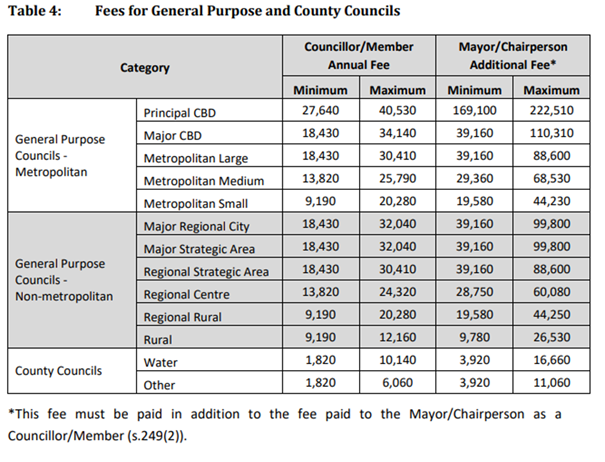
Further, Council successfully advocated for a change to its categorisation as part of the 2020 review, it is not considered reasonable or necessary at this early stage to advocate for a further change.
Financial Considerations
At its meeting held 19 October 2020, Council resolved the following:
1108/20 That any motions put before Council for the remainder of this term of Council that have financial implications require the Chief Executive Officer to provide a report on how those additional costs will be met.
The following statement is provided in response to this resolution of Council.
There is no financial impact in not making a submission to the Tribunal.
Once a new determination is made by the Tribunal a report will be provided to Council to determine the fee for the coming year. This report will have a financial impact. In making the determination for 2021/22 the Council may consider applying a lower fee given the Council’s financial position and community expectations.
Link to Community Strategic Plan
Theme 4: Responsible
|
Goal G: Good governance and great partnerships |
|
R-G2: Communicate openly and honestly with the community to build a relationship based on transparency, understanding, trust and respect. |
Options
1 The Administrator may wish to make submissions to the Tribunal. This is not the recommended option.
2 The Administrator may consider that there is no benefit or utility in making submissions to the Tribunal this year. This is the recommended option.
Critical Dates or Timeframes
Any submission the Council may wish to make should be received by no later than Friday 11 February 2022.
|
1⇨ |
2022 Letter to Councils seeking submissions |
Provided Under Separate Cover |
D14918348 |
|
Item No: 2.14 |
|
|
Title: Use of Domestic Waste Restricted Funds for Fleet Capital Purchases |
|
|
Department: Corporate Affairs |
|
|
14 December 2021 Ordinary Council Meeting |
|
Reference: F2020/00755 - D14954542
Author: Paul Ogden, Section Manager Fleet Services
Manager: Peter Armour, Unit Manager Plant and Fleet
Executive: Natalia Cowley, Director Corporate Affairs and Chief Financial Officer
That Council transfer $1.19M from the Domestic Waste Fund to General Fund as a contribution for the programmed purchase of six fleet assets due for renewal within the current financial year.
|
Report purpose
To seek approval for transfer of funds from the Domestic Waste Fund (DWF) to the General Fund (GF), as a contribution toward the purchase of fleet assets used in the processing of domestic waste at Council waste management sites.
Executive Summary
Following recent receipt of legal advice indicating permissible use of the DWF to fund purchase of fleet assets used for legitimate DWF activities and to aid in the preservation of the GF, approval is sought to transfer a sum of $1.19M from the DWF to GF as a contribution for the programmed purchase of six (6) fleet assets due for renewal within the current financial year. |
Background
Historically, new, and renewed fleet assets are purchased by the Plant and Fleet Unit (P&F) in accordance with the P&F annual Asset Delivery Program, are wholly funded from Council’s GF.
Recent legal advice was received by Council indicating permissible use of the DWF to fund purchase of fleet assets used for legitimate DWF activities and use of such funds will aid in the preservation of the GF.
Waste management facility fleet assets with a total capital value of $2.4M to are programmed to be renewed within the current financial year and include one hydraulic excavator, one traxcavator, one loader, one compaction roller and one generator trailer.
The DWF contribution being sought reflects each fleet asset’s respective waste management facility’s percentage of domestic waste processed as a percentage of total waste processed. The capital contribution for commercial waste processing will remain unchanged and be funded wholly from the GF.
To compensate for an upfront contribution from the DWF toward the purchase of waste management facility fleet assets, P&F will apply an internal hire fee discount for the duration of the assets’ service lives, thus reducing the internal hire fee of these as compared to similar assets funded wholly from the GF.
Current Status
The percentage share of domestic waste to total waste processed at each of Council’s landfill facilities is presently assessed as follows:
· Woy Woy: 64.66%
· Buttondery: 49.33%
Consultation
Consultation has occurred between Director Corporate Affairs and Chief Financial Officer, Director Infrastructure Services, Unit Manager Waste and Resource Recovery and external legal advisory source supporting the use of the DWF restricted funds for the purpose proposed in this report.
Financial Considerations
At its meeting held 19 October 2020, Council resolved the following:
1108/20 That any motions put before Council for the remainder of this term of Council that have financial implications require the Chief Executive Officer to provide a report on how those additional costs will be met.
The following statement is provided in response to this resolution of Council.
This report seeks a contribution of $1.19M is transferred from the DWF to the GF to facilitate the purchase of fleet assets used to process domestic waste at Council’s waste management facilities.
Link to Community Strategic Plan
Theme 4: Responsible
|
Goal G: Good governance and great partnerships |
|
R-G4: Serve the community by providing great customer experience, value for money and quality services. |
Risk Management
This proposal reduces the financial impact to the GF associated with purchase of fleet assets used in Council’s waste facilities and leverages the use of an alternate funding source via the DMF of which Council has received advice supporting its permissible use for the purposes outlined.
Options
1 Continue to fund capital purchases of waste facility fleet assets wholly from the GF and maintain a non-discounted internal hire fee for use of these assets.
2 Transfer $1.19M from the DWF to GF as a contribution toward the purchase of six fleet assets due for renewal within the current financial year and apply a discounted internal hire fee for use of these assets. This is the recommended option.
Critical Dates or Timeframes
Approval required prior to next quarterly budget review.
Attachments
Nil.
|
Item No: 2.15 |
|
|
Title: 2020-2021 Financial Reports - Audit Extension |
|
|
Department: Corporate Affairs |
|
|
14 December 2021 Ordinary Council Meeting |
|
 Reference: F2021/01155 - D14966141
Author: Mellissa McKee, Financial Controller
Manager: Tony Dibbenhall, Unit Manager Finance
Executive: Natalia Cowley, Director Corporate Affairs and Chief Financial Officer
1 That Council note that the Audit Office of New South Wales has requested Council seek an extension to lodge its audited 2020-2021 Financial Reports with NSW Office of Local Government.
2 That Council note that an extension until 28 February 2022 has been submitted to NSW Office of Local Government to lodge Central Coast Council’s audited 2020-2021 Financial Reports.
|
Report purpose
To advise Council that a request has been received from the Audit Office of New South Wales for Council to make application to the NSW Office of Local Government (OLG) for an extension in time from 17 December 2021 to 28 February 2022 for the lodgment of Central Coast Council’s audited 2020-2021 Financial Reports.
Executive Summary
The preparation of Financial Reports is a legislative requirement under the Local Government Act 1993, the Local Government (General) Regulation 2005 and Government Sector Audit Act 1983.
The presentation of the draft Financial Reports and referral to audit is a statutory requirement. A Council’s financial reports for a year should be prepared and audited within the period of 4 months after the end of that year. Approval for a later date is required to be sought from the NSW Office of Local Government when requested by the Audit Office of NSW. |
Background
Under s 416 (1) of The Local Government Act 1993 (“LG Act”) a Council’s financial reports for a year must be prepared and audited within the period of 4 months after the end of that year. In accordance with that legislation, lodgement of Council’s 2020-2021 audited financial reports is due by 31 October 2021.
Under s 416 (2) of the LG Act a Council may from time to time apply to the Departmental Chief Executive for an extension of that period.
Under s 416 (3) of the LG Act a Council must make such an application if requested to do so by its auditor.
On 22 October 2021 Under s 416 (3) of the LG Act, Council was granted an extension to 17 December 2021 to lodge its 2020-2021 financial statements, due to the fact that the audit of the 2019- 2020 financial reports did not conclude until 10 May 2021 and that the significant planning and interim work that would normally occur in the January to May period, could not commence until June 2021. This then impacted the timeframes for the completion of the audit of the 2020-2021 financial reports.
Under s 416 (3) of the LG Act, Council has received a further request from Audit Office of New South Wales to make an application for an extension to lodge Council’s audited 2020-2021 Financial Reports by 28 February 2022.
The Audit Office’s request notes the extent of financial statement disclosures that are impacted by IPPE adjustments and prior period error disclosures, and the time it will require to prepare its completion reports, including the Engagement Closing Report and the Report on the Conduct of the Audit. A further extension will allow time for the Audit Office to complete the audit of the 2020-2021 Financial Statements.
Current Status
On 12 October 2021 Council considered the draft unaudited 2020-2021 financial reports for Central Coast Council and Central Coast Council Water Supply Authority and referred them to external audit.
The Audit Office of New South Wales has requested that Council seek an extension of time for finalisation of the audit. A request has been submitted to the NSW Office of Local Government to defer the due date for lodgement of Central Coast Council’s audited Financial Reports from 17 December 2021 to 28 February 2022.
Consultation
All areas of Council contribute to the information contained within the draft 2020-2021 financial reports.
Weekly meetings continue to be held with Audit Office of New South Wales to progress the audit process.
Financial Considerations
At its meeting held 19 October 2020, Council resolved the following:
1108/20 That any motions put before Council for the remainder of this term of Council that have financial implications require the Chief Executive Officer to provide a report on how those additional costs will be met.
The following statement is provided in response to this resolution of Council.
The audit of Council’s General Purpose financial report, Special Purpose financial report, Special Schedules and Council’s Water Supply Authority financial report is being undertaken by the Audit Office of New South Wales at an agreed engagement fee, which is included in Council’s budget.
Link to Community Strategic Plan
Theme 4: Responsible
|
Goal G: Good governance and great partnerships |
|
R-G2: Communicate openly and honestly with the community to build a relationship based on transparency, understanding, trust and respect. |
Risk Management
Council has worked with the Audit Office of New South Wales to meet the legislative reporting requirements.
Attachments
Nil.
|
Item No: 2.16 |
|
|
Title: Acquisition of part of 20 Brush Creek Rd, Cedar Brush Creek and part of 56 Brush Creek Rd, Cedar Brush Creek for road purposes |
|
|
Department: Infrastructure |
|
|
14 December 2021 Ordinary Council Meeting |
|
Reference: F2019/01073 - D14943905
Author: Navneet Raheja, Project Development Engineer
Manager: Jay Spare, Unit Manager Roads and Drainage Infrastructure
Executive: Boris Bolgoff, Director Infrastructure
1 That Council resolve to acquire the following land for the purpose of a road (Land): That part of Lot 41 DP1003436 at 20 Brush Creek Rd, Cedar Brush Creek and that part of Lot 151 DP1027625 at 56 Brush Creek Rd, Cedar Brush Creek (the Land), to an equal or lesser value than the maximum market value as determined by an independent valuation report.
2 That Council enters into negotiations with the property owners of 20 Brush Creek Rd, Cedar Brush Creek to exchange part of the closed Road Reserve to be reclassified as RU1 Primary Production zoning shown in orange in the attached plan as part compensation.
3 That Council authorise the Chief Executive Officer to execute all necessary documentation relevant to the acquisition of the land.
4 That Council resolve to acquire all or some of the portions comprising the land by compulsory process for the purposes of a road, pursuant to Section 177 of the Roads Act 1993 and in accordance with the requirements of the Land Acquisition (Just Terms Compensation) Act 1991, in the event that negotiations for the acquisition of all or some of the portions comprising the Land with the relevant property owner or owners cannot be satisfactorily resolved.
5 That Council resolve to make an application to the Minister for Local Government and the Governor for approval to acquire all or some of the portions comprising the Land by compulsory process pursuant to the Land Acquisition (Just Terms Compensation) Act 1991, in the event that negotiations for the acquisition of the land with the relevant property owner or owners cannot be satisfactorily resolved.
|
Report purpose
For Council to consider the acquisition of part of 20 Brush Creek Rd, Cedar Brush Creek and part of 56 Brush Creek Rd, Cedar Brush Creek for the purpose of road and bridge reconstruction.
Executive Summary
Detailed construction drawings have been completed confirming the need for Council to acquire a portion of land for the purpose of road allocation and bridge construction. This report also seeks to ensure the road reserve aligns with the existing road that is constructed through 20 Brush Creek Road and 56 Brush Creek Road, Cedar Brush Creek as a portion of the constructed road is not within a road reserve. |
Background
The Council has grant funding to upgrade Maloneys Bridge, Cedar Brush Creek from one-way timber bridge to two-way concrete bridge based on the funding secured. The bridge is programmed for construction in the 2021-2022 financial year.
Current Status
Council is in the process of engaging a valuer to assess compensation for the land to be acquired and a Surveyor engaged to prepare a Proposed Plan of Acquisition for the road to be acquired. Details are attached in a confidential briefing note relating to the internal assessment for the maximum anticipated acquisition costs.
Report
To facilitate the road infrastructure requirements for the Project, it will be necessary to acquire part of 20 Brush Creek Rd, Cedar Brush Creek and part of 56 Brush Creek Rd, Cedar Brush Creek for the purpose of a road reserve corridor over the existing formed road.
20 Brush Creek Rd, Cedar Brush Creek has an area of 177,900m2 and is zoned RU1 – Primary Production and the area to be acquired is approximately 5,278m2 which is over the formed road and part of the property near the Maloneys Bridge.
56 Brush Creek Rd, Cedar Brush Creek has an area of 75,580m2 and is zoned RU1 – Primary Production and the area to be acquired is approximately 213m2 near the Maloneys Bridge upgrade and road alignment.
Attachment 1 shows the area of land proposed to be acquired.
Following acquisitions when the land is transferred to Council, the land will be dedicated as a public road. There is an opportunity to exchange part of the closed road reserve to be reclassified as RU1 Primary Production zoning shown in orange in the attached plan as part compensation.
Council staff will endeavour to acquire the land by agreement with the landowners. If Council is unable to reach agreement within a reasonable time, it will be necessary to apply to the Office of Local Government for compulsory acquisition of the relevant portions of the Land.
Consultation
Council has written to the owners of the affected land informing them of the potential road reserve acquisition and the associated proposal to acquire part of their land to formalise the road corridor where the existing road exists.
Council have had conversations with the landowners and they would like to see the actual pegging of the proposed property boundaries on the ground before Council proceeds further. A registered surveyor has been engaged to prepare a plan of acquisition and undertake the pegging on ground.
Should Council authorise the acquisition of the affected land, consultation will continue with the owners with a view to acquire the affected parts of their property by agreement.
Financial Considerations
At its meeting held 19 October 2020, Council resolved the following:
1108/20 That any motions put before Council for the remainder of this term of Council that have financial implications require the Chief Executive Officer to provide a report on how those additional costs will be met.
The following statement is provided in response to this resolution of Council.
The confidential briefing note contains associated maximum acquisition costs.
The total budget available in 2021-2022 is $900,000 which includes acquisition and construction costs. The full project is grant funded from the ‘Fixing Country Bridges Program’.
Link to Community Strategic Plan
Theme 4: Responsible
|
Goal H: Delivering essential infrastructure |
|
R-H2: Improve pedestrian movement safety, speed and vehicle congestion around schools, town centres, neighbourhoods, and community facilities. |
Risk Management
These funds are budgeted for in the 2021/2022 Capital works program.
Options
1 Acquisition of part of 20 Brush Creek Rd, Cedar Brush Creek and part of 56 Brush Creek Rd, Cedar Brush Creek for the purpose of road and bridge reconstruction. This is the recommended option.
2 Council can resolve not to authorise the acquisition of the affected land and the project cannot proceed. Not recommended.
Critical Dates or Timeframes
Legal agreements regarding acquisition as well as construction to be completed by 30 June 2022. The property acquisition plan should be completed prior to allow construction to proceed and meet the construction milestones.
|
1⇨ |
Consultation plan for Maloneys Bridge |
Provided Under Separate Cover |
D14705703 |
|
2⇨ |
Maloneys Bridge Land Acquisition Concept Plan |
Provided Under Separate Cover |
D14966194 |
|
Confidential Briefing Note - Acquisition of part of 20 Brush Creek Rd, Cedar Brush Creek and part of 56 Brush Creek Rd, Cedar Brush Creek for road purposes - |
|
D14966312 |