Central Coast Council
Business Paper
Ordinary Council Meeting
26 April 2022
Central Coast Council
Business Paper
Ordinary Council Meeting
26 April 2022
The Ordinary Council Meeting
of Central Coast Council
will be held,
2 Hely Street, Wyong
on Tuesday 26 April 2022 at 6.30pm,
for the transaction of the business listed below:
The Public Forum
will commence at 5.45pm, subject to any registered speaker/s to items listed on
this agenda.
Further
information and details on registration process: www.centralcoast.nsw.gov.au/council/meetings-and-minutes/council-meetings
1 Procedural Items
1.1 Disclosure of Interest................................................................................................................................ 4
1.2 Confirmation of Minutes of Previous Meeting................................................................................. 6
1.3 Notice of Intention to Deal with Matters in Confidential Session.............................................. 7
2 Reports
2.1 Draft Central Coast First Nation Accord............................................................................................. 9
2.2 Monthly Finance Report March 2022................................................................................................ 13
2.3 Investment Report for March 2022.................................................................................................... 18
2.4 Central Coast Council Restricted Funds Policy............................................................................... 23
2.5 Adoption of the Central Coast Green Grid Plan............................................................................ 27
2.6 Adoption of Greater Lake Munmorah Structure Plan.................................................................. 32
2.7 Request to Rescind Council Resolutions to Reclassify Land...................................................... 38
2.8 Water Poppy Control Works................................................................................................................ 45
2.9 Potential Transfer of COSS Land to National Parks and Wildlife Service.............................. 50
2.10 Central Coast Heritage Gap Analysis and Action Plan................................................................. 56
2.11 Policy on Assessment of LEP Amendment Requests................................................................... 62
2.12 Planning Proposal RZ/113/2020 for 39 Dell Road, West Gosford........................................... 67
2.13 Community Support Grants Program - February 2022............................................................... 79
2.14 Community Development Grants Program 2021-2022.............................................................. 83
2.15 Minutes of Advisory Group and Committee meetings held in February and March 2022 87
David Farmer
Chief Executive Officer
|
Item No: 1.1 |
|
|
Title: Disclosure of Interest |
|
|
Department: Corporate Affairs |
|
|
26 April 2022 Ordinary Council Meeting |
|
Reference: F2022/00021 - D15067763
That Council and staff now disclose any conflicts of interest in matters under consideration by Council at this meeting.
Chapter 14 of the Local Government Act 1993 (“LG Act”) regulates the way in which the councillors and relevant staff of Council conduct themselves to ensure that there is no conflict between their private interests and their public functions.
Section 451 of the LG Act states:
“(1) A councillor or a member of a council committee who has a pecuniary interest in any matter with which the council is concerned and who is present at a meeting of the council or committee at which the matter is being considered must disclose the nature of the interest to the meeting as soon as practicable.
(2) The councillor or member must not be present at, or in sight of, the meeting of the council or committee:
(a) at any time during which the matter is being considered or discussed by the council or committee, or
(b) at any time during which the council or committee is voting on any question in relation to the matter.
(3) For the removal of doubt, a councillor or a member of a council committee is not prevented by this section from being present at and taking part in a meeting at which a matter is being considered, or from voting on the matter, merely because the councillor or member has an interest in the matter of a kind referred to in section 448.
(4) Subsections (1) and (2) do not apply to a councillor who has a pecuniary interest in a matter that is being considered at a meeting, if:
(a) the matter is a proposal relating to:
(i) the making of a principal environmental planning instrument applying to the whole or a significant part of the council’s area, or
(ii) the amendment, alteration or repeal of an environmental planning instrument where the amendment, alteration or repeal applies to the whole or a significant part of the council’s area, and
(a1) the pecuniary interest arises only because of an interest of the councillor in the councillor’s principal place of residence or an interest of another person (whose interests are relevant under section 443) in that person’s principal place of residence, and
(b) the councillor made a special disclosure under this section in relation to the interest before the commencement of the meeting.
(5) The special disclosure of the pecuniary interest must, as soon as practicable after the disclosure is made, be laid on the table at a meeting of the council and must:
(a) be in the form prescribed by the regulations, and
(b) contain the information required by the regulations.”
Further, the Code of Conduct adopted by Council applies to all councillors and staff. The Code relevantly provides that if a councillor or staff have a non-pecuniary conflict of interest, the nature of the conflict must be disclosed as well as providing for a number of ways in which a non-pecuniary conflicts of interests might be managed.
|
Item No: 1.2 |
|
|
Title: Confirmation of Minutes of Previous Meeting |
|
|
Department: Corporate Affairs |
|
|
26 April 2022 Ordinary Council Meeting |
|
Reference: F2022/00021 - D15069718
That Council confirm the minutes of the Ordinary Meeting of Council held on 22 March 2022.
Summary
Confirmation of minutes of the Ordinary Meeting of Council held on 22 March 2022.
|
1⇨ |
MINUTES - Council Meeting - 22 March 2022 |
Provided Under Separate Cover |
D15086237 |
|
Item No: 1.3 |
|
|
Title: Notice of Intention to Deal with Matters in Confidential Session |
|
|
Department: Corporate Affairs |
|
|
26 April 2022 Ordinary Council Meeting |
|
Trim Reference: F2022/00021 - D15069726
|
That Council note that no matters have been tabled to deal with in a closed session. |
Summary
It is necessary for the Council to adopt a resolution to formalise its intention to deal with certain matters in a closed and confidential Session. The report is incorporated in the "Confidential" business paper which has been circulated.
The Local Government Act 1993 requires the Chief Executive Officer to identify those matters
listed on the business paper which may be categorised as confidential in terms of section 10A
of the Local Government Act 1993. It is then a matter for Council to determine whether those
matters will indeed be categorised as confidential.
Context
2(a) personnel matters concerning particular individuals (other than Councillors),
2(b) the personal hardship of any resident or ratepayer,
2(c) information that would, if disclosed, confer a commercial advantage on a person with whom the Council is conducting (or proposes to conduct) business,
2(d) commercial information of a confidential nature that would, if disclosed:
(i) prejudice the commercial position of the person who supplied it, or
(ii) confer a commercial advantage on a competitor of the Council, or
(iii) reveal a trade secret,
2(e) information that would, if disclosed, prejudice the maintenance of law,
2(f) matters affecting the security of the Council, Councillors, Council staff or Council property,
2(g) advice concerning litigation, or advice that would otherwise be privileged from production in legal proceedings on the ground of legal professional privilege,
2(h) information concerning the nature and location of a place or an item of Aboriginal significance on community land.
2(i) alleged contraventions of any code of conduct requirements applicable under section 440
It is noted that with regard to those matters relating to all but 2(a), 2(b) and 2(d)(iii) it is necessary to also give consideration to whether closing the meeting to the public is, on balance, in the public interest.
Further, the Act provides that Council may also close to the public so much of its meeting as comprises a motion to close another part of the meeting to the public (section 10A(3)).
As provided in the Office of Local Government Meetings Practice Note August 2009, it is a matter for the Council to decide whether a matter is to be discussed during the closed part of a meeting. The Council would be guided by whether the item is in a confidential business paper, however the Council can disagree with this assessment and discuss the matter in an open part of the meeting.
Attachments
|
Item No: 2.1 |
|
|
Title: Draft Central Coast First Nation Accord |
|
|
Department: Community and Recreation Services |
|
|
26 April 2022 Ordinary Council Meeting |
|
Reference: F2018/00555 - D15115123
Author: Belinda McRobie, Section Manager Community Development
Executive: Glenn Cannard, Director Community and Recreation Services (Acting)
1 That Council endorse the draft Central Coast First Nations Accord for the purpose of community consultation.
2 That Council place the draft Central Coast First Nations Accord on public exhibition for a period of 28 days.
3 That Council request the Chief Executive Officer provide a further report back to Council on the outcomes of the public exhibition.
4 That Council endorse the following wording to be used as an official Acknowledgement of Country in all appropriate circumstances – “We acknowledge we live, work and play on Darkinjung Country. We pay our respects to Elders, past, present and emerging and recognise their continued connection to these lands and waterways. We acknowledge our shared responsibility to care for and protect our place and people.”
|
Report purpose
To enable Council to consider the draft Central Coast First Nations Accord (Accord) for the purpose of public exhibition and community consultation.
Executive Summary
The Accord is an agreement between First Nations Leaders and Central Coast Council. It aims to set an agenda that will guide how best to work together and further reconciliation |
Background
In 1983, the NSW State Government passed the Aboriginal Land Rights Act (ALRA) to enable and empower Aboriginal People to lead and govern their own communities. This authority was in the form of Local Aboriginal Land Councils (LALC), who are responsible for the health and wellbeing of their people. On the Central Coast, Darkinjung LALC has this remit.
Darkinjung LALC has a number of functions including land acquisition and management, culture and heritage protection and promotion, the provision of approved community benefits and financial stewardship.
In 1993, the Australian Parliament passed the Native Title Act (NTA), a law that recognises the rights and interests of Aboriginal and Torres Strait Islander people in land and waters according to their traditional laws and customs.
Under the NTA, when a determination recognising native title is made by the Federal Court, traditional owners are required to establish a corporation to represent them and their interests. These organisations are known as registered native title bodies corporate (RNTBC), and they have prescribed functions under the NTA to:
· Hold, protect and manage determined native title in accordance with the objectives of the native title holding group.
· Ensure certainty for governments and other parties interested in accessing or regulating native title land and waters by providing a legal entity to manage and conduct the affairs of the native title holders.
Currently there are no registered native title claims or determined native title claims on the Central Coast, and in the absence of a native title determination, Council recognises the statutory role of Darkinjung LALC in the protection and promotion of the culture and heritage of local Aboriginal people as established under the ALRA.
At its meeting in May 2018, Council committed to enter into a Memorandum of Understanding (MOU) with Darkinjung LALC. The MOU provides a framework for co-operation that recognises Darkinjung LALC as a custodian of Aboriginal land, cultural sites, and landscape within the Central Coast region.
Whilst the MOU has laid the foundation for a productive working relationship between Council and Darkinjung LALC, the First Nations Accord will guide the future journey of reconciliation with all First Nations People living on the Central Coast.
Current Status
The Central Coast Local Government Area is one of the largest and fastest growing Aboriginal communities in Australia with many moving here for the environment, opportunity, and connection to family.
This population grew by 38 per cent between the 2011 and 2016 Census reporting periods, with significant growth expected to continue into the future.
This population continues to experience higher levels of disadvantage than that of non-Indigenous people, often requiring targeted and more intensive services.
The Accord is a commitment to the First Nations People that we will not only continue to support the principles of cooperation, but also listen to history and support Aboriginal people to realise their future. The Accord will become our shared vision for the future of our whole community.
Report
The Accord works in alignment with Government frameworks such as Local Decision Making and delivers against the Priority Reform areas within the National Agreement on Closing the Gap. The key themes that comprise the draft Accord are:
· Strengthening Engagement and Working in Genuine Partnership
· Working with and Strengthening the Aboriginal Community Controlled Sector
· Strengthening Culture and The Way That the Central Coast Council Does Business with First Australians
· Shared Understanding of the Needs of The Community
The Accord acknowledges the significance of the existing MOU with Darkinjung LALC and commits to strengthening this important relationship to ensure both parties are able to maximise outcomes for the community.
The Accord also identifies the establishment of a broad based Aboriginal Advisory Committee as an important action to help guide the implementation of our commitments in a truly collaborative manner, ensuring the views and aspirations of our local First Nations community can be adequately considered.
Consultation
Through the development of this draft Accord, Council officers engaged with Darkinjung LALC and local First Nations Leaders. Consultation was also undertaken with all relevant Council Business Units to ensure the proposed commitments were achievable.
This report seeks formal endorsement to now consult with the broader community and seek their opinions on the commitments proposed.
Financial Considerations
At its meeting held 19 October 2020, Council resolved the following:
1108/20 That any motions put before Council for the remainder of this term of Council that have financial implications require the Chief Executive Officer to provide a report on how those additional costs will be met.
The following statement is provided in response to this resolution of Council:
No additional budget is required nor sought through this report. All actions within have been funded through existing and approved operational plan budgets.
Link to Community Strategic Plan
Theme 1: Belonging
|
Goal B: Creativity, connection and local identity |
|
B-B1: Support reconciliation through the celebration of Aboriginal and Torres Strait Islander cultures. |
Risk Management
There are no risks to Council in placing the draft Central Coast First Nations Accord on public exhibition.
Options
1 To exhibit the draft Central Coast First Nations Accord. This will provide an opportunity for community consultation on the draft. This is the recommended option.
2 To not exhibit the draft Central Coast First Nations Accord. Not recommended.
Critical Dates or Timeframes
The draft Central Coast First Nations Accord needs to be exhibited for 28 days to ensure adequate time for the community to provide feedback.
|
1⇨ |
Draft Central Coast First Nations Accord |
Provided Under Separate Cover |
D15126568 |
|
Item No: 2.2 |
|
|
Title: Monthly Finance Report March 2022 |
|
|
Department: Corporate Affairs |
|
|
26 April 2022 Ordinary Council Meeting |
|
Reference: F2020/03205 - D15123215
Author: Peter Correy, Group Financial Controller, Finance
Executive: Natalia Cowley, Director Corporate Affairs and Chief Financial Officer
1 That Council receive the report Monthly Financial Reports – March 2022.
2 That Council adopt the proposed reallocation of General Fund Materials and Services budgets detailed in Attachment D15126917.
|
Report purpose
To present to Council the monthly financial reports for March 2022.
Executive Summary
This report presents the March 2022 monthly financial reports for Central Coast Council. The reports cover the period 1 July 2021 to 31 March 2022. |
Background
The monthly financial reports have been prepared in accordance with the requirements of the Local Government Act 1993 (“LG Act”), the Local Government (General) Regulation 2005 (“LG Reg”), and the relevant accounting and reporting requirements of the Office of Local Government prescribed Code of Accounting Practice and Financial Reporting and Australian Accounting Standards.
Report
The reports disclose the year-to-date financial results in Operating Statement format, they reflect the organisational structure and are presented by Department and Unit. The reports include a traffic light indicator of current status – on track (green light), off track (red light) continue to monitor status (orange light). Relevant supporting comments are included, as well as a graphical representation of the financial results.
The Local Government Code of Accounting Practice and Financial Reporting (Guidelines) require Council to recognise rates income at the beginning of the financial year when levied. However, for internal reporting purposes Council recognises rates revenue on a continual basis throughout the financial year thereby aligning revenue with Council’s expenditure for the delivery of services to the community.
Consultation
In the preparation and finalisation of the monthly reports for January 2022, all business areas of Council contributed to the information contained within the financial reports.
Financial Considerations
At its meeting held 19 October 2020, Council resolved the following:
1108/20 That any motions put before Council for the remainder of this term of Council that have financial implications require the Chief Executive Officer to provide a report on how those additional costs will be met.
The following statement is provided in response to this resolution of Council.
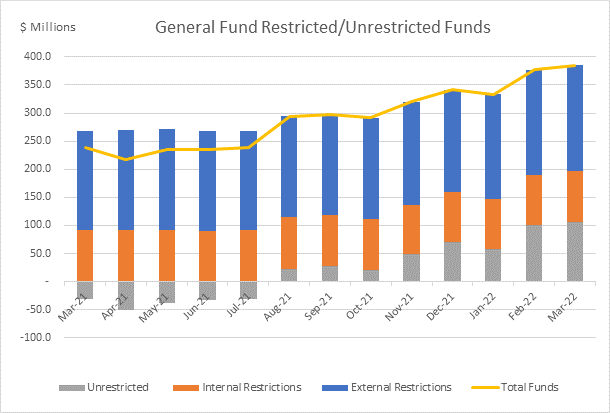
Financial Results
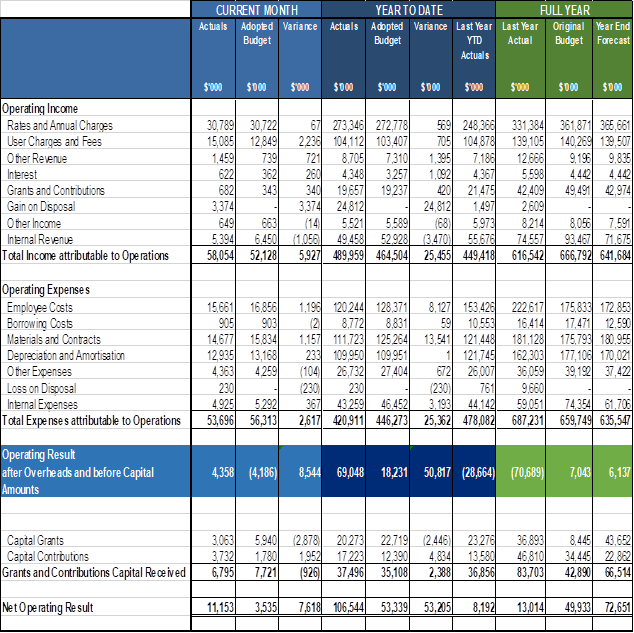
The attached financial reports record how actual revenue and expenditure is tracking against the year-to-date Q2 adjusted forecast of Council for the reporting period 1 July 2021 to 31 March 2022.
In March, Council is reporting a surplus of $1.2M (favourable to budget by $5.4M) for its net operating result, excluding capital income and profit/loss on sale of assets.
Council’s net operating result including capital income and profit/loss on sale of assets is $11.2M (favourable to budget by $7.6M).
Year to date, Council is reporting a surplus of $44.5M (favourable to budget by $26.2M) for its net operating result, excluding capital income and profit on sale of land.
Council’s YTD net operating result including capital income and profit on sale of land is $106.5M (favourable to budget by $53.2M).
Proposed Reallocation of Materials and Services budgets
To meet the costs of recent unplanned emergency weather events and to partially restore service levels in areas impacted by the organisational cost reduction program undertaken as part of Council’s Business Recovery Plan, it is proposed to reallocate funds within current Materials and Service’s budgets to operating works and purchases that can be actioned and completed in April and May this year.
Council’s operational units have worked collaboratively on this process to reallocate budgets to areas of the business with greatest need. In total, $4.8M has been proposed to be reallocated within General Fund, to complete works needed by the community. These works will be funded by reallocating budgets resulting in a nil bottom line impact
Attachment 9 details the proposed works that will be completed with the reallocated funds.
Link to Community Strategic Plan
Theme 4: Responsible
|
Goal G: Good governance and great partnerships |
|
R-G2: Communicate openly and honestly with the community to build a relationship based on transparency, understanding, trust and respect. |
|
1⇨ |
Monthly Finance Report March 2022 |
Provided Under Separate Cover |
D15127495 |
|
2⇨ |
Consolidated and By Fund March 2022 Monthly Financial Report |
Provided Under Separate Cover |
D15126843 |
|
3⇨ |
Office of the Chief Executive Officer March 2022 Monthly Financial Report |
Provided Under Separate Cover |
D15126845 |
|
4⇨ |
Community and Recreation Services March 2022 Monthly Financial Report |
Provided Under Separate Cover |
D15126846 |
|
5⇨ |
Infrastructure Services March 2022 Monthly Financial Report |
Provided Under Separate Cover |
D15126849 |
|
6⇨ |
Water and Sewer March 2022 Monthly Financial Report |
Provided Under Separate Cover |
D15126850 |
|
7⇨ |
Environment and Planning March 2022 Monthly Financial Report |
Provided Under Separate Cover |
D15126852 |
|
8⇨ |
Corporate Affairs March 2022 Monthly Financial Report |
Provided Under Separate Cover |
D15126855 |
|
9⇨ |
General Fund Materials and Services Proposed Budget Reallocations |
Provided Under Separate Cover |
D15126917 |
|
Item No: 2.3 |
|
|
Title: Investment Report for March 2022 |
|
|
Department: Corporate Affairs |
|
|
26 April 2022 Ordinary Council Meeting |
|
Reference: F2004/06604 - D15123223
Author: Devini Susindran, Team Leader
Manager: Mellissa McKee, Financial Controller
Executive: Natalia Cowley, Director Corporate Affairs and Chief Financial Officer
1 That Council note the Investment Report for March 2022.
2 That Council note that internally restricted funds are unrestricted funds that have been internally allocated to a certain purpose.
3 That Council allocate the required unrestricted funds available in the General Fund to meet its March 2022 unrestricted funds deficit of $43.06M in Water and Drainage funds as set out in this report.
|
Report purpose
To present monthly Investment Reports in accordance with cl. 212 of the Local Government (General) Regulation 2005 which states as follows:
1 The Responsible Accounting Officer of a Council
a must provide the council with a written report (setting out details of all money that the council has invested under section 625 of the Act) to be presented— i. if only one ordinary meeting of the council is held in a month, at that meeting, or ii. if more than one such meeting is held in a month, at whichever of those meetings the council by resolution determines, and b must include in the report a certificate as to whether the investment has been made in accordance with the Act, the regulations and the council's investment policies.
2 The report must be made up to the last day of the month immediately preceding the meeting.
Executive Summary
This report details Council’s investments as at 31 March 2022. |
Background
Council’s investments are made in accordance with the Local Government Act 1993, Local Government (General) Regulation 2005, the amended Investment Policy adopted at the Ordinary Council Meeting on 3 February 2021, Ministerial Investment Order issued February 2011 and Division of Local Government (as it was then known) Investment Policy Guidelines published in May 2010.
Current Status
Council’s current cash and investment portfolio totals $635.34M as at 31 March 2022.
Council’s Cash and Investment Portfolio by Source of Funds
|
Source of Funds |
Value ($’000) |
|
Investment Portfolio |
591,888 |
|
Transactional accounts Per Bank Statement and cash in hand |
43,450 |
|
Total |
635,339 |
Council’s Portfolio is held in separate funds by purpose and summarised as follows:
|
Fund |
General Fund
($’000) |
Water Fund
($’000) |
Sewer Fund
($’000) |
Drainage Fund
($’000) |
Domestic Waste Fund ($’000) |
|
External Restricted Funds |
188,268 |
7,602 |
22,296 |
37,149 |
93,828 |
|
Internal Restricted Funds |
90,139 |
989 |
855 |
15 |
58 |
|
Total Restricted Funds |
278,407 |
8,591 |
23,151 |
37,164 |
93,886 |
|
Unrestricted Funds |
106,372 |
(7,326) |
118,790 |
(35,738) |
12,042 |
|
Total funds by Fund |
384,779 |
1,265 |
141,941 |
1,426 |
105,928 |
During March, Council’s total cash and investments increased by $9.85M from $625.49M to $635.34M. The increase during March was primarily due to cash being held for loan balloon repayments of $12.78M ($5.73m in Water Fund and $7.05M in Sewer Fund) due at the end of March. These funds were debited by the bank on 4 April 2022.
Detailed restrictions have been provided in Attachment 2. Council is managing the previously reported negative unrestricted funds balance, as part of Council’s Business Recovery Plan.
The negative unrestricted balance is currently $43.06M, made up of unrestricted fund deficits in the Water and Drainage Funds, as per the table above.
Portfolio management
Council’s Investment Portfolio is managed through term deposits and floating rate note maturities and placements.
Total net return on the portfolio for Council in March, comprising entirely of interest earned, was $520k. The total value of the Council’s investment portfolio at 31 March 2022 is outlined in Table 1 below.
Table 1 – Portfolio movement Investment only
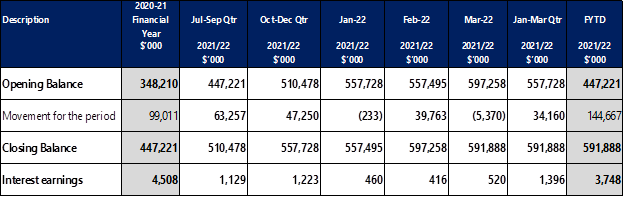
The market value of Council’s investment portfolio at 31 March is $591.89M.
Council’s investments are evaluated and monitored against a benchmark appropriate to the risk (APRA Standards BBB long term or above) and time horizon of the investment concerned.
A summary of the term deposit and floating rate notes maturities are listed in Table 2 below.
Table 2 - Investment Maturities
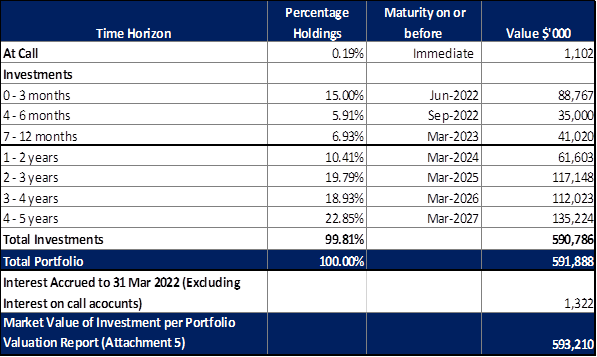
The investment portfolio is concentrated in AA above (22.48%), A (24.62%), and BBB (52.90%).
Council monitors and manages the portfolio taking into consideration credit ratings of financial institutions, interest rates offered for the maturity dates required and counterparty exposure. All of Council’s investments were within policy guidelines at 31 March 2022.
The current spread of investments and counterparty exposure for March 2022 are shown in Graphs 1 and 2 respectively in Attachment 3.
Environmental, Social and Green (ESG) Investments
Council continues to look for ‘ESG’ investment opportunities subject to prevailing investment guidelines. A list of current ESG investments held is contained on the investment listing, highlight in green.
Council currently holds 5.40% or $31.98M in ESG investments as at 31 March 2022.
Portfolio Return
Interest rates on investments in the month, ranged from 0.10% to 3.18%, all of which exceeded the monthly Bank Bill Swap Rate (BBSW) benchmark of 0.03%.
The weighted running yield for March of 1.06% for Central Coast Council is favourable compared to the rolling three-year benchmark bank bill swap (BBSW) Index of 0.37% as shown in Graph 3 - Portfolio Returns in Attachment 3.
Market values reflected in the Portfolio valuation report in Attachment 5 have been used to record the unrecognised gains in tradeable fixed rate bonds and floating rate notes. Interest accrued has been recorded separately and is not reflected in portfolio valuations.
Financial Considerations
At its meeting held 19 October 2020, Council resolved the following:
1108/20 That any motions put before Council for the remainder of this term of Council that have financial implications require the Chief Executive Officer to provide a report on how those additional costs will be met.
The following statement is provided in response to this resolution of Council.
Council’s investment portfolio includes rolling maturity dates to ensure that Council has sufficient liquidity to meet its ongoing obligations.
Link to Community Strategic Plan
Theme 4: Responsible
|
Goal G: Good governance and great partnerships |
|
R-G4: Serve the community by providing great customer experience, value for money and quality services. |
|
1⇨ |
Summary of Investments as at 31 March 2022 |
Provided Under Separate Cover |
D15123440 |
|
2⇨ |
Summary of Restrictions as at 31 March 2022 |
Provided Under Separate Cover |
D15123446 |
|
3⇨ |
Investment Report for March 2022 - Graphs 1, 2 and 3 |
Provided Under Separate Cover |
D15123456 |
|
4⇨ |
Trading Limits Report as at 31 March 2022 |
Provided Under Separate Cover |
D15123474 |
|
5⇨ |
Portfolio Valuation Investment Report Pack as at 31 March 2022 |
Provided Under Separate Cover |
D15123463 |
|
Item No: 2.4 |
|
|
Title: Central Coast Council Restricted Funds Policy |
|
|
Department: Corporate Affairs |
|
|
26 April 2022 Ordinary Council Meeting |
|
Reference: F2004/06604 - D15079183
Author: Mellissa McKee, Financial Controller
Manager: Peter Correy, Group Financial Controller, Finance
Executive: Natalia Cowley, Director Corporate Affairs and Chief Financial Officer
That Council adopt the draft ‘Restricted Funds Policy’ as per Attachment 1.
|
Report purpose
To present a draft ‘Restricted Funds Policy’ to Council for consideration and adoption.
Executive Summary
To seek endorsement of a ‘Restricted Funds Policy’ for Council. Council has not previously adopted a ‘Restricted Funds Policy’ and this has been identified as a recommendation by the Audit Office of NSW. The draft ‘Restricted Funds Policy’ provides a framework for the establishment and management of Council’s restricted cash funds. The Policy details what funds Council will place in external and internal restrictions and the purposes for which the restrictions will be applied.
|
Background
Council has significant cash, cash equivalents and investments. Restrictions are established to set aside funds for Council to meet legislative requirements, to allocate funds against future projects and activities and to ensure sufficient funding is available to meet current and long term financial obligations.
Central Coast Council’s restrictions are held within five funds and a spread across many business units of Council. Council’s five funds are:
I. General Fund
II. Water Fund
III. Sewer Fund
IV. Drainage Fund
V. Domestic Waste Fund
Restrictions are of two types:
External Restrictions over cash, cash equivalents and investments are those where there is a legislative obligation to use the funds for the purpose for which they were paid to Council. Under section 409(3) of the Local Government Act 1993 they are of three categories:
I. Money received as a result of levying a special rate of charge for a particular purpose (e.g. Domestic Waste Management charges)
II. Money that is required by legislation to be set aside of a specific purpose (e.g. developer contributions)
III. Money received from Federal or State Government for a specific purpose (e.g. specific purpose grant funding)
Internal Restrictions over cash, cash equivalents and investments are those funds restricted only by a resolution of the Council. Internal restrictions are adopted by Council to cover commitments that are included in Council’s Long Term Financial Plan and where it is prudent for Council to hold cash restrictions to meet those future commitments.
Unrestricted Cash are funds available to cover operational needs and unexpected or emergency costs within each fund. Unrestricted funds in Water, Sewer or Drainage funds cannot be utilised by other funds without Ministerial Approval. Meanwhile, unrestricted cash in General Fund can be lent to the other funds to cover shortfalls as necessary.
Current Status
As at 31 March 2022, Council holds 18 categories of external restrictions and 11 categories of internal restrictions. External and Internal restricted cash balances are reported annually in Council’s Annual Financial Reports and are reported monthly to Council in the monthly Investment Report. As part of the external audit of Council’s Financial Reports the Audit Office of NSW have concluded that the absence of a Restriction Policy may increase the risk of externally restricted funds being used for purposes in breach of legislation. This draft policy addresses the recommendations received from Audit Office of NSW to address this issue.
Consultation
Unit Managers work with Finance Unit to record the receipt of restricted cash and plan for and manage the allocation of restricted funds to specific purposes and projects via the annual and quarterly budget processes.
Financial Considerations
At its meeting held 19 October 2020, Council resolved the following:
1108/20 That any motions put before Council for the remainder of this term of Council that have financial implications require the Chief Executive Officer to provide a report on how those additional costs will be met.
The following statement is provided in response to this resolution of Council.
The adoption of this Policy will have no direct financial implications. This Policy clarifies what funds shall be placed into External and Internal Restrictions and the purposes for which those funds shall be applied. Budgets are adopted by Council for both the receipt of the income and allocation to specific purpose projects as they are required and are included in Council’s Long Term Financial Plan forecasting.
Link to Community Strategic Plan
Theme 4: Responsible
|
Goal G: Good governance and great partnerships |
|
R-G4: Serve the community by providing great customer experience, value for money and quality services. |
Risk Management
The management and response of Council’s external and internal restrictions. This allows for Council to plan and implement strategies to maintain Council assets and services and to ensure that Council has sufficient liquidity to meet its ongoing obligations. The adoption of this draft policy reflects audit recommendations and continuous better practice.
Options
Council has the option to:
1 Adopt the draft ‘Restricted Funds Policy’ which will provide a framework for the management of Council’s restricted cash. This is the recommended option.
2 Resolve not to adopt draft ‘Restricted Funds Policy’. This is not recommended. The Audit Office of NSW has recommended that Council develops documentation that details the legislative and operational requirements for restricted funds. The absence of a Policy may increase the risk of restricted funds being used for inappropriate purposes, in breach of the applicable legislation.
Critical Dates or Timeframes
There is no legislative requirement for Council to adopt a ‘Restricted Funds Policy’, however it is considered best practice and has been identified by the Audit Office of NSW as a significant risk for Council. The absence of a ‘Restricted Funds Policy’ may increase the risk of externally restricted funds being used for purposes in breach of legislation.
|
1⇨ |
Draft Central Coast Council Restricted Funds Policy |
Provided Under Separate Cover |
D15127118 |
|
Item No: 2.5 |
|
|
Title: Adoption of the Central Coast Green Grid Plan |
|
|
Department: Environment and Planning |
|
|
26 April 2022 Ordinary Council Meeting |
|
Reference: F2013/01967 - D15001163
Author: Chris
McLean, Principal Strategic Planner Centres Planning and Urban Design
Manager: Jared Phillips, Section Manager Centres
Planning and Urban Design
David
Milliken, Unit Manager Strategic Planning
Executive: Alice
Howe, Director Environment and Planning
1 That Council endorse the Central Coast Green Grid Plan: Our Place.
2 That Council note that the Green Grid will be a key informing document for LGA-wide and local place planning activities.
|
Report purpose
To adopt Central Coast Green Grid: Our Place, which provides a mapped framework for future LGA-wide and local place planning, considering the network attributes of our natural environment.
Executive Summary
At its ordinary meeting of 28 September 2021, Council placed the draft Central Coast Green Grid: Our Place on public exhibition (‘The Plan’). The Plan is a strategic planning document that examines the key natural environment attributes of the region and establishes a framework for fine scale, place-based planning and identification of future projects.
A first of its kind for regional NSW, Central Coast Green Grid: Our Place builds on the Sydney Green Grid and divides key attributes of the region into Grids that are then mapped. It is intended that this Plan will be used as a framework for LGA-wide and local place planning in the region for the next two decades and beyond.
Central Coast Green Grid: Our Place seeks to deliver an interconnecting network of open space that will keep the Coast’s major centres cool, encourage healthy living, enhance biodiversity and ensure ecological resilience. The subsequent adoption of the Plan will implement the principles and actions identified in the recently adopted Greener Places Strategy and enable Council to apply for grant funding, supporting current and future capital works projects.
|
Background
Council received a $200,000 grant from the NSW Government’s Metropolitan Greenspace Program in December 2019 to deliver the draft Central Coast Green Grid: Our Place. The aim of the Plan was to improve urban ecosystems, biodiversity resilience, urban amenity and connectivity, between public spaces for the benefit of the Central Coast community, over the next 20 years.
The Plan integrates with several of Council’s future and current strategic documents including the Local Strategic Planning Statement, Streetscape Design Manual, Local Character Statements and the Climate and Sustainability Action Plan. The intent of the Plan is to shape the future character of the Central Coast through understanding current natural and built assets and how these can be connected in the future.
It is intended that the Plan will be used as a framework for LGA-wide and local place planning in the region for the next two decades and beyond.
Current Status
The Plan was placed on public exhibition during September and October 2021. This report recommends that the Plan is now adopted by Council.
Report
The Plan identifies different components of the region and forms them into the following spatial grids:
· Ecological Grid;
· Recreational Grid;
· Hydrological Grid;
· Cultural Grid;
· Agricultural Grid; and
· Transport and Public Domain Grid.
The six grids were mapped and used to understand the current extent of components of each grid. The Plan developed a project ranking criterion for future public projects to determine their benefits to each of the grids.
The Plan also includes a number of technical appendices, which will be used to provide guidance to the development of future District Place Plans at the Social Planning District level.
Consultation
Extensive consultation occurred through the development of the draft Plan. This consisted of three reference groups being:
1 An internal reference group of Council staff from across a range of Units including strategic planning, roads, open space and environmental management;
2 A government agency reference group consisting of representatives from organisations such as NSW National Parks and Wildlife Service, Lake Macquarie City Council, the Department of Planning and Environment and the Office of Strategic Lands; and
3 Community and industry reference group consisting of members of community groups such as Grow Urban Shade Trees, the Community Environment Network, National Parks Association, Sport Central Coast, Wyong Regional Chamber of Commerce and the Urban Development Industry Australia.
These groups met throughout the development of the Plan, both physically and virtually due to COVID restrictions, and provided valuable input into the development of the Plan.
A total of 12 workshops were held across the three reference groups. Each of the workshops provided an opportunity to update all key stakeholders on the progress of the document and discuss targeted questions. The feedback received at each of the workshops was used to inform the future stages of the document and draft Plan for adoption.
The Plan was placed on public exhibition in September and October 2021. Six public submissions were received, all largely supporting the document, in particular recognising that improved urban form is needed as well as factors such as walkability and environmental conservation. One submission supported including the Peninsula as its own Social Planning District. Some comments questioned if Council would implement any of the nominated projects in the future and others were unrelated referring to development, they considered to be environmentally harmful or urban sprawl. The table below summarises submission themes and number of responses.
|
Submission theme |
Number of responses that mention theme |
|
Objection to Green Grid not objecting to the Central Coast Regional Plan |
1 |
|
Comment on continued bushland destruction/ environmental degradation in the region |
2 |
|
Objection that document is largely focused on south of LGA |
1 |
|
Support for place-based planning/ liveability |
3 |
|
Support for more trees |
1 |
|
Opposition to Council selling community land |
1 |
|
Support for coastal path between Budgewoi and Catherine Hill Bay/ Caves Beach |
1 |
|
Comment asking for Urban Heat Island consideration/ action |
1 |
Financial Considerations
At its meeting held 19 October 2020, Council resolved the following:
1108/20 That any motions put before Council for the remainder of this term of Council that have financial implications require the Chief Executive Officer to provide a report on how those additional costs will be met.
The following statement is provided in response to this resolution of Council.
The Plan will streamline project alignment for future public projects over the next 20 years. It is expected that its adoption and implementation will result in efficiencies through reduced duplication, consideration of project integration and streamlined public consultation. Efficiency is also created by developing District Place Plans for the various Social Planning Districts.
There is no direct cost in Plan adoption, with future strategic planning work intended to be completed in-house by strategic planning staff and supported by budget included in Council’s Operational Plan, while any physical projects will be included in Council’s future capital works programs.
A portion of those projects identified in the Green Grid are already programmed, funded and underway. The funding and prioritisation of any future Green Grid projects will be assisted using the project ranking criteria specified within the Plan. Any future funding will be sought via a mixture of internal Council funds (for projects on Council land), internal Government agency funds (for projects on other Government agency land) or through grant funding. For each project, an economic assessment will be made to determine the cost benefit of each project.
Link to Community Strategic Plan
Theme 4: Responsible
|
Goal I: Balanced and sustainable development |
|
R-I2: Ensure all new developments are well planned with good access to public transport, green space and community facilities and support active transport. |
Risk Management
It is intended that this Plan will be used as a framework for LGA-wide and local place planning in the region for the next two decades and beyond. It establishes the natural environment attributes across the LGA to ensure consistency in planning at both the regional and local scale.
Figure 6 of the Plan provides an overview of the interaction between the various relevant strategic documents.
|
1⇨ |
Central Coast Green Grid |
Provided Under Separate Cover |
D15129564 |
|
2⇨ |
Central Coast Green Grid Potential Project List 2022 |
Provided Under Separate Cover |
D15053753 |
|
3⇨ |
Central Coast Green Grid Document Review |
Provided Under Separate Cover |
D14771993 |
|
4⇨ |
Central Coast Green Grid Access to Open Space Social Planning Districts |
Provided Under Separate Cover |
D15053828 |
|
5⇨ |
Central Coast Green Grid Centres Access to Open Space Centres and Priority Growth Areas |
Provided Under Separate Cover |
D15053831 |
|
6⇨ |
Central Coast Green Grid Distribution of Threatened Flora Report |
Provided Under Separate Cover |
D15053840 |
|
7⇨ |
Central Coast Green Grid Wildlife Survey |
Provided Under Separate Cover |
D15053862 |
|
8⇨ |
Central Coast Green Grid Final Cultural Heritage Landscape Framework |
Provided Under Separate Cover |
D15053881 |
|
9⇨ |
Central Coast Green Grid Case Study Mangrove Creek Cultural Landscape |
Provided Under Separate Cover |
D15053885 |
|
Item No: 2.6 |
|
|
Title: Adoption of Greater Lake Munmorah Structure Plan |
|
|
Department: Environment and Planning |
|
|
26 April 2022 Ordinary Council Meeting |
|
Reference: F2015/00603-003 - D14287034
Author: Kathryn Heintz, Principal Strategic Planner.Local Planning and Policy
Scott Duncan, Section Manager Land Use and Policy
David Milliken, Unit Manager Strategic Planning
Executive: Alice Howe, Director Environment and Planning
2 That Council endorse the amendments recommended by Council staff, as outlined in Attachment 3.
3 That Council adopt the Greater Lake Munmorah Structure Plan in Attachment 4 and make this document available on Council’s website.
4 That Council commit to working collaboratively with Darkinjung Local Aboriginal Land Council to support and progress their economic self-determination.
Report purpose
To consider the submissions received during the public exhibition period, outline amendments to the draft Greater Lake Munmorah Structure Plan (GLMSP) in response to these submissions, and request that Council adopt the GLMSP.
Executive Summary
The draft GLMSP has been prepared to ensure that development within the study area occurs in an orderly and desirable manner, producing positive outcomes for current and future residents. The draft GLMSP identifies the long-term vision and principles that will guide land use planning in the study area, enabling sustainable growth that does not compromise the attributes that make the area a desirable place to live.
At its meeting of 11 March 2019, Council resolved to place the draft GLMSP on public exhibition. Public exhibition took place between March and May 2019. A report outlining the submissions received in response to the exhibition of the draft GLMSP was prepared for consideration by Council at its meeting of 27 April 2020 (Attachment 1); however was deferred from consideration due to issues raised by a major landowner within the study area. These issues have since been resolved. Some minor amendments have occurred to the draft GLSMP since this time, as outlined in Attachment 3.
This report recommends that the Council consider the submissions received during exhibition and the amendments made in response to submissions. Further, Council is requested to adopt the GLMSP (Attachment 4) and make the document publicly available.
Background
The GLMSP study area includes the suburbs of Lake Munmorah, Doyalson North, Kingfisher Shores, Chain Valley Bay and a small part of Crangan Bay. The North Wyong Shire Structure Plan (NWSSP) identified a large area of land within the study area for long-term residential and employment land.
The study area has historically been identified for longer-term development due to surface development restrictions related to underground coal mining. However, the following catalysts resulted in the need to review the capacity of the study area to cater for short-term or medium-term development:
· Surface development restrictions relaxed by Subsidence NSW;
· The development of the Lake Munmorah Shopping Centre on Tall Timbers Road;
· Planning for significant recreation facilities (Skate Park and Regional Playspace); and
· Lodgment of significant rezoning applications for residential development.
Due to these factors, Council recognised the importance of developing a vision for the future development of the study area, to accommodate population growth in the north-east of the Central Coast Local Government Area (LGA). The draft GLMSP was prepared to ensure that development of this area occurs in an orderly and desirable manner, to produce positive outcomes for current and future residents.
The draft GLMSP forms the basis for future planning, which will lead to the formulation of new planning controls, such as amendments to Council’s Environmental Planning Instruments, and/or the preparation of Development Control Plan chapters, character statements, Public Domain Plans, and an updated development contributions plan.
At the Ordinary Meeting of Council on 11 March 2019, Council resolved as follows:
156/19 That Council, for the purposes of community consultation, endorse the exhibition of the draft Greater Lake Munmorah Structure Plan for a period of 60 days.
157/19 That the Council consider a further report on the results of the community consultation.
158/19 That Council holds two community workshops that include and encourage key stake holders including working parents and a broader community and that one of these workshops be held after hours.
Current Status
Consideration of the draft GLMSP for adoption by Council at its meeting of 27 April 2020 was deferred due to concerns in relation to the location and width of the biodiversity corridor. Further clarification has been added to the draft GLMSP regarding this matter as follows:
“The regional wildlife corridor shown in the draft GLMSP is indicative and conceptual. The current position of the regional wildlife corridor does not negate alternative wildlife corridor design options from being proposed based on detailed ecological assessment and ecological evidence-based arguments through the rezoning process.”
The draft GLMSP has also been amended to reflect the most up-to-date layouts of the various Planning Proposals that have been lodged within the study area. As this matter has now been resolved it is considered appropriate to refer this matter again to Council for endorsement.
Consultation
The engagement period for the draft GLMSP ran for 60 days between March and May 2019. A report outlining the submissions received in response to the exhibition of the draft GLMSP was prepared for consideration by Council at its meeting of 27 April 2020 (Attachment 1) however was deferred from consideration. A full summary of submissions received, and Council’s response to these submissions, is provided in Attachment 2. Proposed amendments to the draft GLSMP are listed in Attachment 3 and the final version of the GLSMP is provided in Attachment 4.
Financial Considerations
At its meeting held 19 October 2020, Council resolved the following:
1036/20 That any motions put before Council for the remainder of this term of Council that have financial implications require the Chief Executive Officer to provide a report on how those additional costs will be met.
The following statement is provided in response to this resolution of Council:
1 Economic Analysis, prepared by Hill PDA Consultants; and
2 Road Development Strategy Study, prepared by GHD Consultants.
The GLMSP will not amend any land zonings or development controls. Following adoption, any rezonings to facilitate the outcomes of the GLMSP would be required to be landowner-funded in accordance with Council’s Planning Proposal Procedure and relevant fees and charges set in Council’s adopted Fees and Charges.
The Northern Districts Development Contributions Plan will be updated to accommodate certain infrastructure required to service the anticipated future population growth associated with the proposed residential development. It is anticipated that this Contributions Plan will be exhibited in mid-2022 and be in place by late-2022. Some Planning Proposals under assessment may also require Planning Agreements for specific infrastructure/works where there is a direct nexus with a Planning Proposal.
Link to Community Strategic Plan
Theme 1: Belonging
|
Goal B: Creativity connection and local identity |
|
B-B4: Activate spaces and places to complement activity around town centres, foreshores, lakes and green spaces for families, community and visitors. |
Theme 2: Smart
|
Goal C: A growing and competitive region |
|
|
S-C3: Facilitate economic development to increase local employment opportunites and provide a range of jobs for all residents. |
|
Theme 3: Green
|
Goal E: Environmental resources for the future |
|
|
G-F1: Protect our rich environmental heritage by conserving beaches, waterways, bushland, wildlife corridors and inland areas, and the diversity of local native species. |
|
Theme 4: Responsible
|
Goal H: Delivering essential infrastructure |
|
|
R-H4: Plan for adequate and sustainable infrastructure to meet future demand for transport, energy, telecommunications and a secure supply of drinking water. |
|
|
Goal G: Good governance and great partnerships |
|
|
R-G3: Engage with the community in meaningful dialogue and demonstrate how community participation is being used to inform decisions. |
|
Theme 5: Liveable
|
Goal J: Reliable public transport and connections |
|
|
L-J4: Design long-term, innovative and sustainable transport management options for population growth and expansion. |
|
|
Goal K: Out and about in fresh air |
|
|
L-K1: Create a regional network of interconnected shared pathways and cycle ways to maximise access to key destinations and facilities. |
|
|
Goal L: Healthy lifestyle for a growing community |
|
|
L-L1: Promote healthy living and ensure sport, leisure, recreation and aquatic facilities and open spaces are well maintained and activated. |
|
Environmental Considerations
The NSW Government’s North Wyong Shire Structure Plan (NWSSP) identifies a regional east-west biodiversity corridor which aims to link the mountain areas in the west to coastal habitat in the east. This biodiversity corridor performs several functions, including supporting ecological processes and wildlife movement, providing scenic qualities and offering opportunities for recreation.
The NWSSP also identifies a local biodiversity corridor that extends from the northern side of the Pacific Highway, adjacent to the B2 Local Centre zone, across the Pacific Highway, proceeding in a south-easterly direction towards the waterbody known as Lake Munmorah.
The continued functionality of the corridor network depends on both the structural integrity of the habitat patches and the strength of connectivity between the patches. The proposed GLMSP has regard for these biodiversity corridors. Development that has the potential to impact on threatened species, endangered ecological communities and/or biodiversity corridors will be subject to comprehensive environmental assessment processes to satisfy State and Federal biodiversity legislative requirements.
Risk Management
The implementation of the GLMSP through the rezoning of land or delivery of public infrastructure works will consider and mitigate any corporate risks by ensuring:
· Appropriate consultation is undertaken with relevant public authorities and major stakeholders;
· Ongoing community consultation; and
· Relevant legislative requirements are followed.
Options
1 Adopt the GLMSP
The draft GLMSP has now undergone extensive consultation with both internal and external stakeholders. The result is a robust plan that will assist Council in meeting the population, dwelling and employment targets, as set by the Central Coast Regional Plan. Further, the GLMSP refines the precincts identified within the North Wyong Shire Structure Plan (NWSSP) and provides guidance for the future development of the area. This is the recommended option.
2 Further amend the GLMSP
Extensive community and stakeholder consultation has been undertaken, and amendments made in response to this feedback. Not recommended.
3 Not adopt the GLMSP
Failure to adopt the GLMSP will mean that the area will develop in an unplanned manner without appropriate planning, infrastructure and services. Not recommended.
Critical Dates or Timeframes
Part 2, Section 10.0 of the GLMSP identifies implementation measures to give effect to the desired future outcomes for the study area. Further information in relation to the action plan can be found in Part 2, Section 10.0 of the GLMSP (see Attachment 4). Following adoption of the GLMSP, implementation will occur over short (0-5 years), medium (5-15 years) and long term (15+ years) timeframes.
Conclusion
This report recommends that Council receive and note the outcomes of the public exhibition and adopt the Greater Lake Munmorah Structure Plan (Attachment 4).
|
1⇨ |
Council Report of 27 April 2020 - Greater Lake Munmorah Structure Plan - Results of Public Consultation |
Provided Under Separate Cover |
D13654121 |
|
2⇨ |
Summary of Submissions |
Provided Under Separate Cover |
D14539567 |
|
3⇨ |
Amendments to GLSMP |
Provided Under Separate Cover |
D14550292 |
|
4⇨ |
Greater Lake Munmorah Structure Plan - For adoption |
Provided Under Separate Cover |
D15106820 |
|
|
|
|
Title: Request to Rescind Council Resolutions to Reclassify Land |
|
|
Department: Environment and Planning |
|
|
26 April 2022 Ordinary Council Meeting |
|
Reference: F2004/07018 - D14851284
Author: Lynda Hirst, Principal Strategic Planner
Manager: Jared
Phillips, Section Manager Centres Planning and Urban Design
David
Milliken, Unit Manager Strategic Planning
Executive: Alice Howe, Director Environment and Planning
That Council rescind the following resolved motions brought before Council on 28 October 2019 (1060/19, 1061/19, 1062/19, 1063/19) and 9 December 2019 (1263/19).
|
Report purpose
To seek Council approval to rescind resolutions 1060/19, 1061/19, 1062/19, 1063/19 and 1263/19.
Executive Summary
Notices of Motion were resolved by Council at its 28 October 2019 and 9 December 2019 meetings, with the purposes of reclassifying operational land to community land. There does not appear to be strong justification for the reclassification to community land.
Progressing the reclassification of the land would have significant financial and staff costs to investigate, justify and prepare the necessary Plan of Management (PoM) for each operational land parcel. This work is not included in Council’s current budget and is not a priority, particularly given the limited justification for the reclassification.
Council officers have undertaken a review and determined that the land subject to resolution 1263/19 (which is also the subject of resolutions 1060/19, 1061/19, 1062/19 and 1063/19) should remain classified as operational land. Maintaining the operational land classification will ensure the land parcels can continue to be used and managed for the purpose for which they were acquired. Operational land classification also enables the future lease, development or disposal of the land (where the asset is surplus to Council’s service delivery requirements).
In consideration of the financial cost and potential risk versus limited benefit of the reclassifications, it is recommended that the land maintain its operational classification and the resolutions be rescinded.
|
Background
At its ordinary meeting of 28 October 2019 Council resolved:
1060/19 That Council reclassify the Tuggerawong Hall site, 326 Tuggerawong Road, Tuggerawong – Lots 63 and 64 DP 13019 as “Community”.
1061/19 That Council undertake all necessary advertising, consideration of submissions and preparation of relevant documentation in order to give effect to this motion.
1062/19 That Council update its Plans of Management (POM) to ensure that a relevant POM is in place in respect to this parcel.
1063/19 That Council request the Chief Executive Officer to give public notice in compliance with s.34 of the Local Government Act of the proposal.
In addition, at its ordinary meeting of 9 December 2019 Council resolved:
1260/19 That Council propose to reclassify the following land from operational to community land (‘Proposed Community Land):
· 2-18 Newbridge Road, Berkeley Vale
· 38W Wombat Street and 19W Marlborough Place, Berkeley Vale
· 151W – 153W Wyong Road, Berkeley Vale
· 75 Panorama Avenue, Charmhaven
· 2W Bundeena Road, Glenning Valley
· 13W Palm Springs Avenue, Glenning Valley
· 30W and 32 Sandra Street, Jilliby
· 231 Hue Road, Jilliby
· 1W Merro Close, Lake Haven
· 105W Woodbury Park Drive, Mardi
· 50 Wilfred Barrett Drive, Norah Head
· 60W Burns Road, Ourimbah
· 40W Coachwood Drive, Ourimbah
· 1 Teralba Street and 1W Pacific Highway, Ourimbah
· 102W Yeramba Road, Summerland Point
· 7 Wyong Road, Tuggerah
· 11W Molsten Avenue, Tumbi Umbi
· 1W Brittania Drive Watanobbi
1261/19 That Council give public notice of the proposed resolution to reclassify the Proposed Community Land from operational to community land in accordance with s.34 Local Government Act.
1262/19 That on completion of the public notification process, Council approval is sought to reclassify the Proposed Community Land from operational to community land and, if necessary, to prepare a planning proposal to remove the Proposed Community Land from Schedule 4 of Wyong Local Environmental Plan.
· Chittaway Point Hall, 72-76 Geoffrey Rd, Chittaway Point
· Chittaway Bay Hall and oval 91 Chittaway Rd, Chittaway Bay
· 1-3 Berkeley Road, Berkeley Vale
· 36-38 Kitchener Road, Long Jetty
· 1W Wolseley Avenue, Tacoma
· 7W Sir Joseph Banks Drive, Bateau Bay
· 19-21 and 29 Keren Avenue, Berkeley Vale
· 15W Footts Road, Ourimbah
· 8 Titania Avenue, Tuggerah
· 375 Pacific Highway Wyong
· 40-50 Pollock Avenue Wyong
· The Tuggerawong Hall site, 326 Tuggerawong Road Tuggerawong
Furthermore, at its ordinary meeting of 14 September 2020 Council resolved:
844/20 That Council reclassify the following land from operational to community land:
1 Lot 51 DP 609432 and Lot 3 DP 262772 at 2-18 Newbridge Road, Berkeley Vale
2 Lot 79 DP 241571 at 38W Wombat Street, Berkeley Vale
3 Lot 313 DP 31935 at 19W Marlborough Place, Berkeley Vale
4 Lot 25 DP 869735 at 151W Wyong Road, Berkeley Vale
5 Lot 26 DP 869735 at 153W Wyong Road, Berkeley Vale
6 Lot 190 DP 25586 at 75W Panorama Avenue, Charmhaven
7 Lot 105 DP 805181 at 2W Bundeena Road, Glenning Valley
8 Lots 43 and 44 DP 263868 at 13W Palm Springs Avenue, Glenning Valley
9 Lot 8 DP 825848 at 30W Sandra Street, Jilliby
10 Lot 6 DP 246727 at 32W Sandra Street, Jilliby
11 Lot 16 DP 228750 at 231 Hue Hue Road, Jilliby
12 Lot 73 DP 789413 at 1W Merro Close, Lake Haven
13 Lot 7 DP 255531 at 105W Woodbury Park Drive, Mardi
14 Lot 40 DP 787730 at 60W Burns Road, Ourimbah
15 Lot 58 DP 830706 at 40W Coachwood Drive, Ourimbah
16 Lot 104 DP 876413 at 1 Teralba Street, Ourimbah
17 Lot 22 DP1188257 at 1W Pacific Highway, Ourimbah
18 Lots 210, 211 and 266 DP 830759 at 102W Yeramba Road, Summerland Point
19 Lot 21 DP 806713 at 11W Molsten Avenue, Tumbi Umbi
20 Lot 3 DP 793403 at 1W Brittania Drive Watanobbi.
845/20 That the following properties remain classified as operational land:
· Lot 2 DP 600350 at 50 Wilfred Barrett Drive, Norah Head
· Lot 2 DP 810238 at 7 Wyong Road, Tuggerah
· 8 Titania Avenue, Tuggerah.
Resolutions 1260/19, 1261/19 and 1262/19 from 9 December 2019 were enacted with a public notice placed in the Central Coast community newspaper on 11 June 2020 to reclassify the properties from operational land to community land. Council resolution 844/20 on 14 September 2020 effected the reclassification of the land following the expiration of the 28-day public notice period. All land referred to in resolution 1260/19 was reclassified except for 50 Wilfred Barret Drive, Norah Head and 7 Wyong Road, Tuggerah, with resolution 845/20 of 14 September 2020 resolving they maintain their operational classification.
The land reclassification was undertaken in accordance with s.34 of the Local Government Act 1993 and as such, an amendment to the Wyong Local Environmental Plan (WLEP) 2013 was not required.
Resolution 1263/19 from 9 December 2019 resolved to reclassify the following parcels from operational land to community land following the adoption of a PoM for each property:
· Chittaway Point Hall, 72-76 Geoffrey Rd, Chittaway Point
· Chittaway Bay Hall and oval 91 Chittaway Rd, Chittaway Bay
· 1-3 Berkeley Road, Berkeley Vale
· 36-38 Kitchener Road, Long Jetty
· 1W Wolseley Avenue, Tacoma
· 7W Sir Joseph Banks Drive, Bateau Bay
· 19-21 and 29 Keren Avenue, Berkeley Vale
· 15W Footts Road, Ourimbah
· 8 Titania Avenue, Tuggerah1
· 375 Pacific Highway, Wyong
· 40-50 Pollock Avenue, Wyong
· Potential Tuggerawong Hall site, 326 Tuggerawong Road, Tuggerawong2
It should be noted that:
1 8 Titania Avenue, Tuggerah was subsequently removed by resolution 845/20 of 14 September 2020, which resolved that this site maintain its operational classification.
2 The proposed reclassification of the Tuggerawong Hall site duplicated earlier resolutions 1060/19, 1061/19, 1062/19 and 1063/19 of 28 October 2019. This site was purchased for a potential future community hall, which did not proceed.
Resolution 1263/19 from 9 December 2019 has not been enacted as the required PoMs have not been prepared and adopted by Council. Due to the staff resources and financial cost required to prepare the PoMs and reclassify the land, versus the limited benefit of the reclassification, it is recommended that the subject parcels maintain their operational classification.
Land Classification
Under Part 2, Division 1 of the Local Government Act 1993, all public land must be classified as either ‘community’ or ‘operational’. The Local Government Act 1993 imposes restrictions on the use, management, reclassification and disposal of community land. The legislative requirements set down for the administration of community lands are restrictive and result in additional cost and resource burden for Council.
Community land cannot be sold, exchanged or dispensed of in any way. There must be a PoM that applies to the land, and Council can only grant a lease or licence over the land for certain purposes in accordance with the PoM and not for longer than 21 years. Any changes to the land must be reflected in the PoM. Whenever Council considers a change in the use of the land, or a new lease or licence for the land, the PoM must be amended. The PoM process requires significant time for research and consultation. On average it takes 12 months for a PoM to be prepared or amended and subsequently adopted by Council. This takes significant Council time and resources. In some cases, there is no actual public use of the land and therefore no ongoing need to consult or involve the community in the ongoing management of the land.
Classification of land as operational provides greater flexibility in the management and use of Council’s property portfolio. It enables Council to enter into longer term lease arrangements, makes it easier and quicker to redevelop appropriate sites, and allows Council to be responsive to any operational issues with more flexibility and efficiency.
It is important to note that maintaining the operational classification for the land will not impact on the utility of public, recreational and open space areas. Council currently owns a significant number of operational lots which are used extensively for public recreation purposes. Similarly, there are numerous lots currently classified as community land that provide only limited public use. It is also important to note that classification of operational land does not enable Council staff to make changes to the land (e.g. disposal, redevelopment, improvements) without further community consultation.
The identification of current and future recreational, community and open space areas should be based on an assessment of asset utilisation, demographics, cost and appropriateness rather than by use of historic classification. Accordingly, community needs for recreational, open space and community assets is more effectively determined through Council’s Community Strategic Plan, endorsed by Council following an extensive public engagement process. This approach will enable Council to effectively respond to changing community needs and population growth to ensure the correct mix of community assets is preserved. This will optimise asset use to reduce cost and improve efficiency.
Report
The resolutions were decided from Notice of Motions brought to Council with the intention of securing additional community classified land.
Reclassification of the land would require significant financial costs and staff resourcing to investigate, justify and prepare the necessary PoM for each operational land parcel. This work is not included in Council’s current budget and is not a priority given Council’s current financial situation and limited resourcing.
Council officers have undertaken a review and determined that the land subject to resolution 1263/19 (and duplicated in resolutions 1060/19, 1061/19, 1062/19 and 1063/19) should remain classified as operational land. Maintaining the operational land classification will ensure the land can continue to be used and managed for the purpose for which they were acquired, or to enable the lease, development or disposal of the land (where the asset is surplus to Council’s service delivery requirements).
Consultation
Council’s Economic Development and Property Unit, Leisure Beach Safety and Community Facilities Unit and Open Space and Recreation Unit support rescinding resolutions 1060/19, 1061/19, 1062/19, 1063/19, and 1263/19.
Financial Considerations
At its meeting held 19 October 2020, Council resolved the following:
1108/20 That any motions put before Council for the remainder of this term of Council that have financial implications require the Chief Executive Officer to provide a report on how those additional costs will be met.
The following statement is provided in response to this resolution of Council.
1 There is a positive financial impact if the resolutions are rescinded in whole.
2 The Council Units responsible for the management of the subject land do not have a budget for this project and it is not scheduled in their work programs. If the resolutions are not rescinded the reclassification will require Council to reallocate budget from other projects to investigate, justify and prepare the necessary PoM for each site, and undertake the reclassification process. If the resolutions are not rescinded a further report will be prepared for Council’s consideration to identify the projects within Council’s current work program that would need to be deferred to undertake this unprogrammed work.
As such, it is recommended to rescind these resolutions in whole.
Link to Community Strategic Plan
Theme 4: Responsible
|
Goal L: Healthy lifestyle for a growing community |
|
R-G2: Communicate openly and honestly with the community to build a relationship based on transparency, understanding, trust and respect. |
Risk Management
There is potential reputation risk should Council proceed to reclassify this land given the required financial and staffing resources across the organisation to investigate, justify and prepare the necessary PoMs and undertake the reclassification process.
Options
1 Rescind resolutions 1060/19, 1061/19, 1062/19, 1063/19 and 1263/19. This is the recommended option.
2 Proceed with the resolutions and allocate budget from other Council projects to fund the resources required to prepare the PoMs and undertake the reclassification process.
Nil.
|
Item No: 2.8 |
|
|
Title: Water Poppy Control Works |
|
|
Department: Environment and Planning |
|
|
26 April 2022 Ordinary Council Meeting |
|
Reference: F2004/06302 - D15001449
Author: Larry Melican, Section Manager.Natural Assets and Biodiversity
Executive: Alice Howe, Director Environment and Planning
That Council note this report on the completion of works carried out by Council staff on private properties at Matcham for the purpose of controlling the new weed incursion, water poppy, Hydrocleys nymphoides.
|
Report purpose
To report to Council in accordance with Section 67 of the Local Government Act 1993 on the works undertaken on four private properties along Maddens Creek at Matcham to control the new incursion of the priority water poppy, Hydrocleys nymphoides.
Executive Summary
On 15 June 2021 Council resolved to authorise staff to undertake weed management activities under section 67 of the Local Government Act 1993 on four private properties in Oak Road, Matcham. The new incursion of the priority weed, water poppy, Hydrocleys nymphoides, had been identified at the sites by Council’s Biosecurity (Weeds) Officers who then applied for funding to undertake control works from Greater Sydney Local Land Service through the Weeds Action Program 2020-2025.
On-ground works commenced on the private properties in October 2021, with the mechanical removal of the incursions of water poppy along Maddens Creek. Removal and de-watering of the weed material occurred between late October 2021 and early January 2022 after which the then dead weed material and dried soil was disposed of in the Woy Woy Waste Management Facility.
Physical removal of the weed material on the private properties was followed-up with herbicide application for several months, with the project being finalised in March 2022. The project was delivered at no cost to Council with the Weeds Action Program grant funding covering the $9,318 cost of the weed control works. |
Background
Council considered a report titled Water Poppy Control on Private Properties in Matcham on 15 June 2021 and resolved the following:
177/21 1 That Council authorise staff to undertake appropriate weed management activities under section 67 of the Local Government Act 1993, on the following privately owned properties:
· Lot 11 DP 578702 (96 Oak Road, Matcham)
· Lot 12 DP 278702 (88 Oak Road, Matcham)
· Lot 11 DP 285449 (9/217 Oak Road, Matcham)
· Lot 1 DP 285449 (4/217 Oak Road, Matcham)
2 That following completion of the endorsed works in accordance with section 67(4) of the Local Government Act 1993, a further report including the nature of the works, and expenditure be brought to Council.
This report is prepared in response to part 2 of the Council resolution of 15 June 2021.
Current Status
The control works undertaken by Council on the new incursion weed, water poppy, on four private properties on Oak Road, Matcham have been completed at a cost of $9,318. Two grants of $8,353 and $965 (total $9,318) were provided by Greater Sydney Local Land Services through the Weeds Action Program for the water poppy control works. The on-going management of the sites on private land remains the responsibility of the individual landowners.
Report
The presence of a new weed incursion, water poppy, Hydrocleys nymphoides, was identified on a private property by Council’s Biosecurity (Weeds) Officers while inspecting a report of a potential occurrence of a different aquatic weed, water hyacinth. Water poppy is identified as a priority weed in the Greater Sydney Regional Strategic Weed Management Plan 2017-2022.
Further investigation undertaken across an area of potential spread identified four locations on private land where water poppy had become established. The preliminary identification of the weed by Council’s Biosecurity (Weeds) Officers as water poppy was confirmed by the Department of Primary Industry, with the Greater Sydney Local Land Services subsequently providing emergency grant funding through the Weeds Actions Program 2020-2025 to the control of this new weed incursion on the Central Coast.
On 15 June 2021 Council resolved to authorise staff to undertake weed management activities under section 67 of the Local Government Act 1993 on four private properties in Oak Road, Matcham. Section 67 of the Act requires that a report must be given to the next meeting of Council after the work is carried out specifying:
· The person for whom the work was carried out:
The weed control works were undertaken for the property owners of:
o Lot 11 DP 578702 (96 Oak Road, Matcham);
o Lot 12 DP 278702 (88 Oak Road, Matcham);
o Lot 11 DP 285449 (9/217 Oak Road, Matcham); and
o Lot 1 DP 285449 (4/217 Oak Road, Matcham).
· The nature of the work:
The work was undertaken for the control of a new weed incursion, water poppy, on the above four private properties at Matcham through physical removal and herbicide application.
· The type and quantity of materials used:
The project involved the removal of weed and soil material from the four sites on private property at Matcham, dewatering the material and transferring it to the Woy Woy Waste Management Facility. A total of 40.95 tonnes of dewatered material was delivered to the Woy Woy Waste Management Facility.
Other materials used during the project were:
o Metal star pickets x 68;
o Cable ties x 200;
o Silt mesh fencing - 50 metres;
o Black plastic covering – 50 metres; and
o Herbicide - 200 millilitres (mls)
· The charges made for those materials:
Total cost of above materials $348
· The total number of hours taken by each person who carried out the work:
o Truck and plant operators to remove weed and soil material from private properties to dewatering site – 42.5 hours
o Truck and plant operators to transfer dewatered material to Woy Woy Waste Management Facility – 17 hours
o Biosecurity (Weeds) Officers – 105 hours
· The total amount charged for carrying out the work (including the charge made for materials):
o Materials and consumables - $348
o Plant and Fleet - $1,639
o Tipping fees - $7,331
· The reason for carrying out the work:
The work was undertaken to prevent the spread and establishment of the priority weed water poppy in the Central Coast Local Government Area.
Physical removal of water poppy and soil from the waterway commenced during October 2021 with the weed material and saturated soil removed being stored at a Council controlled site for several months to allow dewatering to occur. The dry soil and dead plant material were later transferred to the Woy Woy Waste Management Facility. The final steps of the project, which included follow up herbicide application to any water poppy material that may have been present on the site, were completed in March 2022.
Consultation
Following confirmation of the identification of the new incursion of water poppy on private land along Maddens Creek, residents in the area of potential spread were contacted while investigating potential further occurrences of the priority weed. Council’s Biosecurity (Weeds) Officer were in regular contact with the residents of the four properties where water poppy was confirmed to occur.
Once emergency funding had been provided by the Greater Sydney Local Land Services, Weeds Action Plan 2020-2025, the control methods proposed to be implemented were discussed with the residents of the four affected properties. A written agreement was established with the property owners before works commenced, and the property owners were contacted before, during and after the control works were undertaken.
Council’s Biosecurity (Weeds) Officers consulted with the Department of Primary Industries to confirm the identification of the water poppy and the officers were in regular contact with the Greater Sydney Local Land Service about the control measures to be implemented as well as about the provision of emergency funding through the Weeds Action Plan.
Financial Considerations
At its meeting held 19 October 2020, Council resolved the following:
1108/20 That any motions put before Council for the remainder of this term of Council that have financial implications require the Chief Executive Officer to provide a report on how those additional costs will be met.
The following statement is provided in response to this resolution of Council.
The total cost of the water poppy control works was $9,318, however there was no cost to Council of controlling the new incursion of water poppy on four private properties at Matcham. Council received initial funding of $8,353 and follow up funding of $965, a total of $9,318, through the Greater Sydney Local Land Service’s Weed Action Plan 2020-2025. These funds were used to undertake the weed control works on the private land including, transfer of the material for dewatering and subsequent disposal of the dried and dead plant material to the Woy Woy Waste Management Centre.
Link to Community Strategic Plan
Theme 3: Green
|
Goal F: Cherished and protected natural beauty |
|
G-F1: Protect our rich environmental heritage by conserving beaches, waterways, bushland, wildlife corridors and inland areas, and the diversity of local native species. |
Risk Management
The weed control works undertaken on the four private properties at Matcham have substantially reduced the risk of the priority weed water poppy from spreading from the new incursion areas and becoming a significant biosecurity management issue in the Central Coast Local Government Area.
Options
1 Council note this report on the completion of works carried out by Council staff on private properties at Matcham for the purpose of controlling the new weed incursion, water poppy, Hydrocleys nymphoides. Section 67 of the Local Government Act requires this report be presented to Council. This is the recommended option.
2 Council resolve not to note this report on the completion of works carried out by Council staff on private properties at Matcham for the purpose of controlling the new weed incursion, water poppy, Hydrocleys nymphoides. Not recommended.
Nil.
|
Item No: 2.9 |
|
|
Title: Potential Transfer of COSS Land to National Parks and Wildlife Service |
|
|
Department: Environment and Planning |
|
|
26 April 2022 Ordinary Council Meeting |
|
Reference: F2018/00099 - D15079614
Author: Larry Melican, Section Manager Natural Assets and Biodiversity
Manager: James Lawson, Unit Manager Environmental Management
Executive: Alice Howe, Director Environment and Planning
1 That Council officers continue to work with the NSW National Parks and Wildlife Service (NPWS) to progress the assessment of the Council land listed in Attachment 1 for potential inclusion in the local national parks system.
2 That Council authorise the Chief Executive Officer to write to the Director of the Conservation Branch of the NPWS to advise that Council land assessed as being suitable for inclusion in the national parks system will be transferred for no monetary consideration subject to a further report on the outcomes of the assessment process being considered by Council.
3
That
Council authorise the Chief Executive Officer to write to the Director of the
Conservation Branch of the NPWS to advise of Council’s position that:
i. legal costs associated with the potential transfer be covered by each party
ii. any costs associated with any subdivision or boundary realignments required would be equitably shared between the two parties.
4 That a report be brought back to Council identifying the Council-owned land parcels that are assessed as being suitable for potential transfer to the NPWS for inclusion in the local national park system.
|
Report purpose
To provide information to Council on the progression of the potential land transfer of Council land to the local national parks system, which was the subject of a Notice of Motion on 9 December 2019.
To seek endorsement for Council staff to continue to work with the NPWS to progress the assessment of approximately 72.4ha of Council land for suitability for potential transfer to the NPWS for inclusion in the local national parks system.
To seek clarification of Council’s monetary expectations and any conditions that may apply to the transfer of Council land to the NPWS.
Executive Summary
Council was contacted by the then Minister for Energy and Environment, The Honourable Matthew Kean, MP, in October 2019 requesting proposals for land suitable to include in the local national parks system. Following a Councillor workshop on 14 January 2020, Council submitted a list of 11 property groupings for the Minister’s consideration.
Minister Kean’s subsequent correspondence of 15 March 2021 identified land in three of the property groupings as being of potential interest, subject to further assessment, for inclusion in Wambina Nature Reserve, Bouddi National Park and Munmorah State Conservation Area. The individual land parcels within the three property groupings of potential interest were identified by the Director, Conservation Branch of NPWS in correspondence dated 17 September 2021. The Director of the Conservation Branch also sought advice on Council’s monetary expectations for any land that may be transferred and any conditions which would be applied to potential land transfers.
Council considered a Notice of Motion on 9 December 2019 about Minister Kean’s initial approach. There is currently no Council resolution to support progressing investigation of the identified land for potential transfer to NPWS for inclusion in the local national park system. There is also currently no Council resolution to guide the conditions, including monetary expectations, under which land would be transferred to the NPWS. |
Council considered Item 8.9 Notice of Motion on 9 December 2019 titled ‘Request from (sic) Proposals from Minister Kean’. Correspondence dated 2 October 2019 from the Honourable Matthew Kean MP, former Minister for Energy and Environment, included a request for advice on land acquisition proposals that would add value to the local national parks system.
Council resolved in relation to Item 8.9 on 9 December 2019
1350/19 That Council note the correspondence and commend The Hon Matt Kean MP, Minister for Energy and Environment, for his recent announcement of his intention to add lands to the National Parks Estate and calling for proposals.
1351/19 That Council note that staff have commenced a process of identifying potential land that could be included as part of a proposal.
1352/19 That Council request the Chief Executive Officer provide all Councillors with the opportunity to contribute to the process of identifying suitable lands.
1353/19 That Council request the Chief Executive Officer submit a proposal by the end of January 2020.
A Councillor workshop was held on 14 January 2020 to provide all Councillors with the opportunity to contribute to the process of identifying suitable lands as per resolution 1352/19.
On 31 January 2020 Council submitted 11 property groupings of public and private land to the former Minister for his consideration for potential inclusion in the local national parks system.
A response
from the former Minister dated 15 March 2021 advised
that a request had been made to the NPWS to discuss the initial assessment of
the proposed land groupings with Council and development comprehensive
proposals for three of the nominated property groupings:
· Select lots adjoining Wambina Natural Reserve
· Select lots adjoining Bouddi National Park; and
· One lot adjoining Munmorah State Conservation Area.
Subsequent correspondence from the Director of Conservation Branch of the NPWS on 17 September 2021 identified the specific land parcels of potential interest within the three property groupings (see Attachment 1). The letter from the Director of the Conservation Branch on 17 September 2021 also requested advice on whether Council would transfer land to NPWS for no monetary consideration and if any conditions are proposed for the potential land transfers.
Current Status
Council staff have had preliminary discussions with staff from NPWS to map out the process for progressing the potential transfer of Council land identified in Attachment 1 to NPWS for inclusion in the local national parks system.
There is currently no Council resolution to support progressing investigation of the identified land for potential transfer to NPWS for inclusion in the local national park system.
There is also currently no Council resolution to guide the conditions, including monetary expectations, under which land would be transferred to the NPWS.
Report
Council responded to a request of 2 October 2019 from the then Minister for Energy and Environment, The Honourable Matthew Kean, MP, by providing a list of 11 property groupings for his consideration for potential inclusion in the local national parks system on 31 January 2020. The property groupings typically included multiple land parcels which were a mix of private and public land.
The Minister’s response on 15 March 2021 identified three property groupings proposed by Council that were of potential interest, subject to further assessment, for addition to Wambina Nature Reserve, Bouddi National Park and Munmorah State Conservation Areas. Reasons that each of the other nine property groupings proposed were not to be pursued at that time were also provided in Minister Kean’s correspondence of 15 March 2021.
Correspondence dated 17 September 2021 from the Director Conservation Branch of the NPWS identified the individual properties within the three property groupings proposed to be investigated further. The list of land parcels covering 72.4ha is included in this report as Attachment 1.
The correspondence from the Director Conservation Branch of 17 September 2021 requested that in order to determine the appropriate acquisition pathway, could Council advise of its monetary expectation for the land to be transferred and if any conditions on the transfer of the land are proposed.
Council has previously transferred land to the NPWS for inclusion in the local national parks system for no monetary consideration. As an example, approximately 300ha of Council-owned land was transferred to the NPWS for inclusion in Bouddi National Park in 2003. Subdivision of land was not required as part of that transfer. It is, however, possible that subdivision or boundary realignment may be required to exclude Council infrastructure from any land identified for potential transfer to the NPWS in this current proposal.
Consultation
Information
about the potential land transfer has been provided to the meetings of the
Coastal Open Space System (COSS) Committee on the following dates:
· 27 November 2019
· 13 February 2020
· 30 April 2020
· 25 June 2020
· 9 June 2021
· 21 September 2021
· 13 December 2021
The COSS Committee has indicated general support for the proposal but has not formally resolved on it. It is expected that the COSS Committee will formally resolve on the matter at its June 2022 meeting.
Should Council resolve to proceed with investigations for potential transfer of land to the local national park system, consultation with internal stakeholders will be undertaken to identify land parcels or part of land parcels that are required by Council and are not available for transfer.
Financial Considerations
At its meeting of 19 October 2020, Council resolved the following:
1108/20 That any motions put before Council for the remainder of this term of Council that have financial implications require the Chief Executive Officer to provide a report on how those additional costs will be met.
The following statement is provided in response to this resolution of Council.
Assessment of the land parcels in conjunction with the NPWS can occur with existing staff resources.
The parcels identified in Attachment 1 have a total unimproved land value of $4,124,074. Should all of these parcels be transferred to the national parks system, the value of Council’s asset portfolio would be reduced by this amount on Council’s balance sheet. This is an upper limit impact, as it is likely not all of the parcels would be transferred. There would be no impact on Council’s cash flow or depreciation. Transfer of suitable land to the NPWS will remove Council’s on-going management responsibilities for the land and associated costs.
The cost of the subdivision or boundary realignments of land parcels would be equitably shared between Council and the NPWS. Until the number of subdivisions or boundary realignments required is known, it is not possible to provide an indication of any cost implications.
Link to Community Strategic Plan
Theme 3: Green
|
Goal F: Cherished and protected natural beauty |
|
G-F1: Protect our rich environmental heritage by conserving beaches, waterways, bushland, wildlife corridors and inland areas, and the diversity of local native species. |
Risk Management
The risks associated with the assessment of suitability of Council land for potential inclusion in the local national parks system are assessed as being low. Field based assessments will be accompanied by specific risk assessments.
Options
1 Council resolve to progress with the investigation and assessment of land for potential transfer to the NPWS for inclusion in the local national parks system and report back to Council on the Council owned land parcels that are assessed as being suitable for potential transfer. This is the recommended option.
2 Council resolve not to progress with the investigation and assessment of Council land for potential transfer to the NPWS. Not recommended.
|
COSS land proposed to be transferred to NSW National Parks and Wildlife Service |
Provided Under Separate Cover |
D15108272 |
|
Item No: 2.10 |
|
|
Title: Central Coast Heritage Gap Analysis and Action Plan |
|
|
Department: Environment and Planning |
|
|
26 April 2022 Ordinary Council Meeting |
|
Reference: F2021/00410 - D15059210
Author: Peta James, Senior Strategic Planner, Centres Planning and Urban Design
Rebecca Cardy, Heritage Officer Centres Planning and Urban Design
Jared Phillips, Section Manager Centres Planning and Urban Design
Manager: David Milliken, Unit Manager Strategic Planning
Executive: Alice Howe, Director Environment and Planning
1 That Council endorse the Central Coast Heritage Gap Analysis and Action Plan for the purposes of supporting grant applications to fund heritage projects as an interim measure until the Central Coast Heritage Strategy is adopted.
2 That Council note that the Central Coast Heritage Gap Analysis and Action Plan will be used for the purpose of informing Council’s approach to heritage and the development of the Central Coast Heritage Strategy, and that the actions contained within are considerations for inclusion in the development of that Heritage Strategy.
|
Report purpose
To present the Central Coast Heritage Gap Analysis and Action Plan to Council to seek endorsement of the Plan to support grant applications to fund heritage projects while the Central Coast Heritage Strategy is developed.
Executive Summary
In September 2018, Council was briefed in relation to a proposed framework for strategic heritage planning to ensure the Central Coast Council is progressing a best practice approach to heritage conservation. The culmination of this strategic framework will be the preparation of the Central Coast Heritage Strategy (the Strategy), which will outline the direction of the heritage program for the next 10 years. The Strategy is included in Council’s draft Delivery Program to commence in the 2023/24 financial year.
The Central Coast Heritage Gap Analysis and Action Plan (the Plan) was prepared by GML Heritage Pty Ltd (GML) and is the first step in the preparation of the Strategy. It reviews Council’s heritage management systems and processes and provides a series of actions to progress Council’s heritage framework. Its objective is to provide an independent and expert assessment to inform the Strategy. The Plan identifies gaps, inconsistencies and successes in Council’s planning instruments and heritage management practices and advises on best-practice heritage management within the NSW legislative framework.
On 23 June 2021, the draft Plan was presented to Council’s Heritage and Culture Advisory Committee who supported its progression to Council with no significant concerns raised.
It is recommended that Council endorse the Plan (Attachment 1) for the purposes of grant applications for projects within the Plan and note that the Plan will be used for the purpose of informing Council’s approach to heritage and the development of the Strategy.
Council’s endorsement of the Plan will provide the means to source and secure heritage grant funding over the next several years until the final Strategy and associated Action Plan are completed and adopted. |
Background
In September 2018, Council was briefed in relation to a proposed framework for heritage strategic planning to ensure the Central Coast Council is progressing a best practice approach to heritage management. The culmination of this strategic framework will be the preparation of the Strategy, which will outline the direction of the heritage program for the next 10 years. The Strategy is included in Council’s draft Delivery Program to commence in the 2023/24 financial year.
Report
GML was appointed in May 2020 to prepare the Plan, which was partially financed by a grant from Heritage NSW. The Plan reviews Council’s heritage management systems and processes. Its objective is to provide an independent and expert assessment to inform the future Strategy. It identifies gaps, inconsistencies and successes in Council’s planning instruments and heritage management practices and advises on best-practice heritage management within the NSW legislative framework.
The Plan provides a series of recommendations and actions that will result in a consistent and comprehensive approach to heritage across the local government area (LGA). The actions and recommendations within the Plan aim to ensure that the heritage of the Central Coast is appropriately managed to best-practice standards.
The Plan consists of three sections:
· Section One outlines the methodology and reference material used;
· Section Two is an analysis of Council’s current heritage management practices and a summary of key issues; and
· Section Three is the prioritised Heritage Action Plan, which provides a series of recommended actions to ensure the heritage of the Central Coast is managed to best practice standards.
Importantly, the Heritage Gap Analysis and Action Plan acknowledges Council’s established commitment to the conservation of natural and cultural heritage. It notes that Council has important heritage measures and essential foundations in place for heritage management; however, additional initiatives are necessary to achieve consistency across the LGA and respond to the changing development context, demography, and community expectations of the Central Coast.
Key tasks recommended in the Plan include:
· Preparation of a new Thematic History - reflect the course and pattern of development of the amalgamated Central Coast area over time including Aboriginal history, and local themes relevant to contemporary communities.
· Preparation of an Aboriginal Cultural Heritage Study – to describe different Aboriginal cultural landscapes, update data on Aboriginal sites, recognise Aboriginal cultural values beyond place-based values and identify mechanisms for ongoing consultation and collaboration with Aboriginal people about their local heritage.
· Preparation of an Archaeological Heritage Study - identify areas of potential archaeological significance and their current condition and update inventory sheets and management actions accordingly.
· Preparation of a cohesive Central Coast Heritage Interpretation Strategy - identify opportunities for telling important local stories and celebrating local heritage of the LGA.
· A review of Heritage Inventory Sheets – update to conform with the standard State Heritage Inventory database template and address gaps including lack of detail and outdated photographs.
· A review of Council’s internal heritage management procedures - ensure continuous improvement of internal heritage management procedures, regular reviews and training of staff.
Details of each task are outlined in the Plan, along with an indication of their priority. However, it is intended to inform the scope and phasing of the e Strategy and the final projects and timeframes will be reviewed as part of the development of that Strategy.
Some of these actions, such as the Aboriginal Cultural Heritage Study, the Central Coast Thematic History and Central Coast Heritage Interpretation Strategy, have already been identified as projects in Council’s draft Delivery Program to be delivered between 2022 and 2025. It is possible that grant funding may be available to assist Council to undertake these projects. Grants, especially those from Heritage NSW, are more likely to be gained if it can be demonstrated the project or study is supported by Council. Ideally this would be in the form of a Council resolution.
As such it is recommended that the Plan is endorsed by Council. This is to provide the mechanism for grant applications for projects within the plan and for the purpose of informing the development of the Strategy. It is noted that projects and timeframes identified within the document may need to be reviewed as part of the development of the Strategy with consideration given to Council’s Delivery Program and Budget.
Council’s endorsement of the Plan will provide the means to source and secure much needed heritage funding over the next several years until the final Strategy (including community consultation) is completed and adopted.
Consultation
The consultant team attended a workshop with Council’s Heritage and Culture Advisory Committee at the commencement of the project on 7 October 2020 to gain early input and take advantage of the technical expertise and specialist knowledge of the Committee members.
A second workshop with the Heritage and Culture Advisory Committee was held on 23 June 2021 to present the draft Plan findings. The Committee was supportive of the Plan and its actions and raised no significant issues of concern.
Due to COVID – 19 restrictions, proposed broader workshops and consultation sessions were not possible; however, internal stakeholder consultation was carried out by Council, which has informed the development of the gap analysis.
The Plan will be used to inform the preparation of the Strategy. In order to gain a full understanding of the community expectations regarding Council’s management of heritage, it is proposed that during the preparation of the Strategy Council hold targeted discussions with:
· History and heritage focused community groups,
· Darkinjung Local Aboriginal Land Council and other Aboriginal stakeholder groups,
· Relevant agencies such as:
o NSW Department of Planning and Environment;
o Heritage NSW;
o National Parks and Wildlife Service; and
o Transport for NSW.
Broader community consultation will also occur as part of the development and public exhibition of the Strategy.
Financial Considerations
At its meeting held 19 October 2020, Council resolved the following:
1108/20 That any motions put before Council for the remainder of this term of Council that have financial implications require the Chief Executive Officer to provide a report on how those additional costs will be met.
The following statement is provided in response to this resolution of Council.
Costs for the Plan were partially funded by a Heritage NSW Community Grant, with the remainder budgeted for in Council’s adopted Operational Plan and Budget.
The Plan will be used to inform the scope and phasing of the Strategy and projects will be incorporated into Council’s future Delivery Program as resources allow. There is no direct cost associated with endorsement of this Plan.
Endorsement of the Plan for the purposes of grant funding applications will provide the means for Council to source and secure heritage funding over the next several years until the final Strategy is completed and adopted by Council.
Link to Community Strategic Plan
Theme 1: Belonging
|
Goal B: Creativity, connection and local identity |
|
B-B1: Support reconciliation through the celebration of Aboriginal and Torres Strait Islander cultures. |
Theme 3: Green
|
Goal F: Cherished and protected natural beauty |
|
G-F1: Protect our rich environmental heritage by conserving beaches, waterways, bushland, wildlife corridors and inland areas, and the diversity of local native species. |
Theme 4: Responsible
|
Goal I: Balanced and sustainable development |
|
R-I1: Preserve local character and protect our heritage and rural areas including concentration of development along transport corridors and around town centres and east of the M1. |
Risk Management
Council is required by various legislation including the NSW Heritage Act 1977, the Environmental Planning and Assessment Act 1979 and the NSW National Parks and Wildlife Act 1974 to protect and to manage heritage within the LGA. The Plan reviews Council’s heritage management systems and processes and identifies gaps, inconsistencies and successes in Council’s planning instruments and heritage management practices. It advises on best-practice heritage management within the NSW legislative framework. There are no significant risks with Council endorsing the Plan for the purpose of guiding Council’s approach to heritage and informing the development of the Strategy.
|
1⇨ |
Report - Final Central Coast Gap Analysis and Action Plan - GML Heritage - CPA/3107 |
Provided Under Separate Cover |
D14656688 |
|
Item No: 2.11 |
|
|
Title: Policy on Assessment of LEP Amendment Requests |
|
|
Department: Environment and Planning |
|
|
26 April 2022 Ordinary Council Meeting |
|
Reference: F2004/00550 - D15070428
Author: Charlotte Ryan, Strategic Planner
Scott Duncan, Section Manager Land Use and Policy
Manager: David Milliken, Unit Manager Strategic Planning
Executive: Alice Howe, Director Environment and Planning
1 That Council endorse the draft Policy on Assessment of LEP Amendment Requests (Attachment 1) for the purposes of a 28-day consultation period.
2 That Council considers a further report on the results of community consultation.
|
Report purpose
To present the draft ‘Policy on the Assessment of LEP Amendment Requests’ to Council for the purposes of community consultation.
Executive Summary
To ensure the assessment of planning proposals is undertaken in a consistent, efficient and timely manner, it is proposed to adopt a Policy on Assessment of LEP Amendment Requests (the Policy) that describes Council’s process for the assessment of LEP amendment requests and aims to ensure the necessary information is included to enable an efficient and timely review and assessment. The Policy is designed to outline the principles of dealing with deficient applications and encourage the lodgement of good quality planning proposals.
The draft Policy is presented for consideration at Attachment 1 and is proposed to be publicly exhibited prior to finalisation. |
Background
The NSW Government is implementing a range of planning reforms which aims to reduce assessment timeframes. The Department of Planning and Environment (DPE) has a target of achieving a 33% reduction in average planning proposal assessment timeframes to 380 working days by June 2023, measured from referral of a Planning Proposal to DPE for Gateway Determination to its finalisation.
As part of the planning reforms, DPE released a new Local Environmental Plan Making Guideline (LEP Making Guideline) in December 2021. The new LEP Making Guideline seeks to ensure planning proposals are efficiently progressed through the planning system by better articulating the planning proposal system and implementing changes to improve the process. These guidelines promote best practice principles to assist in the timely determination of planning proposals and recognises that better quality submissions will allow for a more streamlined assessment process.
The LEP Making Guideline provides a single guiding document for the rezoning process and replaces the following DPE guidelines:
· Local Environment Plans: A guide to preparing local environmental plans (2018)
· Planning Proposals: A guide to preparing planning proposals (2018).
All Planning Proposals must be prepared having regard to DPE’s LEP Making Guideline (2021).
Current Status
Council does not currently have a formal policy in place for the assessment of Planning Proposals.
The new Policy has been informed by both DPE’s LEP Making Guidelines (December 2021) and Council’s current procedures for the preparation and assessment of planning proposals (Procedure for Amendments to Wyong Local Environmental Plan 2013 or Gosford Local Environment Plan 2014).
Report
Council supports an efficient and streamlined assessment process for the rezoning of land; however, the quality of proponent-led submissions greatly affects the time in which it takes to complete Planning Proposal assessments. Poor quality submissions or inadequate documentation can hinder the ability for Council to make a timely assessment. Proposals that are not capable of being assessed and determined on the information submitted at lodgement are also likely to have resource implications for assessments, workloads and morale.
DPE recognise these delays in the assessment process and have sought to streamline the process by introducing new LEP Making Guidelines. The new guidelines seek to better explain the planning proposal system and clearly articulate timeframe expectations for the assessment of Planning Proposals, supporting study requirements and the roles of Council, DPE and the proponent. The guidelines include clear benchmark timeframes which outline the maximum length of time each stage of the planning proposal process is expected to take.
To support the new LEP Making Guidelines and improve the quality of planning proposals, Council is seeking to adopt a Policy on assessment of LEP amendment requests. The Policy describes Council’s processes for the assessment of LEP amendment requests and aims to ensure the necessary information is included to enable an efficient and timely review and assessment.
The Policy will apply to all LEP amendment requests submitted to Central Coast Council that seek to change the planning controls or zoning applying to land. The aims of the Policy are to:
· Ensures the efficient and timely review and assessment of Planning Proposals;
· Ensure Council staff can meet the benchmark timeframes proposed by DPE for the assessment and finalisation of Planning Proposals;
· Clearly explain each step of the planning proposal process;
· Ensure proponents of planning proposals provide sufficient documentation and supporting studies to explain the proposal and likely impacts;
· Clearly define the roles of different stakeholders involved in the Planning Proposal process (e.g. DPE, Council and proponents);
· Identify how Council processes planning proposal applications and the relevant procedures Proponents must follow; and
· Outline the services Council offers including pre-lodgement meetings, availability of all local environmental plans, development control plans and constraint mapping, clear and direct communication with applicants.
The Policy explains how Council manages the assessment of Planning Proposals and assists in the delivery of a consistent and efficient assessment service, which is only possible when applications are submitted with the required information so an informed, proper and timely assessment of the application can be made.
The Policy supports and reinforces Council’s existing Planning Proposal Procedures for Amendments to Wyong LEP and Gosford LEP (Planning Proposal Procedures). The Policy contains guidance for Council and proponents to follow, while the supporting Planning Proposal Procedures provide more detailed instructions on how the Policy is to be achieved and the steps involved in the assessment process for an LEP amendment request. The Policy reinforces and clarifies the standards expected of Council and proponents and ensures consistency with the procedures.
The Policy will be reviewed every four years, following the election of a new Council, or as required by legislative change.
Consultation
The Policy relates to the rezoning process, with Council’s strategic planners invited to provide feedback and help support a planning system that is transparent, faster, more certain, and easier to use.
It is proposed to publicly exhibit the Policy for a period of not less than 28 days. At the end of the exhibition period, submissions will be reviewed and responded to. Where appropriate, amendments may be made to the final Policy.
Financial Considerations
At its meeting held 19 October 2020, Council resolved the following:
1108/20 That any motions put before Council for the remainder of this term of Council that have financial implications require the Chief Executive Officer to provide a report on how those additional costs will be met.
The following statement is provided in response to this resolution of Council:
The recommendations in this report will not entail additional costs to Council. The Policy is aimed at creating a more streamlined and efficient Planning Proposal process which will improve efficiency with limited resources following Council’s recent restructure.
Link to Community Strategic Plan
Theme 5: Liveable
|
Goal I: Balanced and sustainable development |
|
R-I2: Ensure all new developments are well planned with good access to public transport, green space and community facilities and support active transport. |
Risk Management
It is important for Council to have a policy in place to provide a clear policy statement on how Council intends to operate and administer its rezoning functions.
Having a policy in place is important in signalling Council’s intentions to enforce the new LEP Making Guidelines which requires proponents to submit high quality proposals and follow the procedures outlined in the Policy. This has consequences on Council’s ability to achieve the new benchmark timeframes set by DPE.
The handling of incomplete or deficient Planning Proposals that require amendments and/or additional information also requires significant resources to manage, and this creates a flow-on effect of an increase in processing times for all planning proposals before Council which impacts on the assessment times for other proposals. Amendments or delays to proposals can also cause uncertainty within the community as to what is being proposed.
Publicly exhibiting the Policy will also allow the community to review the Policy and provide input prior to finalisation.
Options
1 Endorse the draft Policy for community consultation. This will reinforce Council’s commitment to an efficient, consistent and streamlined planning proposal process which benefits applicants that submit high quality and complete proposals. This is the recommended option.
2 Resolve not to endorse the Policy. Given NSW Government’s commitment to reducing assessment timeframes, a Policy is needed to ensure the quality of Planning Proposals is of sufficient quality to allow it to be completed within the relevant benchmark timeframe. Not proceeding with the adoption and exhibition of the Policy may hinder the ability for Council to streamline the planning proposal assessment process and meet DPE’s benchmark timeframes. Not recommended.
Critical Dates or Timeframes
Post-exhibition, a report on the outcomes of public exhibition will be prepared and reported to Council. Where appropriate, amendments will be made to the Policy in response to submissions.
|
1⇨ |
Draft LEP Amendment Request Policy |
Provided Under Separate Cover |
D15114862 |
|
Item No: 2.12 |
|
|
Title: Planning Proposal RZ/113/2020 for 39 Dell Road, West Gosford. |
|
|
Department: Environment and Planning |
|
|
26 April 2022 Ordinary Council Meeting |
|
Reference: F2020/00039 - D15078064
Author: Dean Fisher, Senior Strategic Planner
Scott Duncan, Section Manager Land Use and Policy
Manager: David Milliken, Unit Manager Strategic Planning
Executive: Alice Howe, Director Environment and Planning
1 That Council endorse the Planning Proposal for Lot 6 DP 3944, Dell Road, West Gosford, as exhibited.
2 That Council request the Chief Executive Officer to exercise delegation issued by the Department of Planning and Environment for RZ/113/2020 and proceed with the steps for drafting and making of the amendment to Gosford Local Environmental Plan 2014 or Central Coast Local Environmental Plan 2022, whichever is in effect at the time.
3 That all those who made submissions during public exhibition be notified of Council’s decision.
|
Report purpose
To consider the Planning Proposal on land at 39 Dell Road, West Gosford (Lot 6 DP 3944) following public exhibition and seek endorsement for the Planning Proposal through an amendment to the Gosford Local Environmental Plan 2014 (GLEP 2014) or Central Coast Local Environmental Plan 2022 (CCLEP 2022), whichever is in effect at the time.
Executive Summary
The
Planning Proposal seeks to
enable additional opportunities for industrial development of the land, and
the dedication of C2 Environmental Conservation zoned land to Council for
inclusion in the Coastal Open Space System (COSS), at 39 Dell Road, West Gosford (Lot 6 DP 3944), via amendments
to the following controls: · Expand the existing IN1 General
Industrial zoned portion of the land, as currently zoned under GLEP 2014; and
· Zone the remainder of the land from
7(a) Conservation and Scenic Protection zone under Gosford Interim
Development Order 122 (IDO 122) to C2 Environmental Conservation, under
either GLEP 2014 or CCLEP 2022, whichever is in effect at the time. The site was subject to a previous Planning Proposal for the same purpose (lodged in 2015). This Planning Proposal was withdrawn by the applicant in 2020, based on advice from the [then] Department of Planning, Industry and Environment (now Department of Planning & Environment (DPE)) that all Planning Proposals unresolved after four years would be discontinued if not finalised before 31 December 2020.
This report provides an overview of the outcome of NSW government agency and community feedback received during the public exhibition period.
Based on the community and agency consultation and Council staff review it is recommended that Council endorse the Planning Proposal through an amendment to the GLEP 2014 or the CCLEP 2022, whichever is in effect at the time. |
Background
The Planning
Proposal seeks to rezone 39 Dell Road, West Gosford (Lot 6 DP 3944) to enable
additional opportunities for industrial development, and the dedication of C2
Environmental Conservation zoned land to Council for inclusion in the COSS. The
request seeks to:
· Expand the existing IN1 General Industrial zoned portion of the land, as currently zoned under GLEP 2014; and
· Zone the remainder of the land from 7(a) Conservation and Scenic Protection zone under IDO 122 to C2 Environmental Conservation, under either GLEP 2014 or CCLEP 2022, whichever is in effect at the time.
On 11 May 2021 Council considered the Planning Proposal and resolved the following:
151/21 Resolved
1 That Council prepare a Planning Proposal to amend the Gosford Local Environmental Plan 2014 (GLEP 2014), or the Central Coast Council Local Environmental Plan (CCLEP) (if in effect), to rezone Lot 6 DP 3944, 39 Dell Road to IN1 General Industrial and E2 Environmental Conservation.
2 That Council forward the Planning Proposal to the Minister requesting a Gateway Determination.
3 That Council request delegation from the Minister to finalise and make the draft Local Environmental Plan.
4 That Council authorise the Chief Executive Officer (or delegate) to enter into a Planning Agreement (PA), and to negotiate and execute all documentation in relation to the finalisation of the PA (if required).
5 That Council prepare and exhibit a site-specific Development Control Plan Chapter (if required) to support the development of the land subject to this planning proposal.
6 That Council undertake public authority and community consultation in accordance with the Gateway Determination requirements, including the concurrent exhibition of the draft Planning Agreement and draft site-specific Development Control Plan Chapter (if required).
The site was subject to a previous Planning Proposal for the same purpose (lodged in 2015). This Planning Proposal was withdrawn by the applicant in 2020. A new Planning Proposal was lodged with Council on 6 December 2020. With respect to resolution 151/21(2), a Gateway Determination Alteration was issued by DPE on 20 October 2021.
This report responds to the above resolutions and provides details of the outcome of the Planning Proposal following public exhibition. The Planning Proposal is currently at the stage in the Local Environmental Plan Amendment Process shown in Figure 1.
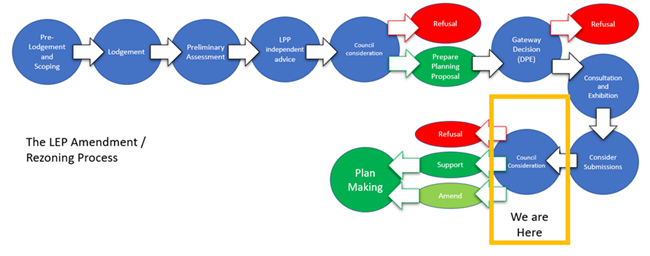
Figure 1: Local Environmental Plan Amendment/Rezoning Process
Report
The Site
The subject site (Figure 2) is located to the west of Nells Road, West Gosford. It is generally of a regular shape with an area of 9.7ha. The site comprises a single parcel (Lot 6 DP 3944) and is currently vacant. The site is located at the western extremity of the West Gosford Industrial Area.
The developable portion of the site is located close to the eastern boundary of the parcel, which is gently sloping and has street frontage to Nells Road. The most western portion of the land is part of the north- south escarpment, located to the west of Gosford City Centre. The escarpment is visually and environmentally significant, with large tracts of the area incorporated into the COSS.
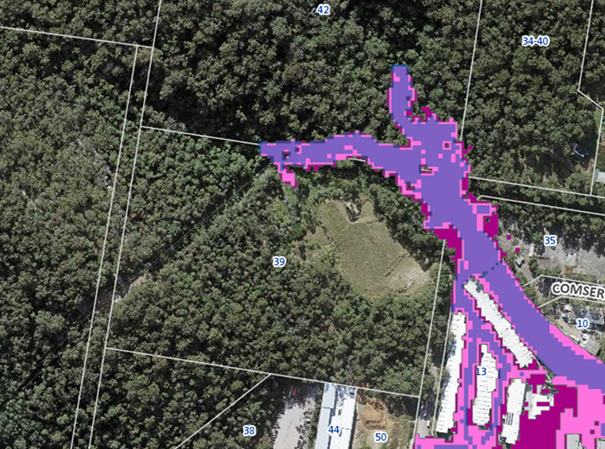
Figure 2: Aerial Photograph of site with flood extent
The site comprises a split zoning of IN1 General Industrial, under the GLEP 2014, and 7(a) Conservation and Scenic Protection zone, under Gosford IDO 122. The north-eastern portion of the site is identified as flood affected. However, the area is small and outside of any developable area (Figure 2).
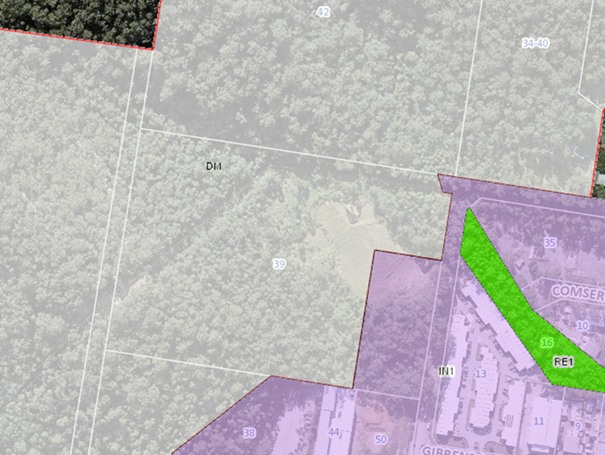
Figure 3: Existing zoning of site under GLEP 2014
The Proposal
The Planning
Proposal seeks to rezone 39 Dell Road, West Gosford (Lot 6 DP 3944) to enable
additional opportunities for industrial development, and the dedication of C2
Environmental Conservation zoned land to Council for inclusion in the COSS, the
request seeks to:
· Expand the existing IN1 General Industrial zoned portion of the land, as currently zoned under GLEP 2014; and
· Zone the remainder of the land from 7(a) Conservation and Scenic Protection zone under Gosford IDO 122 to C2 Environmental Conservation, under either GLEP 2014 or draft Central Coast Local Environmental Plan 2022 (CCLEP 2022) whichever is in effect at the time.
The proposed zoning plan is provided as Figure 4 and a summary of proposed amendments to planning controls for the site is provided in Table 1.
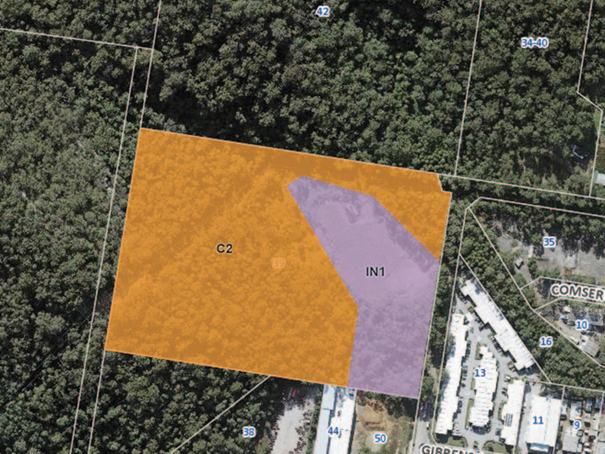
Figure 4: Proposed zoning for the site – C2 Environmental Conservation & IN1 General Industrial.
Regarding Resolution 151/21(5), referring to the development and exhibition of a site-specific Development Control Plan (DCP) for the site, it is determined that an amendment to the DCP is not required. This is a result of the relatively small area to be rezoned to IN1 General Industrial (1.4ha), directly adjacent to the existing industrial area of West Gosford. Additionally, the majority of the site is to be dedicated to Council for inclusion into the C2 Environmental Conservation zone. Consequently, existing Gosford DCP 2014 and GLEP 2014 provisions (or CCDCP and CCLEP 2022 if in force at the time of gazettal) will be sufficient.
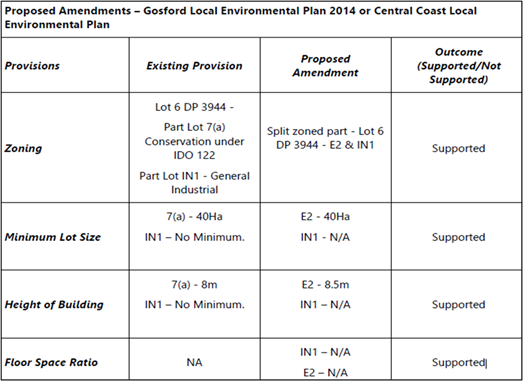
Table 1: Summary of proposed planning control amendments
Naming change to Environmental Zones (current)
As of 1 December 2021, DPE announced changes to the Standard Instrument – Principal Local Environmental Plan (2006) to rename all “E” Environmental zones to “C” Conservation zones. A summary of the changes is provided in Table 2. The new naming variation does not affect the purpose or the controls within the zone other than the new ‘C’ classification. Therefore, the proposed E2 Environmental Conservation portion of the site is now referred to as C2 Environmental Conservation. To reiterate, the ‘C’ naming modification will not affect the existing controls of the conservation zones.
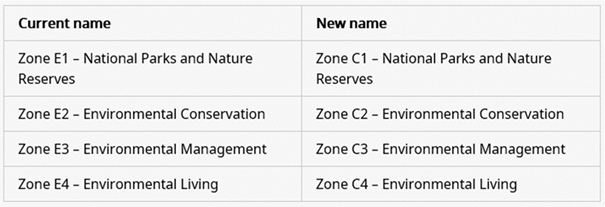
Table 2: Summary of name changes for environmental zones
Naming change to Industrial Zones (Proposed)
DPE is also planning to implement name changes for Industrial zones, renaming “IN” Industrial and “B” Business zones to a new “E” Employment zones. However, this is to occur in the second half of 2022 and will not affect the current proposal. Figure 5 demonstrates how the zones will be presented when the new zone titles are introduced.
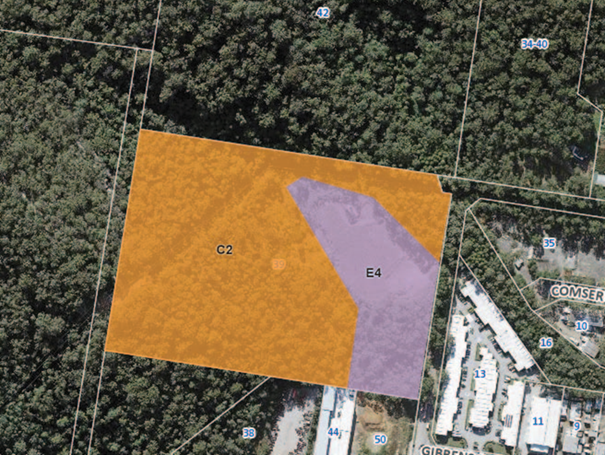
Figure 5: Proposed revised titles for ‘C’ Environmental and ‘E’ Industrial zones.
Planning
Agreement
Resolution 151/21(4) required a Planning Agreement to be negotiated between Council and the applicant, which will facilitate the dedication of approximately 7.3ha of environmental lands to Council for inclusion into the COSS. The agreement reduces financial burden to Council by the inclusion of initial funds for the bush regeneration of the site and the construction of an access track for the Rural Fire Service (RFS) and Council if required for the purpose of maintenance.
The agreement was placed on exhibition at the same time as the Planning Proposal, with no objections received.
Consultation
Internal Consultation
Internal consultation has been undertaken as summarised below:
· Environmental Planning – the portion of the site
proposed for industrial is heavily disturbed, with no ecological constraints
that need to be addressed by the Planning Proposal. The lands proposed for
dedication to Council have been assessed as worthy of inclusion into the COSS,
subject to a Planning Agreement between Council and the applicant.
· Environment and Health – a Stage 2 Detailed Site
Contamination Assessment was prepared generally in accordance with the NSW
EPA’s Contaminated Site Guidelines. Samples were analysed for all
potential contaminants of concern and appropriate National Environment
Protection (Assessment of Site Contamination) Measure (NEPM) health and
ecological investigation levels in soils were selected (Residential A). All
samples were below the adopted criteria, therefore, the site is considered
suitable for the proposed industrial land use.
· Floodplain Management – a very small portion of the
north western corner of the site is impacted by flooding. However, the affected
portion sits outside of the developable area of the site and therefore poses no
material constraint to the proposed IN1 zoning.
· Transport Planning – the site will integrate well
with the existing industrial precinct of West Gosford and the established road
network, with direct access to Manns Road and the Central Coast Highway. As
such there are no material transport concerns with the proposed rezoning as the
transport network has the capacity to cater for the proposed rezoning.
· Water and Sewer – There are no significant constraints with respect to water supply and sewerage services. The development will be assessed as part of any subsequent Section 305 Applications under the Water Management Act 2000.
Government Agency Consultation
The Gateway Determination required that the NSW Rural Fire Service (RFS) and Department of Planning and Environment – Biodiversity and Conservation Branch (BDC) be consulted, with their assessment as follows:
· RFS - No objections to the proposal subject to future
development demonstrating compliance with the relevant requirements of Planning
for Bush Fire Protection (PBP) 2019. Future industrial development located on
bush fire prone land will need to consider the provisions of Section 8.3.1
Buildings of Class 5 to 8 under the NCC of PBP 2019.
· Biodiversity Conservation Division (BCD) - Satisfied with the ecological assessment undertaken by Ecological Australia and support the inclusion of the environmental conservation lands into COSS, with additional conditions to be imposed.
Community Consultation
The proposal to transfer part of the subject land to the COSS has been discussed with the COSS Committee over many years. The Committee has not formally resolved on the proposal and did not make a submission on the Planning Proposal, but has indicated general support.
The Planning Proposal was publicly exhibited from 4 February 2022 to 4 March 2022, in accordance with the Gateway Determination. Two submissions were received during the public exhibition.
· Submission 1: The submission did not object to the proposed rezoning of a portion of the site for industrial purposes, but rather requested assurance from Council that the land to be dedicated to the COSS will remain as a conservation reserve, owned and managed by Council in perpetuity.
Response: In order to divest ownership of COSS land, Council would firstly need to pursue a recommendation that the lands are surplus to use and seek reclassification of the land from community to operational, in accordance with the Local Government Act 1993.
· Submission 2: The submission supported the rezoning to industrial land; however, felt that the site should be reserved as part of the Very Fast Train Corridor and would be best utilised as a freight terminal, commuter railway station and car park.
Response: It is agreed that a Very Fast Train linking the communities along the east coast of Australia is a desirable outcome. However, as the site is not within the existing rail corridor nor has it been examined as a site within a possible alternative rail corridor, there is currently no prospect that the site is potentially required for this purpose. Council has no ability to reserve the site for a future use at such an early stage in that future use’s development.
Outcomes of Consultation
Based on the community and agency feedback, the Planning Proposal has satisfied relevant statutory requirements relating to consultation.
Financial Considerations
At its meeting held 19 October 2020, Council resolved the following:
1108/20 That any motions put before Council for the remainder of this term of Council that have financial implications require the Chief Executive Officer to provide a report on how those additional costs will be met.
The following statement is provided in response to this resolution of Council:
The adoption of this recommendation will result in the transfer approximately 7.3ha of environmental lands to Council for inclusion into the COSS. This will add to Council’s asset base and there will be a marginal cost of maintenance of the land into the future. The planning agreement will reduce the financial burden to Council by the inclusion of initial funds for the bush regeneration of the site and the construction of an access track for the RFS and Council if required for the purposes of maintenance and firefighting. Upon expiry of the planning agreement, the marginal cost of maintenance would fall within Council’s annual budget.
Link to Community Strategic Plan
Theme 1: Belonging
|
Goal A: Our community spirit is our strength |
|
B-A1: Work within our communities to connect people, build capacity and create local solutions and initiatives. |
Theme 2: Smart
|
Goal C: A growing and competitive region |
|
S-C1: Target economic development in growth areas and major centres and provide incentives to attract businesses to the Central Coast. |
|
S-C3: Facilitate economic development to increase local employment opportunites and provide a range of jobs for all residents. |
Theme 3: Green
|
Goal F: Cherished and protected natural beauty |
|
G-F2: Promote greening and the wellbeing of communities through the protection of local bushland, urban trees, and expansion of the Coastal Open Space System (COSS). |
Theme 4: Responsible
|
Goal I: Balanced and sustainable development |
|
R-I3: Ensure land use planning and development is sustainable and environmentally sound and considers the importance of local habitat, green corridors, energy efficiency and stormwater management. |
Risk Management
There have been no material risks identified to the natural and built environment associated with the proposed amendment to GLEP 2014 (or the draft CCLEP 2022).
Options
1 Endorse the Planning Proposal. The Planning Proposal is considered to have strategic merit, it has received a Gateway Determination, which received two submissions during the exhibition period. These submissions have been discussed within this report.
This is the recommended option.
2 Refuse the finalisation of the Planning Proposal. The Planning Proposal has been assessed on its merit and is deemed to be a suitable proposal. In Council staff opinion there is no reason why it should be refused. Not recommended.
Nil.
|
Item No: 2.13 |
|
|
Title: Community Support Grants Program - February 2022 |
|
|
Department: Community and Recreation Services |
|
|
26 April 2022 Ordinary Council Meeting |
|
Reference: F2017/02117 - D15103016
Author: Belinda McRobie, Section Manager Community Development
Executive: Glenn Cannard, Director Community and Recreation Services (Acting)
That Council allocate $9,317.00 (inclusive of GST where applicable) from the 2021/22 grants budget to the Community Support Grant program, as outlined in the following report and Attachment 1.
|
Report purpose
To seek endorsement of the recommendations for the Community Support Grant Program.
Executive Summary
This report considers the applications and recommendations for the Community Support Grant Program.
The Community Support Grant Program remains open throughout the year to provide assistance for community activities that require In-kind support through the provision of subsidised access to Council services and financial assistance for community activities that require a smaller amount of support.
This program enables applicants to apply for funding support in a quicker response time. |
Background
Council’s grant programs are provided to support the community to deliver quality programs, projects or events that build connections, celebrate our local community, that align with the One-Central Coast Community Strategic Plan and build capacity across the entire Central Coast community.
The Community Support Grant Program is provided to support the community to deliver activities which require a small amount of funding and/or in-kind support. The Community Support Grant Program remains open throughout the year to provide assistance for community activities that require:
1 In-kind support through the provision of subsidised access to Council services.
2 Financial assistance for community activities that require a smaller amount of support. The Community Support Grant Program provides a combined budget of $300,000 annually as detailed in table one below.
Table 1: Community Support Grant Program
|
Program |
Budget |
Opening Period |
2021/2022 allocation to date (inclusive of GST where applicable) |
Recommendation allocation within this report (inclusive of GST where applicable) |
Allocation to date + Recommendation within report (inclusive of GST where applicable) |
|
Community Support Grant Program |
$300,000 |
Ongoing |
$140,185.62 |
$9,317.00 |
$149,502.62 |
|
TOTAL |
$140,185.62 |
$9,317.00 |
$149,502.62 |
||
Current Status
The Community Support Grant Program remains open for applications throughout the year and the closing date for each assessment period is the last day of each month.
The Community Support Grant Program provides up to $5,000 per project per financial year in combined funding and in-kind Council services to applicants who are a legally constituted not-for profit organisations, or auspiced by one.
Assessment
Three applications were received and assessed by 7 March 2022 with all three recommended for funding in this Council report.
The Community Support Grant applications were assessed by Council’s Unit Manager Community and Culture and the Community Grants Team, against the Community Support Grant Program guidelines.
Information on Council’s Community Grants program is provided on Council’s website and promoted through Council’s social media platforms.
Regular emails with relevant information were provided to the community grants database.
Council staff conducted two grant writing workshops with 51 attendees and four grant information sessions with 94 attendees
Additionally, Council staff also undertook two drop-in support sessions with 10 attendees to assist applicants with their submissions where required.
Financial Considerations
At its meeting held 19 October 2020, Council resolved the following:
1108/20 That any motions put before Council for the remainder of this term of Council that have financial implications require the Chief Executive Officer to provide a report on how those additional costs will be met.
The following statement is provided in response to this resolution of Council.
Council’s 2021/2022 Council Operational Expenditure budget allocates $300,000 to the Community Support Grant Program.
Expenditure is approved until the end of the 2021-2022 financial year. Unspent funds will lapse on 30 June 2022.
No additional budget is required nor sought through this report. All actions within have been funded through existing and approved operational plan budgets.
Link to Community Strategic Plan
Theme 1: Belonging
|
Goal A: Our community spirit is our strength |
|
B-A1: Work within our communities to connect people, build capacity and create local solutions and initiatives. |
Risk Management
All successful applications will receive a letter of offer outlining Council’s requirements of funding, service delivery and accountability for both Council and the funded organisation.
Applications recommended for funding are conditional on all relevant event/activity approvals (including COVID-19 related) being provided prior to the release of funds, and successful applicants are required to return any unspent funds for projects not able to be delivered as planned through COVID-19 related impacts.
All successful applicants are required to submit a final project acquittal report no later than twelve weeks after the agreed completion date of the activity/project with copies of any photos, promotional materials and evidence of payment/purchase for each funded item.
Options
1 Approval of all recommended applications as submitted will provide a community benefit to residents of the Central Coast Local Government Area.
This
is the recommended option
2 Non approval of some or all applications, as recommended, may result in projects not being undertaken if the respective proponents are unable to secure alternate funding. Not recommended.
Critical Dates or Timeframes
Many of these grant applications are dependent upon support via Council’s grant program. Should decisions be delayed or not supported projects may not be undertaken.
|
1⇨ |
Community Support Grants - February 2022 - Recommended |
Provided Under Separate Cover |
D15103027 |
|
Item No: 2.14 |
|
|
Title: Community Development Grants Program 2021-2022 |
|
|
Department: Community and Recreation Services |
|
|
26 April 2022 Ordinary Council Meeting |
|
Reference: F2020/00039 - D15113153
Author: Belinda McRobie, Section Manager Community Development
Executive: Glenn Cannard, Director. Community and Recreation Services (Acting)
That Council allocate $20,000 (inclusive of GST where applicable) from the 2021-22 grants budget to the Community Development Grant Program as outlined in the following report and Attachment 1.
|
Report purpose
To seek endorsement of an additional application recommended for the Community Development Grant Program.
Executive Summary
At its meeting on 23 November 2021, Council considered and endorsed the recommended and not recommended applications for the 2021-2022 Community Development Grant Program. There were 65 applications received with 26 recommended for funding and 39 not recommended.
This report is requesting Council consider the endorsement of one additional application that was not recommended for funding at the November 23 meeting based on an outstanding debt to Council.
Background
The Community Development Grant Program opened on July 1 2021 and closed on July 31 2021. There were 65 applications received with 26 originally recommended for funding totalling $266,439.69, and 39 not recommended.
One of the applications for this program, submitted by Northern Settlement Services Limited was initially assessed and recommended for funding due to the strength of the application and benefit to the local community.
During the assessment process, the grants team were advised that there was an unresolved outstanding debt to Council to be paid by Northern Settlement Services Limited. This debt was continually disputed by Northern Settlement Services Limited. Council was not able to resolve the queries surrounding the outstanding debt in the grant application period and the applicant was therefore deemed to be ineligible and at its meeting on November 23 Council endorsed the following recommendation related to the application:
Amount Recommended $0.00. Not recommended for funding as the application is ineligible in accordance with ineligibility clause 7.19 of the Community Development Grant Program. 7.19: Applicants who have an outstanding debt to Council.
After significant investigation, the outstanding debt situation has been resolved and it is now recommended to fund the application through the Community Development Grant Program due to its critical need and broad community benefit. |
The recommendation of the one additional application will increase the original total to 27 applications recommended for funding totalling $286,439.69.
The Community Development Grant program aims to support local community organisations to implement specific projects and activities that provide community outcomes and enhance the quality of life of residents, as well as strengthening their ability to deliver projects and services that respond to the needs of the community.
The Community Development Grant Program provides a budget of $300,000 annually as detailed in table 1 below.
Table 1: Community Development Grant Program
|
Program |
Budget |
Opening Period |
2019/20 allocation to date |
Recommended allocation within this report |
Allocation plus Recommendation |
|
Community Development Grant Program |
$300,000 |
July 1 2021 – July 31 2021 |
$266,439.69 |
$20,000 |
$286,439.69 |
|
TOTAL |
$300,000
|
|
$266,439.69 |
$20,000
|
$286,439.69
|
Consultation
Council’s Grants Team has worked with Council’s credit management team to resolve this issue.
Financial Considerations
Council’s 2021/2022 Council Operational Expenditure budget allocates $300,000 to the Community Development Grants Program.
Expenditure is approved until the end of the 2021-2022 financial year. Unspent funds will lapse on 30 June 2022.
At its meeting held 19 October 2020, Council resolved the following:
1108/20 That any motions put before Council for the remainder of this term of Council that have financial implications require the Chief Executive Officer to provide a report on how those additional costs will be met.
The following statement is provided in response to this resolution of Council.
No additional budget is required nor sought through this report. All actions within have been funded through existing and approved operational plan budgets.
Link to Community Strategic Plan
Theme 1: Belonging
|
Goal A: Our community spirit is our strength |
|
B-A1: Work within our communities to connect people, build capacity and create local solutions and initiatives. |
Risk Management
The successful grant applicant will receive a letter of offer outlining Council’s requirements of funding, service delivery and accountability for both Council and the funded organisation.
This application recommended for funding is conditional on all relevant event/activity approvals (including COVID-19 related) being provided prior to the release of funds, and the successful applicant is required to return any unspent funds for projects not able to be delivered as planned through COVID-19 related impacts.
The successful applicant is required to submit a final project acquittal report no later than twelve weeks after the agreed completion date of the activity/project with copies of any photos, promotional materials and evidence of payment/purchase for each funded item.
Options
1 Approval of the recommended application as submitted will provide a community benefit to residents of the Central Coast Local Government Area. This is the recommended option.
2 Non approval of this application, as recommended, may result in projects not being undertaken if the respective proponents are unable to secure alternate funding.
Critical Dates or Timeframes
This grant application is dependent upon support via Council’s grants program. Should decisions be delayed or not supported, this project may not be undertaken.
|
1⇨ |
Community Development Grant Program - 2021-2022 - Recommended for Funding |
Provided Under Separate Cover |
D15112948 |
|
Item No: 2.15 |
|
|
Title: Minutes of Advisory Group and Committee meetings held in February and March 2022 |
|
|
Department: Corporate Affairs |
|
|
26 April 2022 Ordinary Council Meeting |
|
Reference: F2021/00030 - D15084536
Author: Rachel Callachor, Meeting Support Officer
Manager: Edward Hock, Unit Manager Governance, Risk and Legal
Executive: Natalia Cowley, Director Corporate Affairs and Chief Financial Officer
That Council note the minutes of Advisory Group and Committee meetings held in February and March 2022.
|
Report purpose
To note the unconfirmed minutes of the Advisory Group and Committee meetings held in February and March 2022, which include no recommendations for Council and are reported for information only.
Executive Summary
Six Advisory Group and Committee meetings were held in February and March 2022, as listed below. The associated minutes were approved by the respective Coordinators and Chairs and were circulated to members via email. It is noted that minutes from previous meetings are confirmed by Advisory Groups and Committees at their next meeting, so are uploaded to Council’s website as ‘unconfirmed minutes’ until that time.
Minutes from Advisory Group meetings that contain no recommendations to Council are reported to Council as a combined report for information only.
Links to the unconfirmed minutes on Council’s website are included below for the information of Council.
· Heritage and Culture Advisory Group meeting held 23 February 2022 · Pedestrian Access and Mobility Advisory Committee meeting held 1 March 2022 · Catchments to Coast Advisory Committee meeting held 2 March 2022 · Audit, Risk and Improvement Committee meeting held 9 March 2022 · Coastal Open Space System (COSS) Committee meeting held 15 March 2022 · Water Management Advisory Committee Meeting held 23 March 2022
It is noted that the Heritage and Culture Advisory Group was unable to achieve quorum due to insufficient members being present.
If there are any changes made to these minutes that result in a recommendation to Council following confirmation at the next meeting, the minutes will come back to Council. |
Financial Considerations
At its meeting held 19 October 2020, Council resolved the following:
1108/20 That any motions put before Council for the remainder of this term of Council that have financial implications require the Chief Executive Officer to provide a report on how those additional costs will be met.
The following statement is provided in response to this resolution of Council.
There are no financial implications of this report.
Link to Community Strategic Plan
Theme 4: Responsible
|
Goal G: Good governance and great partnerships |
|
R-G3: Engage with the community in meaningful dialogue and demonstrate how community participation is being used to inform decisions. |